
Social Inequity, Place of Residence and All-Cause Premature Death in Argentina
pp. 108-113
DOI:
https://doi.org/10.7775/rac.es.v84.i2.8267Keywords:
Mortality - Vital Statistics - Social Class - Epidemiology - ArgentinaAbstract
Background: Although the relationship between premature death and socioeconomic status has been recently reported in Argentina, there are no analyses on the impact of this condition in different regions of the country.
Objective: The aim of this study was to describe the influence of socioeconomic status on the incidence of premature death rate in different provinces of Argentina, from 2000 to 2010.
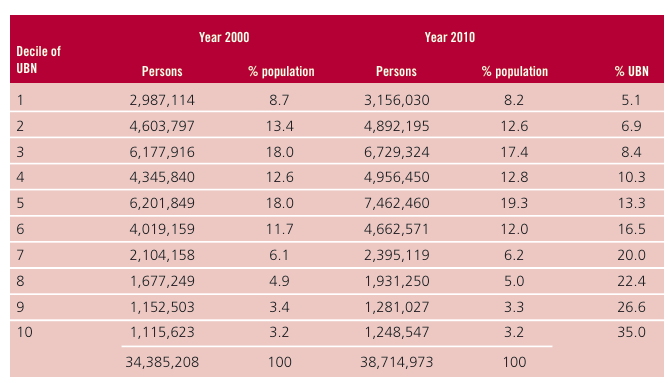
Methods: An ecological model was used to evaluate standardized premature death rates (≤74 years) during the period between 2000 and 2010. In addition, the relationship between socioeconomic status, measured in deciles of unmet basic needs at geographic departmental level and premature death was examined. The units of analysis were the 512 Argentine departments and the 15 communes of the city of Buenos Aires.
Results: Socioeconomic status was significantly associated with premature death rate in Argentina during the study period. A linear gradient was observed between premature death and socioeconomic status in all provinces and regions. However, the slope index of inequality varied significantly between departments. While the absolute difference in standardized premature death rate between the extreme components of socioeconomic status was 10 deaths (range: 7.81-12.36) per 10,000 persons pers year in all Argentina, in the city of Buenos Aires this difference was 61 deaths (range: 53-69). The Southern communes of Buenos Aires were the areas with the highest social and health inequalities of Argentina.
Conclusions: Although social inequity had a significant impact on premature death rate throughout Argentina during the study period, the city of Buenos Aires was the most unequal region.
Downloads
Published
Issue
Section
License
Copyright (c) 2016 Argentine Journal of Cardiology

This work is licensed under a Creative Commons Attribution-NonCommercial-ShareAlike 4.0 International License.





