

INTRODUCTION
The global burden of cardiorenal disease associated with type 2 diabetes mellitus (T2DM) has steadily increased over the past decades. (1) The coexistence of cardiovascular disease (CVD), heart failure (HF), and chronic kidney disease (CKD) constitutes a very high-risk phenotype, characterized by accelerated disease progression and a high incidence of adverse clinical outcomes. In this context, the development of novel therapies with cardiorenal benefits has substantially changed the therapeutic approach. Sodium-glucose cotransporter 2 inhibitors (SGLT2i), glucagon-like peptide-1 receptor agonists (GLP-1 RA), and, more recently, nonsteroidal mineralocorticoid receptor antagonists such as finerenone, have been shown to reduce cardiovascular events, hospitalizations for HF, and the progression of kidney disease, regardless of glycemic control. (2) Accordingly, international clinical practice guidelines have incorporated these therapies with strong recommendations supported by high-level evidence for patients with diabetes and cardiorenal disease.
However, despite the robust body of evidence, several studies have demonstrated a marked discrepancy between guideline recommendations and their implementation in routine clinical practice. In populations with T2DM and established CVD, the use of evidence-based therapies remains suboptimal, with a low proportion of patients receiving all recommended therapies. (3) This phenomenon, known as the “treatment gap,” represents a significant source of potentially preventable residual risk.
The gaps in cardiometabolic management remain alarming. For example, in a population of 155 958 patients in the United States with T2DM and established atherosclerotic CVD, only 2.7% were receiving all recommended evidence-based therapies. (4)
In a 2019 study conducted in Argentina, only 12.8% of patients with T2DM and CVD were receiving SGLT2i , and 3.04% were receiving GLP-1 RA. (5)
No integrated metrics have been developed to specifically quantify this gap by stratifying treatment indications by their class of recommendation and weighting therapies by their relative clinical importance.
OBJECTIVE
This study aimed to quantify the treatment gap among patients with T2DM and very high-risk cardiorenal disease using a proportional index that differentiates therapies according to their class of recommendation (Class IA and Class IIA), and to evaluate the clinical factors associated with a greater likelihood of omission of evidence-based therapies.
METHODS
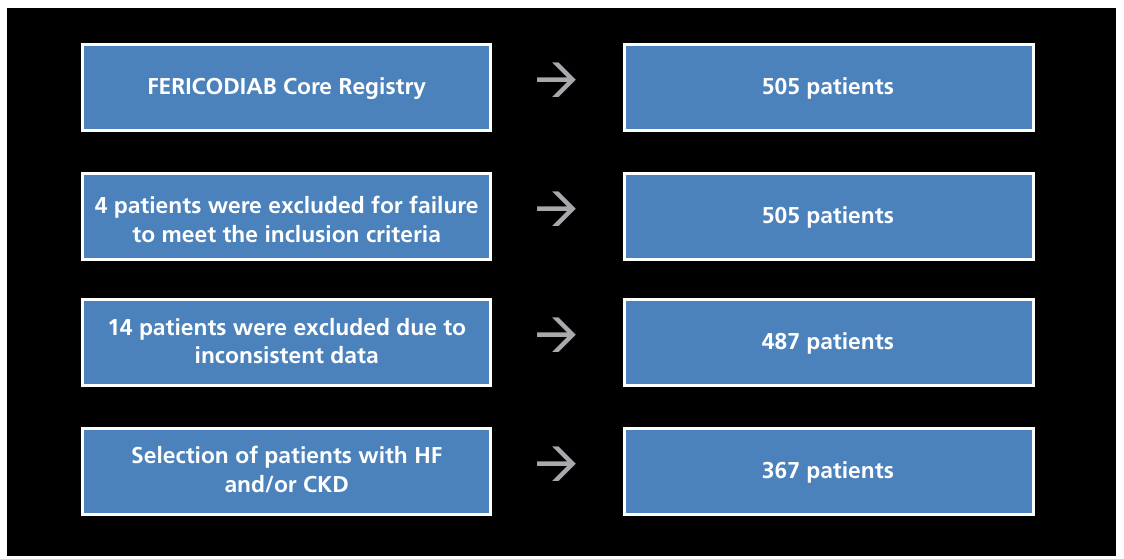
The FERICODIAB group collected data from adult patients with T2DM as part of a study on iron deficiency. Data were prospectively collected from subjects with T2DM and current or previous anemia, T2DM with HF, and/or T2DM with CKD. Of the 505 patients in the FERICODIAB registry, 4 were excluded because they did not meet the inclusion criteria and 14 were excluded due to inconsistent data. Of the remaining 487 patients, data from 367 patients with HF and/or CKD, as determined by the researchers based on patients’ personal history, were included in the analysis (Figure 1).
Demographic, clinical, and biochemical variables were collected, including age, sex, body mass index (BMI), duration of diabetes, glycated hemoglobin (HbA1c), blood pressure, renal function (estimated glomerular filtration rate, eGFR), albuminuria and urine albumin-creatinine ratio (UACR), other comorbidities, and current treatment. CVD was defined as the presence of coronary artery disease, cerebrovascular disease, and/or peripheral vascular disease.
Eligibility criteria were established for each therapy and categorized according to their class of recommendation (Class IA and IIA) . The classes of recommendation were based on contemporary international guidelines (ADA/EASD, American Diabetes Association/ European Association for the Study of Diabetes, (6) KDIGO, Kidney Disease: Improving Global Outcomes, (7) and ESC, European Society of Cardiology, (8)), harmonized by consensus among the study’s principal investigators, based on the primary premise that the study population consisted of patients with T2DM and a history of CKD and/or HF.
Based on the aforementioned guidelines, the following indications were defined:
Class IA indications:
SGLT2i for all patients with an eGFR ≥20 mL/min/1.73 m².
GLP-1 RA for all patients with a BMI ≥27 kg/m² and established CVD and/or CKD with an eGFR >15 mL/min/1.73 m².
Antiplatelet agents for all patients with established CVD and hemoglobin (Hb) >12 g/dL (women) or >13 g/dL (men).
Statins for all patients aged between 40 and 75 years.
Renin-angiotensin-aldosterone system inhibitors(RAASi) for patients with hypertension (HTN) and CKD or patients with HTN and established CVD.
Finerenone for patients with CKD, UACR ≥30 mg/g and eGFR ≥25 mL/min/1.73 m² .
Class IIA indications:
Combination therapy with SGLT2i and GLP-1 RA for patients with established CVD and an eGFR ≥15 mL/min/1.73 m² .
RAAS inhibitors for all patients with HTN.
Combination therapy with finerenone and SGLT2i for patients with UACR ≥100 mg/g and eGFR 30–90 mL/min/1.73 m².
Development of a treatment gap index
To quantify the treatment gap, a weighted composite index (proportional treatment gap index, prop-TGI) was developed based on the methodology used to develop composite performance measures or composite quality indicators, which integrates multiple healthcare quality indicators into a single summary measure. (9) A predefined weight was assigned to each recommended drug therapy according to its relative importance within the comprehensive management of cardiorenometabolic syndrome. The weights were assigned a priori by the research group based on the breadth and consistency of the available evidence regarding reductions in cardiovascular and renal events, the impact on multiple domains of cardiorenometabolic syndrome, and the role of each intervention in contemporary recommendations from major international guidelines. Under this framework, SGLT2i and GLP-1 RA were assigned a weight of 2.0; finerenone, a weight of 1.5; and statins, RAASi , and antiplatelet therapy, a weight of 1.0.
The prop-TGI was calculated as the sum of the weights assigned to recommended but non-prescribed therapies divided by the sum of the weights assigned to all recommended therapies for each patient, yielding a continuous index ranging from 0 (no treatment gap) to 1 (complete treatment gap).
Statistical analysis
Gaps by therapy among eligible patients, prop-TGI distributions, and subgroup comparisons were described. Independent predictors of the prop-TGI for Class IA indications (TGI-IA) and Class IIA indications (TGI-IIA) were evaluated using multivariate linear regression. The independent variables included age, sex, BMI, HbA1c, duration of diabetes, HF, CKD, CVD, HTN, dyslipidemia (DLP), and smoking. Since the prop-TGI is bounded between 0 and 1, the primary analysis was performed using linear regression because of its clinical interpretability. Beta regression was also performed as a sensitivity analysis.
Epi Info, R, and JAMOVI were used for all analyses.
Ethical considerations
The study was reviewed and approved by the Research Ethics Committee of the Argentine Society of Cardiology under registration No. 8426, in accordance with international guidelines for clinical research, including the Good Clinical Practice (GCP) guidelines and the Declaration of Helsinki and its amendments. (10)
Results
Data were collected from 367 patients with a mean age of 70.0 ± 11.1 years; 226 (61.6%) were male. The prevalence of HTN was 92.1% (n = 338) and that of DLP was 86.1% (n = 316), while 6.5% (n = 24) had a history of smoking. The mean BMI was 30.9 ± 6.1 kg/m², and the mean duration of T2DM was 16.0 ± 9.9 years, reflecting a long-standing metabolic disease. Metabolic dysfunction-associated steatotic liver disease (MASLD) was present in 33.5% (n = 123). From the cardiorenal standpoint, 195 participants (53.1%) had an eGFR <60 mL/min/1.73 m². When the study definition of CKD (eGFR <60 mL/min/1.73 m² or UACR >30 mg/g) was applied, 296 participants (80.7%) met the criteria, 61 of whom also had HF. Median (IQR) UACR was 48.3 (15-201) mg/g in 309 available measurements. A total of 94 participants (25.6%) had HF, and 61 (16.6%) had both coexisting HF and CKD. Regarding CVD, 27.5% (n = 101) had coronary artery disease, 6.8% (n = 25) had a history of cerebrovascular disease, and 14.7% (n = 54) had peripheral vascular disease. Taken together, these findings describe an elderly cohort with long-standing T2DM and a very high burden of cardiorenal comorbidities, representative of a population at very high cardiovascular and renal risk. Table 1 shows the baseline characteristics of the study population.
Table 1
Demographic characteristics of the total population and by gender
| Variable | Total | Men | Women | p |
|---|---|---|---|---|
| Age (years) | 70.0 ± 11.1 | 70.3 ± 11.1 | 69.7 ± 11.3 | 0.618 |
| BMI (kg/m²) | 30.9 ± 6.1 | 31.0 ± 5.6 | 30.8 ± 7.1 | 0.884 |
| HbA1c (%) | 7.2 ± 1.5 | 7.1 ± 1.4 | 7.3 ± 1.6 | 0.177 |
| eGFR (mL/min/1.73 m²) | 61.5 ± 26.8 | 56.7 ± 24.3 | 69.9 ± 28.6 | <0.001 |
| Hemoglobin (g/dL) | 13.0 ± 2.0 | 13.6 ± 2.0 | 12.0 ± 1.5 | <0.001 |
| HTN | 338/367 (92.1%) | 211/226 (93.4%) | 111/124 (89.5%) | 0.288 |
| DLP | 316/367 (86.1%) | 200/226 (88.5%) | 101/124 (81.5%) | 0.098 |
| Smoking | 24/367 (6.5%) | 16/226 (7.1%) | 8/124 (6.5%) | 0.999 |
| eGFR <60 mL/min/1.73 m² | 195/367 (53.1%) | 136/226 (60.2%) | 52/124 (41.9%) | 0.002 |
| UACR >30 mg/g | 204/309 (66.0%) | 128/188 (68.1%) | 63/106 (59.4%) | 0.172 |
| HF | 94/367 (25.6%) | 60/226 (26.5%) | 31/124 (25.0%) | 0.850 |
| Coronary CVD | 101/367 (27.5%) | 82/226 (36.3%) | 16/124 (12.9%) | <0.001 |
| SGLT2i | 200/367 (54.5%) | 140/226 (61.9%) | 50/124 (40.3%) | 0.001 |
| GLP-1 RA | 47/367 (12.8%) | 37/226 (16.4%) | 8/124 (6.5%) | 0.013 |
| Finerenone | 7/367 (1.9%) | 1/226 (0.4%) | 6/124 (4.8%) | 0.016 |
| RAAS inhibitor | 323/367 (88.0%) | 197/226 (87.2%) | 111/124 (89.5%) | 0.635 |
| Antiplatelet agents | 155/367 (42.2%) | 106/226 (46.9%) | 44/124 (35.5%) | 0.051 |
Continuous variables are expressed as mean ± standard deviation.
Categorical variables are expressed as n (%).
Student’s t-test was used for continuous variables and the χ² test for categorical variables.
∗ Differences between totals and the sums of the subgroups are due to missing data in the stratification variables.
BMI: body mass index; CVD: cardiovascular disease; DLP: dyslipidemia; eGFR: estimated glomerular filtration rate; GLP-1 RA glucagon-like peptide-1 receptor agonists; HbA1c: glycated hemoglobin; HF: heart failure; HTN: hypertension; RAAS: renin-angiotensin-aldosterone system; SGLT2i: sodium-glucose cotransporter-2 inhibitors; UACR: urine albumin-creatinine ratio.
The mean TGI-IA was 0.491 with a median of 0.483; 45.4% of patients had an TGI-IA >0.5. The mean TGI-IIA was 0.454 with a median of 0.778, and 51.2% of patients had an TGI-IIA >0.5. (Figure 2)
Fig. 2
Distribution of the Therapeutic Gap Index (TGI)
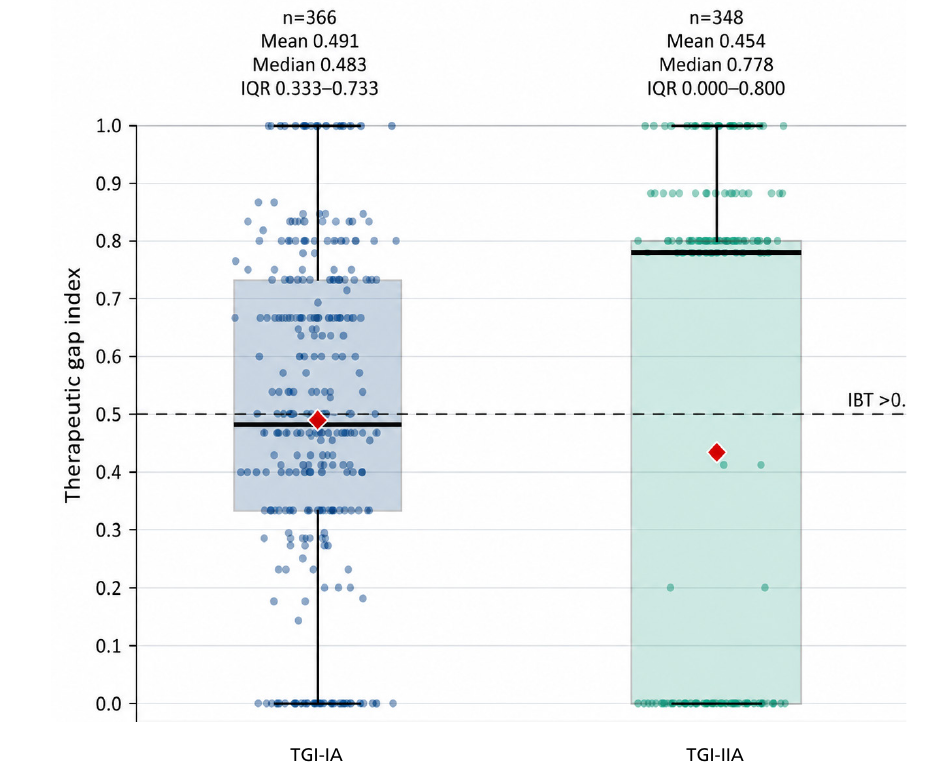
Each data point represents a single patient's value. The boxes indicate the interquartile range, the central line indicates the median, the whiskers extend up to 1.5 times the interquartile range, and the red diamonds represent the mean. The dashed line indicates the TGI threshold of >0.5. TGI-IA: n=366; TGI-IIA: n=350
Figure 3 shows the proportion of participants eligible for each intervention, the percentage treated among eligible participants, and the resulting treatment gap. Figure 4 presents a heat map of the treatment gaps corresponding to Class IA and Class IIA indications. Table 2 presents the TGI-IA according to the presence of cardiorenal comorbidity. The index was significantly lower among participants with HF and those with established CVD. Among patients with CKD, a numerically smaller treatment gap was observed, and the difference did not reach statistical significance.
Fig. 3
Percentage of patients eligible for Class IA and IIA recommendation therapies, treatment rates, and treatment gap
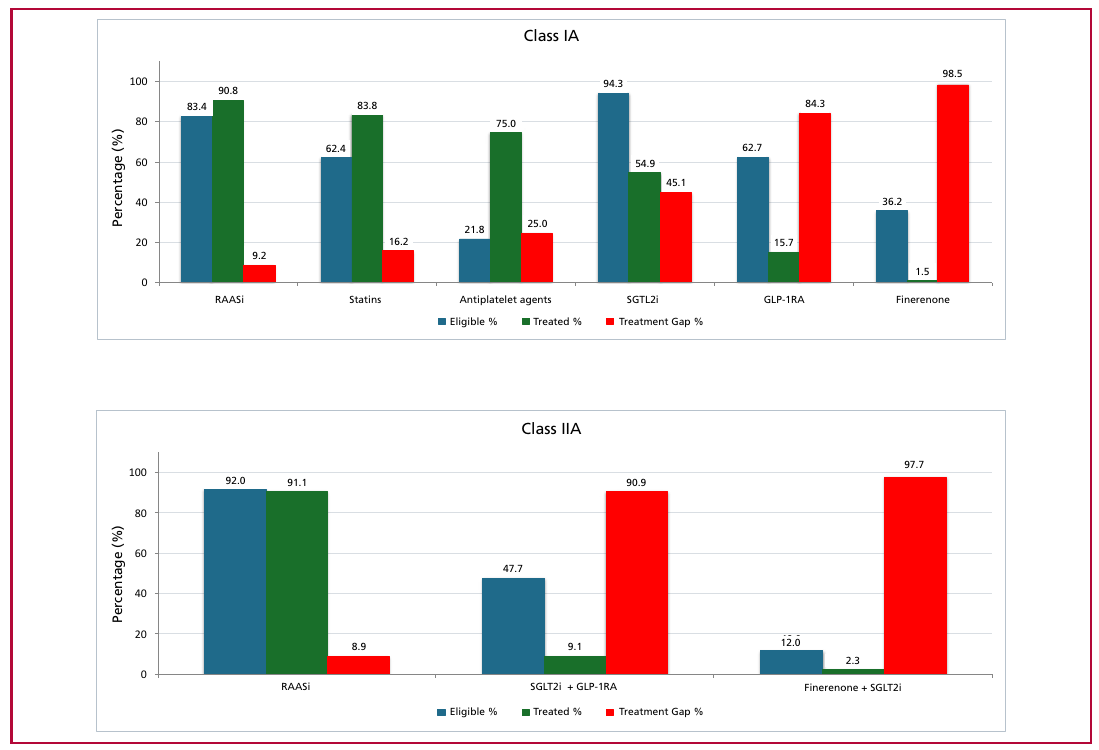
GLP-1 RA glucagon-like peptide-1 receptor agonists; RAASi: renin-angiotensin-aldosterone system inhibitors; SGLT2i: sodium-glucose cotransporter-2 inhibitors
Fig. 4
Heat map of treatment gaps for Class IA and Class IIA recommendations
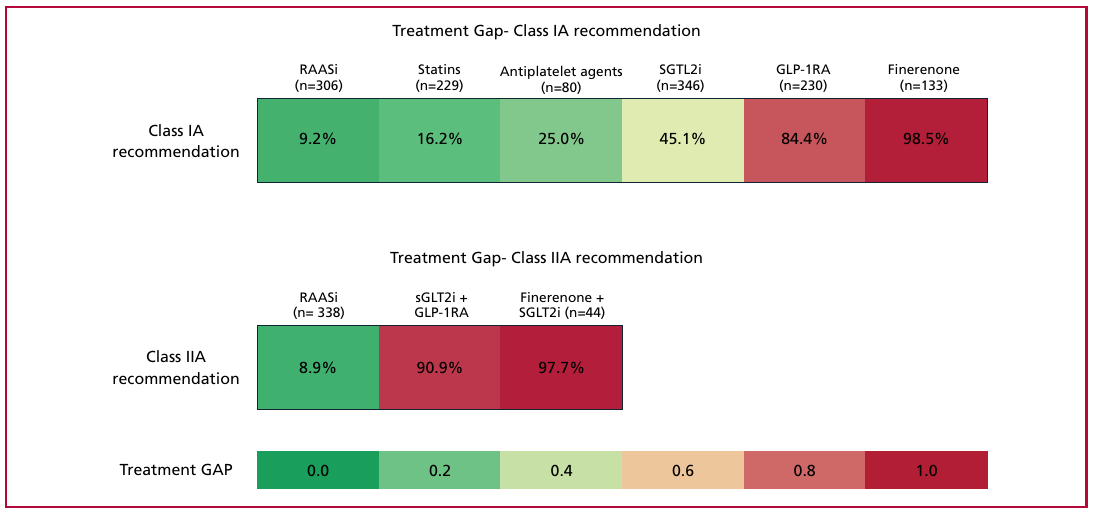
GLP-1 RA glucagon-like peptide-1 receptor agonists; RAASi: renin-angiotensin-aldosterone system inhibitors; SGLT2i: sodium-glucose cotransporter-2 inhibitors
Table 2
Median TGI-IA by cardiorenal comorbidity subgroups
| Subgroup | n | Present | Absent | p |
|---|---|---|---|---|
| HF | 94 | 0.406 | 0.531 | <0.001 |
| CKD (eGFR <60 mL/ min/1.73 m² or UACR >30 mg/g) | 296 | 0.467 | 0.636 | 0.073 |
| Established CVD | 145 | 0.444 | 0.538 | <0.001 |
CVD: cardiovascular disease; CKD: chronic kidney disease; HF: heart failure
In the adjusted multivariate model, DLP, HF, CKD, and male sex were independent predictors of a smaller treatment gap for Class IA indications, whereas older age, higher BMI, and female sex were associated with a larger treatment gap (Figure 5). In the linear model, older age and female sex were associated with a higher prop-TGI; however, these associations were attenuated and were no longer statistically significant in the beta regression model and should therefore be interpreted as exploratory findings.
Fig. 5
Predictor variables associated with the Class IA recommendation treatment gap (TGI- IA)
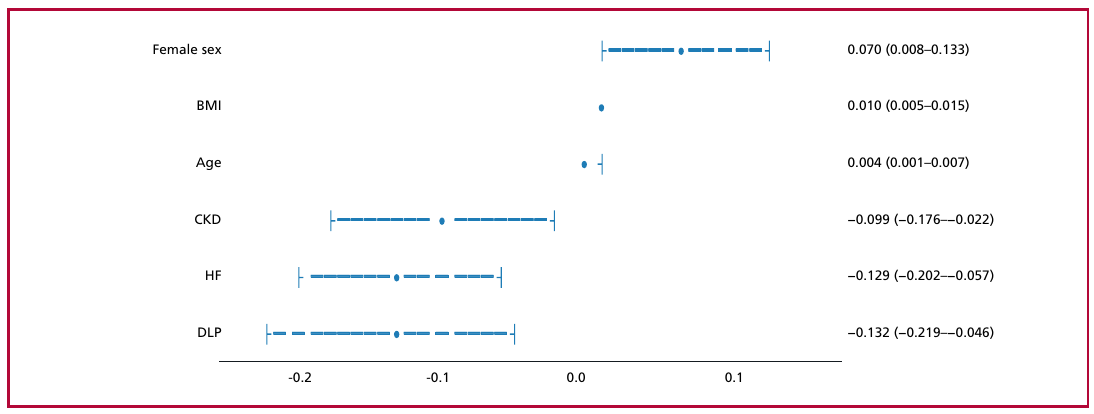
Forest plot of the ß coefficients and their 95% confidence intervals estimated using a multivariate linear regression model, with TGI-IA as the dependent variable. The model included age, sex, body mass index (BMI), HbA1c, duration of diabetes, heart failure (HF), chronic kidney disease (CKD), established cardiovascular disease, hypertension, dyslipidemia (DLP), and smoking (n = 343 complete cases). Positive coefficients indicate a larger treatment gap, whereas negative coefficients indicate a smaller treatment gap. The vertical line at zero represents no association. Only variables that remained statistically significant in the multivariate model are shown.
Discussion
In this observational study, which included a cohort of patients with T2DM and a high burden of cardiorenometabolic disease, a significant treatment gap was observed in the implementation of evidence-based therapies when applying eligibility criteria aligned with current international guidelines. The principal finding was that the treatment gap was not uniform but was concentrated in the most recent disease-modifying cardiorenal therapies, whereas historically established therapies, such as RAASi and statins, have been more widely adopted in clinical practice.
Major scientific societies recommend a comorbidity-based approach for patients with T2DM and established atherosclerotic CVD, HF, or CKD. (11)
Our findings are consistent with previous reports demonstrating the low implementation of modern therapies in high-risk patients. (12) In the study by Nelson et al., only 2.7% of patients with T2DM and atherosclerotic CVD received the full combination of recommended therapies, underscoring a substantial global gap in evidence-based treatment. (4)
In the regional context, data from Argentina have shown limited use of SGLT2i (12.8%) and GLP-1 RA (3.04%) in patients with T2DM and CVD, (5) highlighting the persistence of this phenomenon across diverse healthcare systems. In our study, despite broader and more contemporary eligibility criteria, the use of GLP-1 RA (15.6%) and finerenone (1.5%) among eligible patients remained markedly low, suggesting that the treatment gap cannot be explained solely by indication restrictions but rather by more complex factors related to clinical practice.
An important finding of our study was the identification of a distinct pattern of therapy implementation. While traditional therapies such as statins and RAASi showed high rates of use, therapies with direct cardiorenal benefits—SGLT2i, GLP-1 RA, and finerenone—were used significantly less frequently.
This phenomenon may reflect an incomplete transition toward the modern cardiorenal paradigm, in which treatment is no longer based exclusively on controlling traditional risk factors but also on directly modifying the underlying pathophysiological mechanisms, including inflammation, endothelial dysfunction, hemodynamic overload, and the progression of kidney disease. (13)
Beyond individual clinical characteristics, the adoption of these therapies should be interpreted as a phenomenon influenced by factors operating at multiple levels of the healthcare system. In a cohort of 80 807 patients with T2DM and established CVD, those exposed to the highest out-of-pocket costs were 13% less likely to initiate treatment with a GLP-1 RA and 20% less likely to initiate treatment with an SGLT2i than those facing the lowest out-of-pocket costs. (14) Similarly, a recent study of 22 060 patients with T2DM and atherosclerotic CVD, HF, or CKD showed that only 17.4% were receiving any of these therapies and that prescription rates varied significantly according to the specialty, with lower prescription rates in cardiology practice. (15) In this context, the gap identified by the prop-TGI should not be attributed exclusively to individual practitioner decisions or therapeutic inertia but rather may also reflect economic barriers, differences in drug coverage, and fragmentation of care across specialties. Although these variables were not evaluated in our study, they should be incorporated into future research aimed at understanding and reducing the treatment gap.
Additionally, the multivariate analysis provides important insights into the variables associated with this treatment gap, namely BMI, age, and female sex. In this regard, the association between higher BMI and a higher prop-TGI suggests that patients with a greater metabolic burden—who would be expected to benefit most from therapies such as GLP-1 RA—(16) are, paradoxically, the least likely to receive them. Similarly, although there is robust evidence supporting the safety and effectiveness of these therapies in patients older than 65 years, (17) we observed systematic underuse among older adults. An analysis of older Medicare Advantage beneficiaries showed significantly lower initiation rates of SGLT2i and GLP-1 RA than among younger patients, with these gaps widening progressively with increasing age. (18) In our study, older age was an independent predictor of a wider treatment gap. This finding, which is consistent with several previous reports (19), may reflect multiple factors, including treatment inertia, ageism, or concerns regarding safety, tolerability, and socioeconomic factors.
Historically, women with T2DM and/or cardiometabolic diseases have consistently been less likely to receive guideline-recommended cardioprotective therapies. (20) A recent meta-analysis including more than 14.6 million patients confirmed that women were less likely to receive SGLT2i, although, paradoxically, they may be more likely to receive GLP-1 RA. (21) In our study, female sex was associated with a wider treatment gap. This recurring finding across multiple studies may stem from bias in cardiovascular risk assessment, whereby women are often perceived as being at lower cardiovascular risk, as well as from cultural, socioeconomic, and structural barriers. (22) The ADA/EASD consensus emphasizes that “the increase in the relative risk of CVD due to T2DM is greater in women than in men,” making treatment disparities particularly concerning. (23) Conversely, the smaller treatment gap observed among patients with HF and established CVD suggests that the clinical recognition of risk has a substantial influence on therapeutic decision-making, promoting greater adherence to guideline recommendations in secondary prevention than in patients with high metabolic risk but no overt clinical events.
Limitations
This study has several limitations that should be considered. First, its observational design precludes causal inference regarding the association between the analyzed factors and the observed treatment gap. Second, although eligibility criteria were based on international guidelines, they were harmonized by consensus among the researchers, which may have introduced some variability in their interpretation. Furthermore, detailed information on specific contraindications, treatment tolerability, and adherence was not available, all of which could have influenced prescribing decisions. In addition, factors related to healthcare access, drug coverage, and socioeconomic status were not assessed, although they may play an important role in the implementation of therapies. Finally, some of the covariates included in the model, such as HF, CKD, CVD, and BMI, were also incorporated into the rules to determine treatment eligibility. Consequently, some of their associations with the prop-TGI may reflect the way the index was constructed rather than differences in prescribing behavior alone.
Conclusion
A significant treatment gap was identified in the implementation of guideline-based therapies, particularly those with a Class IA recommendation and the greatest demonstrated impact on reducing cardiovascular events and slowing progression of kidney disease. While historically established therapies, such as antiplatelet agents, RAAS inhibitors, and statins, had high rates of use, the most recent cardiorenal therapies (SGLT2i, GLP-1 RA, and finerenone) were implemented far less frequently, with particularly pronounced gaps among older patients, women, individuals with higher BMI, and especially in the use of recommended combination therapies. These findings highlight the need for systematic implementation strategies, interdisciplinary approaches, and structured treatment optimization in patients with cardiorenal disease to bridge the gap between scientific evidence and real-world clinical practice.
Acknowledgments
We thank all the researchers from the FERICODIAB registry who contributed to the collection of the data used in this study:
Roxana Abeleedo, Carina Adjiman, Florencia Aranguren, Cecilia Araya, Mauricio Arguello, Bárbara Arinovich, Judith Bendahan, José Cardozo, Yanina Castaño, Ivana Castillo, Pilar Cean, Mirta Centeno Maxzud, Alejandra Cicchitti, Jimena Conforti, Daniel Croatto, Guillermo De’ Marziani, Alicia Elbert, Ezequiel Forte, Paula Gómez, Cristina Grosso, Natalia Heredia, Sonia Hermida, Andrea Laurenza, Gustavo Lavenia, Sergio Liderman, Martin Maraschio, Diego Novielli, Luciana Paganti, Bruno Payeras, Florencia Pizzatti, Andrea Prospero, Daniela Recalde, Carlos Tapia, Fiorella Tartaglione, Fabiana Vázquez, Beatriz Villarroel Parra, Rocío Zabala