

INTRODUCTION
Cardiovascular diseases are the leading cause of death worldwide and in our country, as well as a leading cause of disability and loss of work capacity among adults. Access to diagnostic and therapeutic strategies requires adequate coordination of the healthcare system and goes far beyond the role of specialists. It is essential to have accurate information on its prevalence and treatment, as well as on the various barriers that limit access to appropriate diagnosis and treatment, with a view to addressing them. Both for basic knowledge and for evaluating the relevance and effectiveness of corrective measures, a robust registry of these conditions is required to enable the adoption of public policies and guidelines tailored to national needs.
Acute myocardial infarction with ST-segment elevation (STEMI) is one of the conditions that poses the greatest challenges to the healthcare system. It is the leading cause of morbidity and mortality worldwide (1) and in our country. (2) In Argentina, the annual rate of AMI was estimated at 41.9 per 10 000 inhabitants and, when adjusted for other types of classic heart attacks, at 55.9 per 10 000 among those aged 35 to 64. (3,4)
Early recognition prevents death from arrhythmias in the first few hours and allows for the implementation of strategies to reperfuse the myocardium using thrombolytic drugs or invasive procedures such as primary angioplasty.
Antiplatelet therapy and myocardial reperfusion strategies (both medical and percutaneous) have favorably altered the natural short- and long-term course of the disease, (5,6) and their impact is greater the earlier they are implemented. (7,8)
Multiple barriers hinder adequate treatment: delays in patients seeking care, failure to perform or misinterpretation of electrocardiograms, lack of training among emergency physicians to initiate reperfusion measures early, difficulties in accessing medication, and the absence of coordinated networks to facilitate rapid referral to centers with greater treatment capacity.
All records show, across different areas of the system, a failure to implement reperfusion strategies in a timely and appropriate manner in a large number of patients, whether due to late arrival, the “unavailability” of fibrinolytics, (9) or the lack of a catheterization lab or referral options. Even in regions where resources are available, a lack of coordination or networking prevents their adequate utilization, and delays persist that result in preventable deaths and disability. (10,11) The Argentine Society of Cardiology (SAC) and the Argentine Federation of Cardiology (FAC) have been conducting cross-sectional registries of the epidemiological, clinical, and therapeutic characteristics of acute coronary syndromes (ACS) for nearly 40 years, (12-14) in which these delays or the failure to implement reperfusion strategies can be observed.
A thorough understanding of the reality of these delays, along with their contributing factors, will help establish strategies to address the barriers that prevent adequate medical care. Similarly, understanding the treatment strategies used and their outcomes will help identify future improvements and ultimately reduce complications and mortality from myocardial infarction.
Establishing a national AMI registry allows for the collection of concrete and representative data from across the country to develop policies aimed at improving survival rates.
OBJECTIVES
The main objectives of this registry are:
To evaluate changes in the clinical course of STE-MI through a prospective registry with cross-sectional analyses.
To evaluate the time intervals and causes of delay from symptom onset to reperfusion therapy: prehospital and in-hospital delays
To assess the prevalence of reperfusion therapy in patients admitted with STEMI, reperfusion modalities (thrombolytics/angioplasty), and causes of non-reperfusion.
To assess in-hospital mortality and complications
To analyze treatment modalities.
METHODS
This is a national registry of patients with STEMI admitted to intensive care units throughout the country. Institutions with intensive care units that admit cardiovascular patients—selected through the Argentine Integrated Health Information System (SISA)—and institutions affiliated with the SAC-FAC scientific societies were invited to participate.
The characteristics of the participating institutions were surveyed to determine the level of complexity of each and their degree of integration into the country’s healthcare system.
Inclusion criteria:
Patients admitted with STEMI
Progressed AMI with new Q waves within the past 36 hours.
Suspected inferoposterior AMI (horizontal ST-segment depression in leads V1 through V3, suggestive of acute occlusion of the circumflex coronary artery).
New or suspected new left bundle branch block.
Exclusion criteria:
Acute Coronary Syndrome without ST-Segment Elevation, or non-Q-wave myocardial infarction.
Myocardial infarctions with a duration of more than 36 hours.
Demographic and clinical data (age, sex, risk factors, medical history, comorbidities), clinical presentation (location of the myocardial infarction, Killip and Kimball class at admission, duration of symptoms), treatment administered (antiplatelet agents, reperfusion therapy, adjunctive therapy), and in-hospital clinical course (heart failure, postinfarction angina, shock, death) were collected.
Data collection was performed using a specially designed electronic form accessible via the web. In 2020, the system was migrated to a database developed by the SAC on RedCap.
Patient Data Confidentiality
Patient privacy in the registry is guaranteed, as patients’ names or initials are not stored in the database. Patients are identified by a sequential number assigned by each center.
Since this registry does not collect data that would allow patients to be identified, informed consent was not required.
Statistical Analysis
This is a prospective, cross-sectional, multicenter registry with nationwide coverage.
Quantitative variables were expressed as mean and standard deviation (SD) or median and interquartile range (IQR), depending on their distribution, and qualitative variables as proportions with their confidence intervals. Comparative analysis of discrete variables was performed using contingency tables. Comparative analysis of continuous variables was performed using the t-test or the Kruskal-Wallis test for unpaired data, or analysis of variance (ANOVA), as appropriate.
For the multivariate analysis of events with a dichotomous distribution, logistic regression analyses were performed. The relationship between the variables was initially determined through univariate analysis. Subsequently, those variables considered relevant (principle of parsimony) and/or those that had a p-value <0.1 in the previous analysis were manually selected. The variables selected for the final model were expressed with their corresponding odds ratio (OR) and 95% confidence interval (95% CI).
Sample size calculation was based on one of the registry’s primary objectives, which was to evaluate predictors of death in patients admitted with STEMI. We used this parameter because it requires the largest number of patients to ensure stability in the prediction of the regression models.
According to evidence from simulation studies, logistic models require between 12 and 15 events per predictor to generate stable results. (15,16) In our registry, we predefined the possibility of analyzing approximately 25 predictive variables, including clinical, electrocardiographic, and laboratory variables.
Previous registries conducted in our setting have reported a mortality rate of approximately 10%. We set an initial sample size of 3000 patients to ensure stability in the prediction models. Considering the scenario with the lowest mortality rate (8%), we were able to analyze up to 20 predictor variables based on the number of events. A mortality rate of 10% allowed us to analyze up to 25 variables without compromising the validity of the results. Finally, we considered the sample size to be sufficient to carry out the remaining objectives set by the registry related to reperfusion times and strategies.
A p-value <0.05 was considered statistically significant. The analysis was performed using EpiInfo Version 7.2.2.6 and Stata/SE 13.0®.
Ethical Considerations
The protocol was reviewed and approved by the Bioethics Committee of the Argentine Society of Cardiology (February 15, 2015) and, in accordance with local regulations and institutional policies, was submitted for review by local committees. The protocol was registered on ClinicalTrials.gov under number NCT2458885.
RESULTS
Demographic and Institutional Characteristics
During the initial phase of the registry, between December 2014 and December 2015, 247 centers nationwide participated (43% public and 57% private), of which 56.3% were dedicated coronary care units and 57.6% were centers capable of performing primary angioplasty.
During that period, 1759 patients (age 61 ± 12 years) were enrolled, 78% of whom were male. Most were admitted with ST-segment elevation; only 25 patients were admitted with left bundle branch block and 11 with ST-segment depression in leads V1 through V3 due to suspected occlusion of the circumflex coronary artery. The results were previously published. (17) From then until December 2025, although the number of participating institutions decreased, a total of 8073 patients were enrolled. The characteristics of the cohort were similar to those of the cohort included in the initial phase (Table 1). Approximately 13% of patients had a history of coronary artery disease, and about 11% were previously taking aspirin.
Table 1
General Characteristics of the Population
| Variable | N | Data N | % | 95% CI |
|---|---|---|---|---|
| Age, years (mean ± SD) | 61 ± 12 | |||
| Male | 6357 | 8062 | 78.9 | 77.9 – 79.7 |
| Coronary risk factors | ||||
| High Blood Pressure | 4375 | 8073 | 54.2 | 53.1 – 55.3 |
| Diabetes | 2193 | 8073 | 27.2 | 26.2 – 28.2 |
| Dyslipidemia | 3047 | 8073 | 37.3 | 36.7 – 38.8 |
| Smoking | 1036 | 3130 | 33.1 | 31.1 – 35.0 |
| Family history | 1150 | 8073 | 14.3 | 13.5 – 15.0 |
| Cardiovascular history | 1519 | 8073 | 18.8 | 18.0–19.7 |
| Coronary artery disease | 1033 | 8073 | 12.8 | 12.1 – 13.5 |
| Heart failure | 156 | 8073 | 1.9 | 1.7–2.3 |
| Stroke | 129 | 8073 | 1.6 | 1.4 – 1.9 |
| Peripheral vascular disease | 101 | 8073 | 1.3 | 1.0–1.5 |
| Atrial fibrillation / Atrial flutter | 39 | 8073 | 1.3 | 1.0–1.5 |
| COPD | 249 | 8073 | 3.1 | 2.7 – 3.5 |
| Chronic kidney disease | 76 | 8073 | 0.9 | 0.8–1.2 |
| Previous use of aspirin | 876 | 8046 | 10.9 | 10.2–11.6 |
| Location of the Heart Attack | 7918 | |||
| Anterior | 3,977 | 50.2 | 49.1 – 51.3 | |
| Inferior | 3,624 | 45.8 | 44.7 – 46.9 | |
| Lateral | 267 | 3.4 | 3.0 – 3.8 | |
| Undetermined | 50 | 0.6 | 0.5 – 0.8 | |
| Killip and Kimball on Admission | 7911 | |||
| I | 6086 | 76.9 | 76.0 – 77.9 | |
| II | 1114 | 14.1 | 13.3 – 14.9 | |
| III | 123 | 1.6 | 1.3 – 1.9 | |
| IV | 588 | 7.4 | 6.9 – 8.0 |
COPD: chronic obstructive pulmonary disease; SD: standard deviation; 95% CI Confidence interval 95%
The location of the myocardial infarction was anterior in 50.2% of cases and inferior in 45.8%. At admission, 1825 patients (23.1%) showed signs of heart failure, and 588 (7.4%) were in cardiogenic shock.
Reperfusion therapy
The overall reperfusion rate was 93.2%, and the reperfusion strategy consisted of fibrinolytic therapy in
10.2% of cases and percutaneous coronary intervention (PCI) in 80.4% (Table 2).
Table 2
Types of reperfusión therapy
| Reperfusion | N | Data N | % | 95% CI |
|---|---|---|---|---|
| Patients who underwent reperfusion | 7492 | 8039 | 93.2 | 92.6 – 93.7 |
| Fibrinolytics only | 772 | 7608 | 10.2 | 9.5 – 10.9 |
| PCI only | 6116 | 7608 | 80.4 | 79.5 – 81.3 |
| Both | 720 | 7608 | 9.5 | 8.8 – 10.1 |
| Primary angioplasty | 5611 | 6258 | 89.9 | 89.1 – 90.4 |
| Rescue angioplasty | 316 | 6258 | 5.05 | 4.5 – 5.6 |
| Pharmacoinvasive therapy | 202 | 6258 | 3.2 | 2.8 – 3.7 |
| Angioplasty for another reason | 129 | 6258 | 2.1 | 1.7 – 2.4 |
PCI: percutaneous coronary intervention
Rescue PCI was performed in 316 (21.2%) of the patients who received thrombolysis, and only 202 (3.2%) underwent a pharmacologically invasive strategy. The thrombolytic agent of choice was streptokinase (92.5%); in the remaining patients, alteplase (7.0%) and tenecteplase (0.5%) were used.
The primary success rate of coronary angioplasty was 96.1%, and 96.3% of patients received stents, most of which were drug-eluting (69.1%). The arteries responsible for the myocardial infarction were: the anterior descending artery (47.8%), the right coronary artery (34.4%), the circumflex artery (12.8%), the diagonal artery (2%), the left main coronary artery (1.3%), and venous bypass grafts (0.5%).
The reason for failure to achieve reperfusion was recorded in 302 patients, with delayed presentation being the main reason (75.5%), followed by lack of availability of thrombolytics (13.3%) and contraindications to thrombolytics (11.3%).
Delays
The delay from symptom onset to admission was 120 minutes (IQR 60–270); the door-to-needle time was 59 minutes (IQR 30–120), the total ischemia time was 180 minutes (IQR 105–300) in patients treated with fibrinolytics, the door-to-balloon time was 78 minutes (IQR 45–137), and the total ischemia time was 317 minutes (IQR 190– 610 ) in patients undergoing PCI. Among the main causes of delays, physicians reported patients’ delay in seeking medical attention in 38.1% of cases, delay in referral for primary PCI treatment in 24.0%, followed by delays related to the ambulance in 19.0% and emergency department care in 13.2%.
Two-thirds of patients were admitted within 3 hours of symptom onset (Table 3). 68.3% of patients treated with primary PCI were admitted within 3 hours of symptom onset.
In-hospital Outcomes
Overall mortality was 8.5%, with the majority due to cardiac causes (72.4%). Mortality among patients with cardiogenic shock was 53.1%, while patients classified as Killip and Kimball Class I had a mortality rate of 3% (Figure 1).

During the hospital stay, heart failure (among those admitted without heart failure) at 13.1% and atrial fibrillation at 4.4% were the most common complications. The incidence of major bleeding was 0.7% (Table 4).
Table 4
Events During Hospitalization
| Reperfusion | N | Data N | % | 95% CI |
|---|---|---|---|---|
| Overall mortality | 638 | 7517 | 8.49 | 7.88 – 9.14 |
| Post-infarction angina | 168 | 8073 | 2.1 | 1.8 – 2.4 |
| Recurrent myocardial infarction | 141 | 8073 | 1.8 | 1.5 – 2.1 |
| Stroke | 70 | 8073 | 0.9 | 0.7 – 1.1 |
| Atrial fibrillation | 356 | 8073 | 4.4 | 3.9–4.9 |
| Heart failure | 1055 | 8073 | 13.1 | 12.4 – 13.8 |
| Mechanical complications | 95 | 8040 | 1.2 | 0.9 – 1.4 |
| Ventricular septal defect | 43 | 0.5 | ||
| Mitral regurgitation | 31 | 0.4 | ||
| External cardiac rupture | 21 | 0.3 | ||
| Hemorrhage | 339 | 8039 | 4.2 | 3.8 – 4.7 |
| Minimal | 199 | 2.5 | 2.2 – 2.8 | |
| Moderate | 81 | 1.0 | 0.8 – 1.3 | |
| Major | 59 | 0.7 | 0.6 – 0.9 |
Patients referred to centers with cardiac catheterization capabilities.
The lack of coordinated networks to facilitate rapid referral to centers with the capacity to perform cardiac catheterization leads to delays that can cause primary angioplasty—currently recognized as the strategy with the best outcomes—to lose its relative advantage. (22)
In Argentina, more than 90% of patients presenting with STEMI receive reperfusion therapy. (12,14,23) This figure might be considered high, but the actual conditions under which it is administered and in particular the delays involved—are not ideal.
In this study, we analyzed the prevalence of patients with STEMI who are referred to centers with catheterization laboratories and whether these patients were treated in a timely and appropriate manner in accordance with national and international guidelines, whether referred for primary angioplasty or pharmacologically invasive treatment.
We included 8045 patients in the analysis, of whom 3608 (44.8%) were admitted as referrals from other centers. The characteristics of the population, based on whether or not they were referred, are summarized in Table 5. Patients referred from another center were younger, had a lower prevalence of prior coronary artery disease, and had a higher incidence of anterior AMI and a higher Killip and Kimball class at admission.
Table 5
Baseline characteristics of the population according to whether or not they were referred.
| Variable | Referred (n=3608; 44.8%) | Non-referred (n=4439; 55.2%) | OR | 95% CI | p | ||
|---|---|---|---|---|---|---|---|
| Age, years (mean ± SD) | 59.4 ± 11.5 | 62.4 ± 12.2 | – | – | <0.001 | ||
| n | % | n | % | ||||
| Male | 2890 | 80.1 | 3453 | 77.8 | 11.5 | 1.03 – 1.28 | 0.024 |
| Coronary risk factors | |||||||
| High blood pressure | 1953 | 54.1 | 2413 | 54.4 | 0.99 | 0.91 – 1.08 | 0.822 |
| Diabetes | 1021 | 28.3 | 1167 | 26.3 | 1.11 | 1.00 – 1.22 | 0.045 |
| Dyslipidemia | 1281 | 35.5 | 1763 | 39.7 | 0.84 | 0.76 – 0.91 | <0.001 |
| Smoking | 418 | 41.8 | 342 | 26.5 | 2.03 | 1.71 – 2.44 | <0.001 |
| Family history | 506 | 14.0 | 643 | 14.5 | 0.96 | 0.85 – 1.09 | 0.554 |
| Other medical history | |||||||
| Coronary heart disease | 353 | 9.8 | 679 | 15.3 | 0.60 | 0.52 – 0.69 | <0.001 |
| Heart failure | 63 | 1.8 | 93 | 2.1 | 0.83 | 0.60 – 1.15 | 0.262 |
| COPD | 79 | 2.2 | 169 | 3.8 | 0.57 | 0.43 – 0.74 | <0.001 |
| Chronic kidney disease | 30 | 0.83 | 46 | 1.04 | 0.80 | 0.50 – 1.27 | 0.345 |
| Stroke | 55 | 1.52 | 74 | 1.67 | 0.91 | 0.64 – 1.30 | 0.613 |
| Aspirin use | 343 | 9.5 | 533 | 12.0 | 0.77 | 0.67 – 0.89 | <0.001 |
| Anterior location | 1,859 | 52.5 | 2,107 | 48.4 | 1.18 | 1.08 – 1.29 | <0.001 |
| Killip and Kimball at admission | |||||||
| I | 2,643 | 74.6 | 3,430 | 78.8 | |||
| II | 529 | 14.9 | 583 | 13.4 | |||
| III | 52 | 1.5 | 71 | 1.6 | |||
| IV | 317 | 8.9 | 268 | 6.2 | <0.001 | ||
| > I | 898 | 25.4 | 922 | 21.2 | 1.26 | 1.13 – 1.40 | <0.001 |
Results expressed as a percentage of the total number of patients with no missing data for each variable CABG: Coronary artery bypass grafting; COPD: Chronic obstructive pulmonary disease; SD: Standard deviation;
Reperfusion Therapy
The prevalence of reperfusion therapy among referred patients was lower than among those treated at the first center or on-site, primarily due to a lower use of primary PCI (Figure 2). When comparing referred patients with those treated on-site, the overall use of reperfusion therapies was lower among the referred patients: 91.7% versus 94.5% (OR 0.64; 95% CI 0.54– 0.77; p=0.001). When the analysis was restricted to patients treated with reperfusion strategies, primary angioplasty was used less frequently in the referred group: 84.6% versus 92.8% (OR 0.42; 95% CI 0.36– 0.50), and thrombolytics were used more frequently: 15.4% versus 7.2% (OR 3.10; 95% CI 2.60–3.70; p<0.001). Of the 1018 out of 3353 referred patients who received thrombolytics (30.4%), 905 (88.9%) received them prior to referral.
Fig. 2
Prevalence and type of reperfusion therapy according to whether patients were treated at the first center (on-site) or referred from other centers.

PCI: percutaneous coronary intervention
Rescue angioplasty was performed in 316 patients—272 among those referred and 44 among those treated at the initial center; percutaneous coronary intervention was performed in 174 referred patients and 28 patients at the initial center.
The primary success rate of angioplasty was similar among patients treated at the first center and those referred (96.2% vs. 95.8%).
In 547 patients (6.8%), no reperfusion therapy was performed, with a higher proportion among referred patients (Figure 2).
Delays
The delay from symptom onset to admission was 120 minutes (IQR 60–270) in the overall population. Among patients transferred from another institution, the total delay was 360 minutes (IQR: 190–660), whereas among those who presented directly, it was 2 hours shorter: 120 minutes (IQR: 60–270; p<0.001). Fewer than one-quarter of patients referred from another institution were admitted within 3 hours of symptom onset (23.5% vs. 66.6%; OR 0.15; 95% CI 0.14–0.17; p<0.001) (Table 6).
Table 6
Time intervals from symptom onset to admission
| Hours from symptom onset to | Referred (n=3608) | Not referred (n=4425) | ||
|---|---|---|---|---|
| admission | n | % | n | % |
| 0–3 | 847 | 23.5 | 2955 | 66.6 |
| >3 – 6 | 1003 | 27.8 | 683 | 15.4 |
| >6–12 | 957 | 26.5 | 470 | 10.6 |
| >12–24 | 521 | 14.4 | 208 | 4.7 |
| >24–36 | 142 | 3.9 | 60 | 1.4 |
| >36 | 138 | 3.8 | 61 | 1.4 |
The door-to-balloon time for patients who underwent primary angioplasty at the first center they visited that was equipped to perform the procedure was 86.5 minutes (IQR: 50–150), whereas for those referred from another center it was 64 minutes (IQR: 36–120) (p < 0.001). The total time window from symptom onset to balloon inflation was 450 minutes (IQR: 270–792) for referred patients and 245 minutes (IQR: 155–450) for those treated at the first center (p < 0.001). The delay in waiting for treatment at the first center and/or transfer was more than 3 hours.
As summarized in Figure 3, among referred patients, the time to pre-referral thrombolysis was 150 minutes, and the time to primary angioplasty was 315 minutes. The difference in time between the potential administration of thrombolysis prior to transfer versus angioplasty can be analyzed in two ways: a) by comparing the time from symptom onset to on-site thrombolysis (152 minutes) and the time to angioplas- ty (315 minutes), a difference of 163 minutes, or more than 2.5 hours (Figure 3); b) by comparing the time from arrival at the facility to on-site thrombolysis (60 minutes) with the time from arrival plus the referral time (130 minutes) and the door-to-balloon time (65 minutes), for a total of 195 minutes. The difference was thus 135 minutes, more than 2 hours.
Fig. 3
Total ischemia time for patients in different therapeutic scenarios and institutional delays in those treated on-site or referred from other centers without reperfusion capabilities. The time from patient presentation to admission is calculated as the difference between the total (median) myocardial ischemia time minus the door-to-needle or door-to-balloon time (median). In the specific case of patients referred from other centers for primary percutaneous coronary intervention (PPCI); the same presentation time was used as for on-site primary PCI (120 minutes).

TL: thrombolytics
Among patients who received thrombolytics, the door-to-needle time was 45 minutes (IQR: 30–90) for those contacted by the first center and 60 minutes (IQR: 30–125) for those referred; only 32% of the referred patients and 33.9% of those treated at the first center had a door-to-needle time 30 minutes. The total time window from symptom onset to thrombolytic infusion was slightly longer in referred patients (180 minutes; IQR: 100–300) compared with those treated at the center (160 minutes; IQR: 89.5–267) (p=0.056).
Referred patients had a lower proportion of positive reperfusion criteria than those treated on-site (41.2% vs. 51.2%; OR 0.67; 95% CI 0.52–0.86; p=0.001).
In-hospital mortality was similar between patients referred from other institutions and those treated onsite (Table 7).
Table 7
In-hospital events based on whether patients were referred or treated on-site
| In-hospital events | Referred (n=3608) | Not referred (n=4437) | OR | 95% CI | p | ||
|---|---|---|---|---|---|---|---|
| n | % | n | % | ||||
| Overall mortality | 297 | 8.66 | 340 | 8.35 | 1.04 | 0.88 – 1.22 | 0.631 |
| Cardiovascular mortality | 239 | 6.62 | 223 | 5.03 | 1.34 | 1.11 – 1.61 | 0.002 |
| Post-infarction angina | 90 | 2.49 | 78 | 1.76 | 1.43 | 1.05 – 1.94 | 0.021 |
| Recurrent heart attack | 56 | 1.55 | 85 | 1.92 | 0.81 | 0.57 – 1.13 | 0.222 |
| Stroke | 35 | 0.97 | 35 | 0.77 | 1.23 | 0.77 – 1.97 | 0.384 |
| Atrial fibrillation | 173 | 4.8 | 183 | 4.1 | 1.17 | 0.95 – 1.45 | 0.156 |
| Cardiac arrest | 366 | 10.3 | 424 | 9.6 | 1.07 | 0.92 – 1.24 | 0.383 |
| Bleeding | 191 | 5.3 | 146 | 3.3 | 1.64 | 1.32 – 2.05 | <0.001 |
| Minimal | 120 | 3.3 | 77 | 1.74 | |||
| Moderate | 41 | 1.14 | 40 | 0.90 | |||
| Major | 30 | 0.83 | 29 | 0.66 | |||
| Heart failure | 559 | 15.5 | 495 | 11.2 | 1.46 | 1.28 – 1.66 | <0.001 |
| Cardiogenic shock | 399 | 11.1 | 359 | 8.1 | 1.41 | 1.22 – 1.64 | <0.001 |
| Mechanical complications | 53 | 1.47 | 42 | 0.95 | 1.56 | 1.04 – 2.34 | 0.037 |
Mechanical complications
Mortality and its relationship to different reperfusion therapies
We conducted an analysis to identify the components of overall mortality according to different subgroups of patients who did or did not receive reperfusion therapy and their relationship to delays and total ischemia time.
In-hospital mortality was 8.49%. The population characteristics associated with mortality are summarized in Table 8. Deceased patients were older, one- third of them were women, and they had a higher prevalence of a history of coronary artery disease and heart failure, as well as a higher prevalence of risk factors, with the exception of smoking and family history. More than 70% of the deceased patients had heart failure according to the Killip classification at admission.
Table 8
Clinical characteristics associated with in-hospital mortality..
| Variable | Survivors (n=6879) | Deceased (n=638) | Odds Ratio | 95% CI | p | ||
|---|---|---|---|---|---|---|---|
| Age, years, median (IQR) | 60 (IQR 53–68) | 67 (IQR 59–76) | - | - | <0.001 | ||
| n | % | n | % | ||||
| Female | 1389 | 20.2 | 185 | 29.0 | 1.61 | 1.35 – 1.94 | <0.001 |
| Age ≥ 65 years | 2334 | 34.2 | 349 | 55.5 | 2.39 | 2.03 – 2.83 | <0.001 |
| Coronary risk factors | |||||||
| High Blood Pressure | 3944 | 57.3 | 425 | 66.6 | 1.48 | 1.25 – 1.76 | <0.001 |
| Diabetes | 1959 | 28.5 | 232 | 36.4 | 1.44 | 1.21 – 1.70 | <0.001 |
| Dyslipidemia | 2771 | 40.3 | 274 | 42.9 | 1.12 | 0.95 – 1.31 | 0.192 |
| Smoking | 686 | 43.9 | 53 | 37.3 | 0.76 | 0.53 – 1.08 | 0.134 |
| Family History | 1084 | 15.8 | 65 | 10.2 | 0.61 | 0.47 – 0.79 | <0.001 |
| Cardiovascular History | |||||||
| Coronary heart disease | 908 | 13.2 | 123 | 19.3 | 1.57 | 1.27 – 1.94 | <0.001 |
| Heart failure | 120 | 1.7 | 36 | 5.6 | 3.37 | 2.30 – 4.93 | <0.001 |
| Other Background Information | |||||||
| COPD | 205 | 3.0 | 43 | 6.7 | 2.35 | 1.68 – 3.30 | <0.001 |
| Previous aspirin use >7 days | 697 | 10.1 | 87 | 13.6 | 1.40 | 1.10 – 1.78 | 0.006 |
| Anterior Location | 3374 | 50.0 | 339 | 54.5 | 1.20 | 1.02 – 1.41 | 0.034 |
| Killip and Kimball at admission | |||||||
| I | 5498 | 81.5 | 174 | 27.9 | |||
| II | 908 | 13.5 | 136 | 21.9 | |||
| III | 85 | 1.3 | 25 | 4.0 | |||
| IV | 254 | 3.8 | 287 | 46.1 | <0.001 | ||
| > I | 1247 | 18.5 | 448 | 72.0 | 11.4 | 9.43 – 13.7 | <0.001 |
| Symptom onset-admission interval ≤ 180 minutes | 4626 | 67.4 | 379 | 59.4 | 0.71 | 0.59 – 0.83 | <0.001 |
Results expressed as a proportion of the total number of patients with no missing data for each variable COPD: Chronic obstructive pulmonary disease; IQR: interquartile range
Mortality
Mortality among patients who did not receive reperfusion therapy was twice that of those who did (15.4% vs. 7.9%; OR 2.12; 95% CI 1.65–2.71; p < 0.0001). Most patients received primary angioplasty, with a mortality rate of 7.49%, which was lower than that of patients who received fibrinolytics: 9.93% (OR 0.73; 95% CI 0.60–0.89; p=0.002). Rescue angioplasty was performed in 21.2% of patients treated with thrombolytics, with a mortality rate of 11.0%, while pharmacologically invasive treatment was administered to only a small proportion of patients treated with thrombolytics (13.4%) and was associated with a low mortality rate (5.6%) (Figure 4).
Fig. 4
Overall mortality and mortality by type of reperfusion.

No Rep: patients not treated with reperfusion therapy; PhIT pharmacoinvasive therapy; PPCI: primary percutaneous intervention; Rep: patients treated with reperfusion therapy; RPCI: rescue PCI; TL: thrombolytic therapy
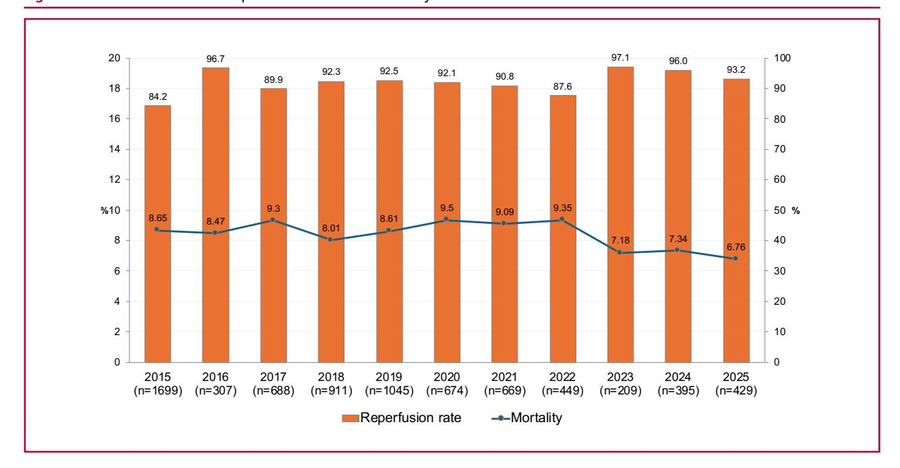
We conducted an exploratory and descriptive analysis to examine changes in reperfusion and mortality from 2015 to 2025. While reperfusion rates remained more or less constant, a slight but non-significant downward trend (p trend = 0.30) in mortality was observed during the last three-year period, despite sustained high reperfusion rates. (Figure 5).
Mortality and Treatment Duration
Patients admitted to a medical facility within 3 hours of symptom onset (66.5%) had a mortality rate of 7.6%, compared with 10.4% among those admitted later (OR 0.71; 95% CI 0.59–0.83; p < 0.001) (Table 9).
Table 9
Mortality by length of hospital stay
| ≤ 3 hours | > 3 hours | Odds Ratio | 95% CI | P |
|---|---|---|---|---|
| 379/5005 (7.57%) | 259/2493 (10.4%) | 0.71 | 0.59 – 0.83 | <0.001 |
| ≤ 6 hours | > 6 hours | |||
| 479/6157 (7.78%) | 159/1341 (11.9%) | 0.63 | 0.52 – 0.76 | <0.001 |
| ≤ 12 hours | > 12 hours | |||
| 572/6907 (8.28%) | 66/591 (11.2%) | 0.72 | 0.55 – 0.94 | 0.016 |
| ≤ 24 hours | > 24 hours | |||
| 607/7281 (8.34%) | 31/217 (14.3%) | 0.55 | 0.28 – 0.80 | 0.002 |
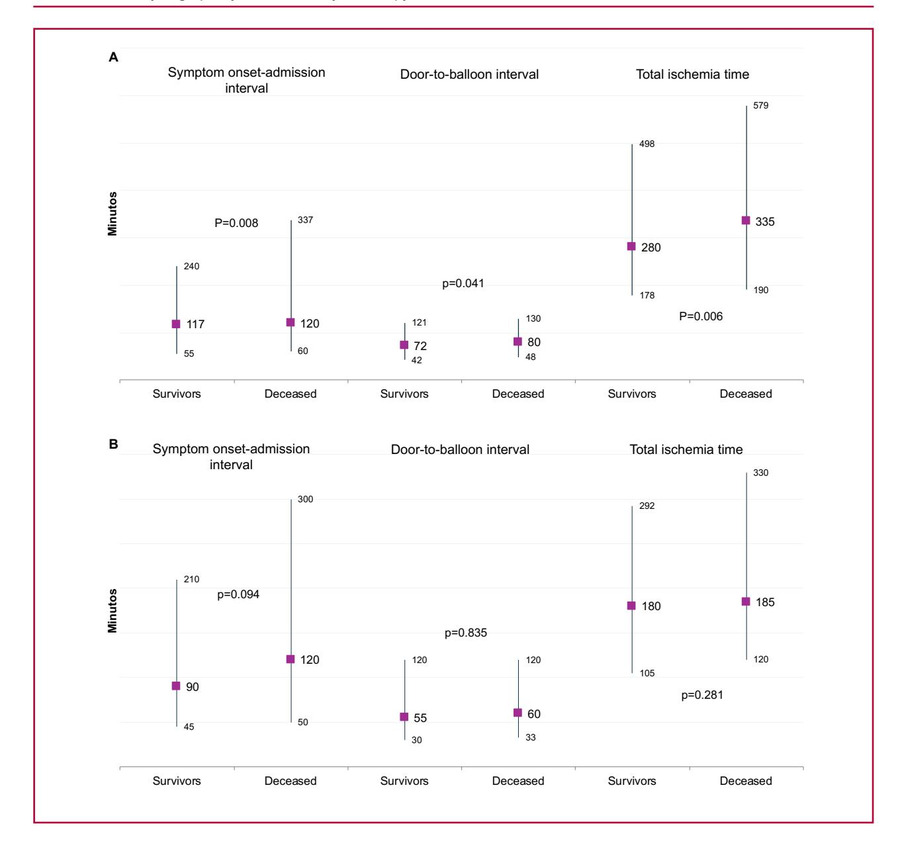
Deceased patients who underwent primary angioplasty had longer time from hospital admission, door-to-balloon time, and total ischemia time than survivors (Figure 6A). No statistically significant differences were detected in patients treated with fibrinolytics, although it was also observed that doorto-needle time and total ischemia time were longer than recommended (Figure 6B).
Fig. 6
Times to admission, to treatment, and total ischemia time, and their relationship to mortality according to the indicated treatment: Primary angioplasty (A) or fibrinolytic therapy (B) (medians and IQR).
Patients who died and received rescue angioplasty had a significantly longer total ischemia time compared with survivors (720.5 minutes [IQR 382–795] versus 545.5 minutes [IQR 525–947]; p=0.005). Patients treated with a pharmacological-invasive strategy had a total ischemia time of 770 minutes (IQR 465– 1128); deceased patients had a longer total ischemia time (915 minutes versus 745 minutes; p=0.445), though this did not reach statistical significance.
Mortality. Multivariate analysis
The independent variables associated with higher mortality were the presence of heart failure, defined as a Killip class greater than I at admission (OR: 10.5; 95% CI 8.66–12.62; p < 0.001), age ≥65 years (OR: 1.90; 95% CI 1.59–2.27; p < 0.001), and having received reperfusion therapy was protective (OR: 0.62; 95% CI 0.47–0.83; p = 0.001).
DISCUSSION
The national STEMI registry (ARGEN-IAM-ST) is, to date, the largest conducted in our country, having enrolled more than 8000 patients over the past 11 years.
The initial phase (2014–2015) had the highest participation, with 247 centers from all Argentine provinces taking part; in some cases, this represented 100% of the centers registered with the National Ministry of Health, with an average participation rate of 22%.(26)
The data obtained during the registry’s initial phase made it possible to map the reality of AMI in Argentina at that time, revealing a reperfusion rate exceeding 80%, high use of primary PCI, and an overall mortality rate of 8.8%.(17)
Barriers to timely and appropriate access to treatment were identified. Although more than 70% of patients sought care within 6 hours of symptom onset, the proportion of patients receiving treatment with door-to-balloon and door-to-needle times in line with recommendations was far from adequate.
Physicians identified treatment delays in more than 60% of cases, primarily attributed to delays in patient presentation and the need to refer patients to another center for angioplasty. This finding was further corroborated by the fact that the window time for angioplasty and thrombolytic therapy was longer in this group.
The registry’s ongoing nature has allowed us to monitor the most important parameters related to care and outcomes for patients treated for AMI at centers in different provinces across Argentina. (17,27)
Although the core group of participating centers has decreased, the registry continues to enroll a significant number of patients annually, enabling analysis and a critical examination of real-world practice.
Reperfusion and Mortality
Over the course of these 11 years, we observed no significant changes in times to reperfusion or overall inhospital mortality compared to what was observed in the initial phase. These data are similar to previously published registries from more selective centers with cardiology residencies (14,23,28), and while they are somewhat higher than those of some international registries, such as the French one (29), they are similar to those of public registries in that country (30) and somewhat lower than those of American registries (31).
In 2020, a study was published comparing mortality rates between the United Kingdom and Sweden in 842 897 patients with acute coronary syndrome, with or without ST-segment elevation, between 2003 and 2013. (32) These data do not reflect the current situation, particularly in the United Kingdom, but they can help us compare certain aspects with our registry. They reported lower rates of revascularization (primary angioplasty or revascularization surgery)—43.8% in the United Kingdom versus 74.9% in Sweden; however, reperfusion achieved with thrombolytics (tPA and/or fibrinolytics) was higher in the United Kingdom (78.9% versus 75.7%; p<0.05). The standardized net probability of death between admission and 1 month was higher in the United Kingdom: 8.0% (95% CI 7.4–8.5) versus 6.7% (95% CI 6.5–6.9) in Sweden. Mortality in the ARGEN-IAM-ST registry is higher, although our population is much younger than that of Sweden and the United Kingdom (61 ± 12 years versus 68.9 ± 12.6 and 65.8 ± 13.6 years, respectively) and the reperfusion rate in our registry is higher (>90%). (19) In turn, mortality varies according to the reperfusion procedures performed.
STEMI is a condition in which survival is timedependent: ideally, the patient should present within 3 hours of symptom onset, and reperfusion therapy should be administered as quickly as possible—either thrombolytic therapy with a door-to-needle time of less than 30 minutes, or primary angioplasty with a door-to-balloon time of less than 90 minutes. In the real world, it is very difficult to meet these time targets. (33)
We have observed that total ischemia time is associated with higher mortality and is significantly longer in transferred patients. (18)
In the registry, 30% of patients present more than 180 minutes after symptom onset, which is associated with higher mortality. Furthermore, the total ischemia time is very prolonged, particularly with regard to reperfusion times, which deviate from the recommendations of clinical practice guidelines. (34-38) An analysis of the temporal variation in two key markers—reperfusion and overall in-hospital mortality—reveals little progress in reversing these outcomes. This mortality rate has remained unchanged over the past 18 years in registries conducted by the SAC and the FAC. (12,17,23,39)
Implications of Referral to Centers with Catheterization Laboratories
Currently, the way to address this complex problem is to focus on prehospital logistics and regionalization, as demonstrated by the Stent Save Life initiative in our country, (40) which achieved a low mortality rate (3.5%) among patients treated within 3 hours of symptom onset. However, overall mortality remains high (7%), similar to that of patients treated with primary angioplasty in our registry (7.49%).
Referral for reperfusion therapy is required in nearly half of all heart attacks, and there are still inadequate response times in the coordination of the heart attack care system. Forty percent of participating centers do not offer primary angioplasty. (17)
Referred patients were less likely to receive reperfusion therapy, and the quality of their treatment was lower, as 20% fewer primary angioplasties were performed. These findings are consistent with the study by Ting et al. (41) from the U.S. National Acute Myocardial Infarction Registry, which included 440 398 patients, in which the authors observed that the delay between the onset of symptoms and hospital presentation was associated with lower use of reperfusion therapies and higher mortality.
The delay in initiating primary angioplasty in patients is well above the recommendations in the guidelines. Patients who received thrombolytic therapy prior to referral also had a door-to-needle time that exceeded the recommended limit (60 minutes).
The observed times show that the difference between access to thrombolysis versus angioplasty in referred patients was 135 or 150 minutes, depending on the measurement criterion—in both cases, a very long delay. It is well established in the literature that after a 2-hour delay from needle to balloon, the benefit of angioplasty is lost. (42-44)
Studies analyzing the strategy of administering thrombolytics at the referral site versus transfer for primary angioplasty showed no benefit for angioplasty when symptom onset was less than 3 hours, but transfer proved beneficial with longer times, particularly regarding the incidence of reinfarction and stroke. (45-47) However, the door-to-balloon times in these studies were very short and very difficult to translate to real-world practice; therefore, based on these data, a large number of patients could benefit from the use of fibrinolytics prior to referral.
In the registry, only 27% of patients received thrombolytic therapy prior to referral. Overall, 5% underwent rescue angioplasty, and only 3.2% received a pharmacologically invasive strategy.
On the other hand, the pharmacologically invasive strategy has proven to be successful and comparable to the outcomes of primary angioplasty, provided that tecneteplase is available and rescue angioplasty is performed on patients who do not meet reperfusion criteria.(48,49) The STREAM study demonstrated a mortality rate of approximately 4.5% with a total ischemia time of 100 minutes for a pharmacologically invasive strategy and 179 minutes for primary angioplasty.(50) In the registry, the total ischemia time for thrombolytic therapy was approximately 180 minutes, and for primary angioplasty, it was 280 minutes for survivors and 335 minutes for those who died. It is evident that the doubled mortality rate in the registry correlates with very prolonged total ischemia times. It is striking that in a country with long distances such as Argentina, the rate of use of the pharmacologically invasive treatment is so low and that it has not been a strategic option. (51,52) Even though mortality among patients receiving the pharmacologically invasive strategy was lower in our registry, its application was limited and the patient group was highly selected. The utility of this strategy in a community setting has not been evaluated in the Argentine context.
Twenty-one percent of patients who received fibrinolytics required rescue angioplasty with a total ischemia time of approximately 9 hours, which explains the high mortality rate compared to the aforementioned randomized studies, and a low mortality rate in patients reperfused with thrombolytics who subsequently underwent angioplasty with a longer total ischemia time (12 hours), but pharmacologically invasive treatment cannot be considered in any way without taking into account those patients who do not achieve reperfusion and require the procedure within less than 2 hours.
The Role of Heart Failure
Patients with heart failure at admission (HFad) in the context of STEMI account for approximately one in every four or five hospitalized patients. These data are similar to those from other international registries with a comparable population; (53-56) however, the rate is lower than in other South American countries. (57) Furthermore, the presence of HFad is associated with older age, and one in four patients was female. This is consistent with other studies, in which a 5- to 10-year increase in age raises the probability of HF by 30%. (58,59) The incidence is also higher in women, likely due to delays in seeking medical care, diagnosis, and implementation of guideline-recommended treatment, as well as lower use of reperfusion strategies. (60) In addition, there are comorbidities associated with patients admitted with heart failure, such as hypertension, (58,61) atrial fibrillation (62), and diabetes mellitus. (63)
The time from symptom onset to admission was slightly shorter but statistically significant in patients without acute coronary syndrome. The median time to consultation was approximately 120 minutes, which is somewhat shorter than in other registries, where more than 60% of patients waited at least 120 minutes, (54) and even with times exceeding 160 minutes, (64) where variables associated with a delay in consultation include advanced age, absence of acute coronary syndrome (ACS), diabetes, and onset of pain in the early morning hours, among others. (54) However, a non-significant increase in door-to-balloon time was observed in the group of patients with ACS. This could reflect the medical team’s preference for the patient to be as stable as possible upon admission to undergo PCI.
As is well known, the reperfusion strategy in STE-MI is imperative regardless of the patients’ hemodynamic status. (65) However, the presence of HF was significantly associated with lower use of any type of reperfusion strategy. This is consistent with other studies in which reperfusion strategies in patients with heart failure and acute coronary syndrome are used to a lesser extent, (24,59) even though they are associated with reduced mortality. (66) No differences were observed between the groups regarding the type of reperfusion (fibrinolytics or primary coronary angioplasty), but differences were noted regarding the success of these procedures, which were more frequent in patients without HF. This could be related to the fact that the most commonly used fibrinolytic agent in Argentina is streptokinase (17) and that the longer door-to-balloon time may have reduced the success of primary angioplasty.
Regarding oral pharmacological therapy, we observed significant differences. The dual antiplatelet therapy strategy was less common in patients with CAD, which could be related to the fact that reperfusion therapy was less common in this group. However, this finding is not supported by previous studies, since dual antiplatelet therapy—regardless of whether patients underwent reperfusion or not—is associated with a significant reduction in mortality.(67) Regarding the use of beta-blockers at admission, although it was more common in the group without CAD, it is noteworthy that one in three patients with CAD still received this type of medication during admission, despite their known increased risk of cardiogenic shock and death, (68) but their use was not associated with increased mortality in the multivariate analysis. On the other hand, the use of renin-angiotensin system inhibitors was less frequent in patients with HF with acute coronary syndrome, which could be related to the lower blood pressure values in this group. Although statin use was high at the time of hospitalization—even higher than in other registries (54)—it was less frequent in patients with acute heart failure. These last two classes of drugs were associated with a significant reduction in mortality in the multivariate analysis.
Finally, mortality in the group with HF was one in every three or four patients, with a nearly 12-fold increased risk compared to those without heart failure in the univariate analysis and more than an 8-fold increased risk in the multivariate analysis. Although HF is one of the strongest predictors of mortality in STEMI,(24,56) the increase observed in this analysis exceeds data from other countries,(24,63) including data from Argentina itself more than 15 years ago, where the mortality rate reported at a specialized cardiovascular care center was 15.6% among patients with STEMI and heart failure.(69) The reperfusion strategy was significantly associated with a reduction in mortality in the multivariate analysis, which continues to highlight the importance of this treatment, which should be attempted in more patients and within the timeframes recommended by the guidelines.
CONCLUSIONS
These data provide a snapshot of the current state of STEMI in Argentina and its evolution over the past 10 years. The reperfusion rate has increased significantly without any change in in-hospital mortality.
Delays in treatment are significant, and there are areas that need improvement. Delays in treatment were observed in more than 60% of cases, particularly regarding patients consultation and referrals to other centers.
These data suggest the need to implement corrective strategies, such as launching medical education programs, adopting supportive health policies, and considering regional characteristics and the on-theground cost-benefit analysis of reperfusion strategies, all of which could help shorten reperfusion times for both thrombolytic therapy and primary angioplasty. Identifying and addressing these barriers could result in a reduction of up to 2 hours in delays.
Improving the quality of care for cardiovascular patients by optimizing adherence to diagnostic and treatment standards can also be achieved through various approaches. One such approach, already documented internationally, (70-73) involves institutions’ self-assessment of their performance levels and the implementation of coordination measures, such as a single phone number for heart attacks, the establishment of protocols, referral and care networks, diagnostic support systems like telemedicine, and other initiatives that can be evaluated at the global or regional level based on identified issues.
There are successful examples of implementing heart attack networks that have been shown to reduce response times and improve mortality rates in Argentina, and this is a viable tool for application in routine clinical practice—especially given that physicians reported delays related to ambulances and emergency department care as significant factors impacting patient care, making it necessary to expand its use as a strategy to improve care for acute myocardial infarction (AMI). (74-77)
Networking will also enable the implementation of initiatives that result in improved quality of care and the development of epidemiological research projects that enhance patient care and outcomes. Ultimately, this involves gaining an in-depth understanding of the problems and adopting measures to improve the quality of care and reduce morbidity and mortality.
Finally, although the registry has methodological weaknesses, it remains the only independent tool open to the scientific community that allows for a discussion of the reality of AMI in Argentina.