
Coronary Angioplasty in Acute Myorcardial Infarction
pp 37-45
DOI:
https://doi.org/10.7775/rac.v63i1.3224Keywords:
Coronary angioplasty , Acute myocardial infarction, Follow-up, ShockAbstract
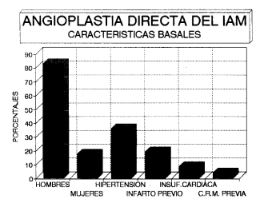
Percutaneous transluminal coronary angioplasty was performed in 168 consecutive patients (139 males, mean age 60.2 years), admitted with an acute myocardial infarction. Time between symptoms on set and procedure was 3.67 hours. Lesions were localized in the anterior descendent 78 (46.4%), right coronary artery 55 (32.7%), circumflex 32 (19%) and venous grafts 3(1.9%). Multivessel lesions were present in 55 patients (32.7%). Conventional angioplasty was performed in 135 cases (80.4%), with perfusion balloon in 20 (11.8%), Rotablator in 6 (3.6%) and stent in 2 (1.2%). Contrapulsation balloon was utilized in 19 patients in shock (11.3%). The procedure was completely successful in 94% of cases, partial success in 2% and failure in 4%. Mean follow-up time was 15 months (3-42 months). In 39.6% of patients, a coronary angiography was performed 3 to 6 months later. Six patients died in cardiogenic shock (3.6%). Ventricular fibrillation was present in 3(1.8%),non-occlusive dissection in 6 (3.5%) and acute occlusion in 5(3%). Among the 162 survivors, 38 (23.5%) had re-ischemia, 23 of which (14.2%) were redilated and 15 (9.2%) send to surgery. In the follow-up 8 cases (4.9%) had a new myocardial infarction and there were 4 more deaths (2.5%).ConclusionsIn this series, direct angioplasty in acute myocardial infarction had a high re-perfusion rate (94%) with an acceptable mortality in those with cardiogenic shock (31.6%), revascularization procedures in the follow-up period (23.5%), late mortality (2.5%) and re-infarction (4.9%).
Downloads
Published
Issue
Section
License
Copyright (c) 2026 Argentine Journal of Cardiology

This work is licensed under a Creative Commons Attribution-NonCommercial-ShareAlike 4.0 International License.





