
MAPEC-Salta Project: A New Care Model for Hypertensive Patients in Primary Health Care in the City of Salta, Argentina
pp. 197-202
DOI:
https://doi.org/10.7775/rac.es.v88.i3.17460Keywords:
Hypertension - Primary Health Care - Patient Care Management - Health Planning - Chronic Care ModelAbstract
Background: Hypertension (HT) is the first cause of worldwide cardiovascular morbidity and mortality. However, it is often a poorly controlled disease, mainly because health care systems are oriented to the attention of acute diseases. The Argentine Ministry of Health proposed a new model for the care of hypertensive patients called MAPEC, based on the Chronic Care Model.
Objective: The aim of this study was to evaluate the impact of MAPEC implementation to improve blood pressure (BP) control, changes in lifestyle, disease knowledge and treatment adherence in hypertensive patients treated in three primary health care centers of the City of Salta, Argentina.
Methods: Blood pressure was measured with a digital blood pressure monitor and the Batalla and Morisky-Green-Levine tests were used to evaluate disease knowledge and adherence to treatment, respectively.
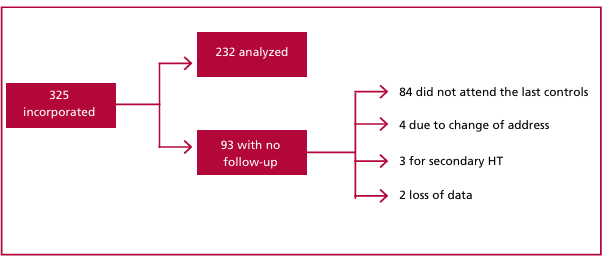
Results: The study included 232 patients. After model implementation, significant differences (p<0.0001) were found in blood pressure control, disease understanding, treatment adherence and changes in hygienic-dietary measures. There was a decrease in mean BP with a reduction of 12.97 (95% CI: 9.52-16.42) mm Hg and 6.93 (95% CI: 4.70-9.16) mm Hg in systolic and diastolic BP, respectively.
Conclusions: There was evident improvement in the analyzed health parameters after MAPEC implementation. This model can be easily adapted to primary health care centers at a low cost. In addition, it agrees with the 25×25 WHO targets to reduce 25% cardiovascular premature deaths by 2025.
Downloads
Published
Issue
Section
License
Copyright (c) 2020 Argentine Journal of Cardiology

This work is licensed under a Creative Commons Attribution-NonCommercial-ShareAlike 4.0 International License.





