Multi-step Web-based Training: the Road to Stress Echo 2020
pp 385-390
DOI:
https://doi.org/10.7775/rac.es.v86.i6.14286Keywords:
Stress Echocardiography, Web-based Platform, Quality ControlAbstract
Background: A standardized training platform helps to achieve reading harmonization in stress echocardiography (SE) beyond regional wall motion abnormalities (RWMA).
Objective: To harmonize SE reading criteria across different laboratories.
Methods: The core lab prepared for readers an obligatory 2-hour web-based learning module for 5 parameters: RWMA; B-lines; coronary flow velocity reserve (CFVR) based on peak diastolic flow velocity on the left anterior descending coronary artery; left ventricular contractile reserve (LVCR, from raw measurements of end-systolic volume, ESV); systolic arterial pulmonary pressure
(from raw measurements of peak tricuspid regurgitant jet velocity, TRV). The quality control test consisted of 20 cases selected by the coordinating center. The a priori determined pass threshold was 18/20 (≥90%) with intra-class correlation coefficient between the coordinating lab and the peripheral reader >0.90.
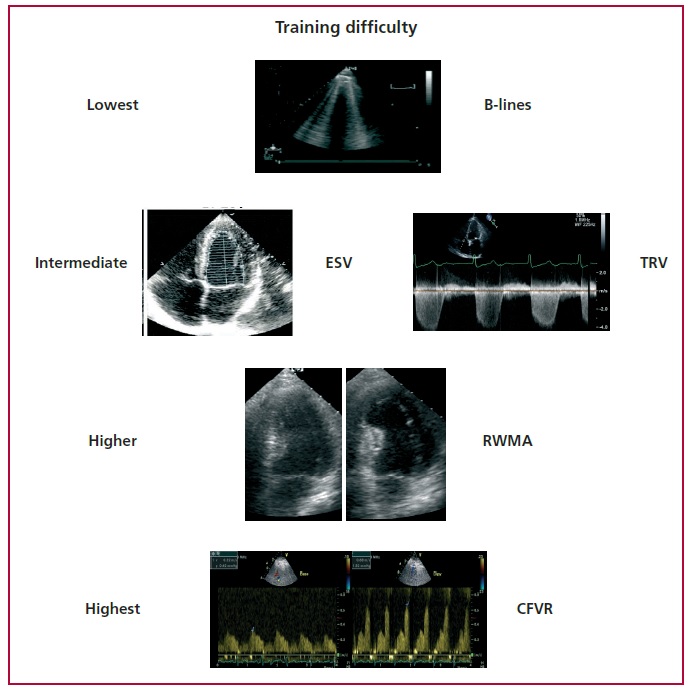
Results: The certification was completed by 84 readers for RWMA, 65 for B-lines, 30 for CFVR, 24 for ESV and 20 for TRV. The mean reading time per attempt was shorter for TRV (9±4 min), CFVR (13±6 min) and B-lines (17±3 min), intermediate for ESV (24±7min), and longer for RWMA (29±12 min, p <0.01). The success rate of the first attempt was higher for CFVR (85%), intermediate for TRV (75%) and B-lines (43 %), lower for ESV (35%) and lowest for RWMA (28 %, p <0.01).
Conclusions: A web-based learning platform improves image interpretation skills without need for expensive imaging equipment or a patient to scan. The road to certification is longer for RWMA, intermediate for ESV, and shorter for TRV, CFVR and B-lines.
Downloads
Published
Issue
Section
License
Copyright (c) 2025 Argentine Journal of Cardiology

This work is licensed under a Creative Commons Attribution-NonCommercial-ShareAlike 4.0 International License.