
Ventricular-Arterial Coupling in Severe Aortic Stenosis: Relationship with Symptoms and Heart Failure
pp. 304-309
DOI:
https://doi.org/10.7775/rac.es.v84.i4.8714Keywords:
Aortic Stenosis, Echocardiography, Ventricular-arterial CouplingAbstract
Background: Left ventricular function is determined by ventricular-arterial coupling via effective arterial elastance (Ea) and left ventricular end-systolic elastance (Ees). In aortic stenosis, the characteristics of the vascular system may influence left ventricular function, particularly in patients with symptoms or heart failure.
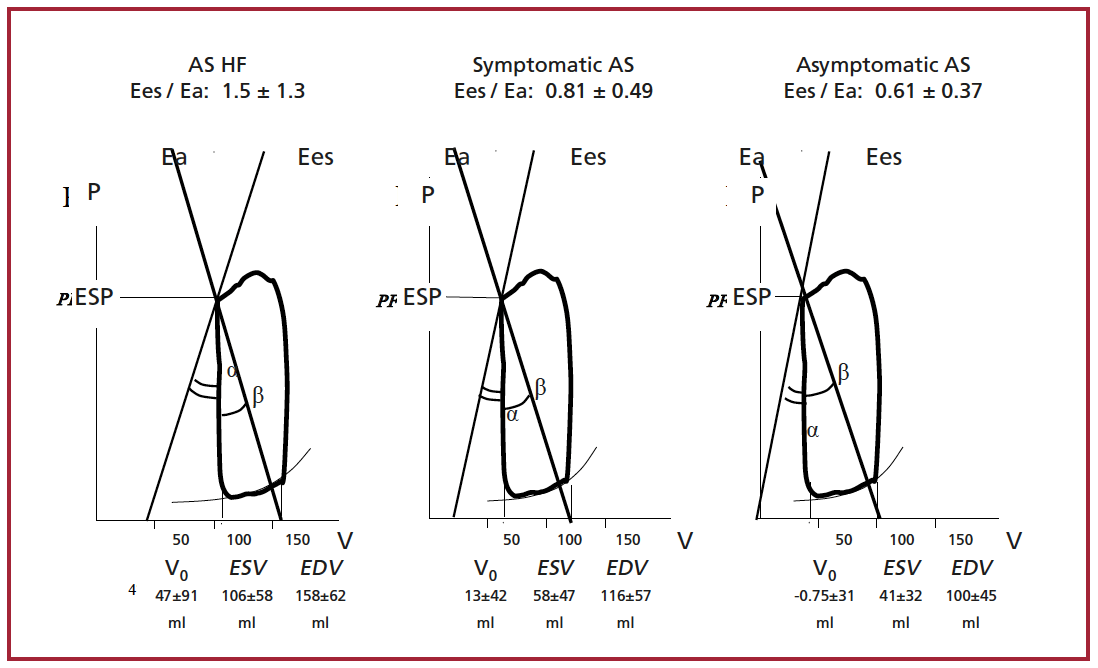
Objective: The aim of the present study was to evaluate ventricular-arterial coupling using the Ea/Ees ratio in patients with severe aortic stenosis and its relationship with symptoms and heart failure.
Methods: The cohort consisted of 136 patients aged 69±11 years, with severe aortic stenosis (aortic valve area <1 cm2). Ea and Ees were estimated noninvasively. Patients were divided into three groups: heart failure (n=48), symptomatic (n=45) and asymptomatic (n=43).
Results: Ea was increased in patients with heart failure while Ees was significantly reduced in patients with symptoms and with heart failure compared with asymptomatic ones. The Ea/Ees ratio was significantly higher in symptomatic and heart failure patients compared with asymptomatic patients (1.5±1.3 and 0.81±0.49 vs. 0.61±0.37; p<0.01). There were no significant differences in aortic valve area among groups.
Conclusions: The Ea/Ees ratio was increased in patients with symptoms or heart failure due to increased Ea and reduced Ees. The development of symptoms or heart failure in severe aortic stenosis seems to be related with the characteristics of the vascular system, irrespectively of aortic stenosis severity.
Downloads
Published
Issue
Section
License
Copyright (c) 2025 Argentine Journal of Cardiology

This work is licensed under a Creative Commons Attribution-NonCommercial-ShareAlike 4.0 International License.





