Effects of Endurance Training on Myocardial Hypertrophy and Ventricular Function in a Transgenic Mouse Model with Sympathetic Hyperactivity
pp. 501-505
DOI:
https://doi.org/10.7775/rac.es.v83.i6.7093Keywords:
Exercise Tolerance, Physical Conditioning, Animal, Sympathetic Nervous System, IsoproterenolAbstract
Background: Previous studies have shown that endurance training (ET) reduces inotropic, chronotropic, and lusitropic reserve in normal mice.
Objective: The aim of this study was to evaluate the effect of endurance training on the inotropic and chronotropic reserve of transgenic mice with sympathetic hyperactivity induced by overexpression of the cardiac GSα protein.
Methods: Endurance training consisted in two daily 90-min sessions, 6 days/week, during 4 weeks. Four experimental groups were formed: (1) non-transgenic sedentary (nonTG Sed); (2) transgenic sedentary (TG Sed); (3) nonTG+ET; and (4) TG+ET.
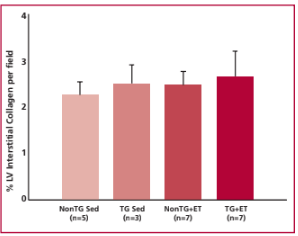
Results: Endurance training induced myocardial hypertrophy [left ventricular weight (g)/tibial length (mm)] from 5.3±0.3 and 5.5±0.2 in nonTG Sed and TG Sed to 6.8±0.1 and 6.8±0.3 in nonTG+ET and TG+ET, respectively (p<0.05 nonTG Sed vs. nonTG+ET and TG Sed vs. TG+ET). Isoproterenol administration (56 ng/kg) increased +dP/dtmax by 63±10% in nonTG Sed (p<0.05 vs. baseline), 34±2% in TG Sed (p<0.05 vs. baseline and p<0.05 vs. nonTG Sed), 36±7% in nonTG+ET (p<0.05 vs. baseline), and 36±7% in TG+ET (p<0.05 vs. baseline). Heart rate (beats/min) increased from 301±15 to 528±37 in nonTG Sed (p<0.05 vs. baseline), from 519±57 to 603±41 in TG Sed, from 300±16 to 375±20 in nonTG+ET (p<0.05 vs. baseline), and from 484±18 to 515±21 in TG+ET. Interstitial collagen was similar among groups.
Conclusions: These results suggest that endurance training decreases inotropic and chronotropic reserve without generating structural changes associated with pathological hypertrophy. The presence of sympathetic hyperactivity does not modify this response.
Downloads
Published
Issue
Section
License
Copyright (c) 2025 Argentine Journal of Cardiology

This work is licensed under a Creative Commons Attribution-NonCommercial-ShareAlike 4.0 International License.