
Stress-Induced Cardiomyopathy (Tako-Tsubo syndrome). A New Physiopathological Hypothesis
pp. 43-45
DOI:
https://doi.org/10.7775/rac.v77i1.2106Keywords:
Takotsubo Cardiomyopathy, Stress, PsychologicalAbstract
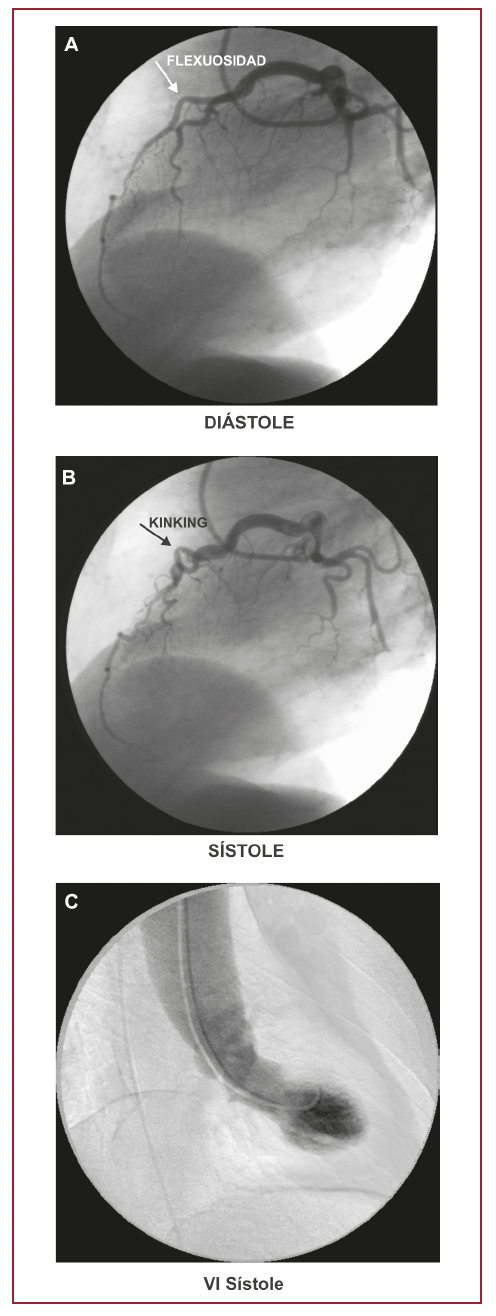
Stress-related cardiomyopathy is a condition that occurs mostly in post-menopausal women under some form of physical or psychological stress who present an acute coronary event mimicking an acute myocardial infarction. The diagnosis is made on the basis of coronary arteries with absence of significant obstruction and transient left ventricular apical dyskinesia or akinesia. Tortuous coronary arteries are also frequent in post-menopausal women and this type of arteries is prone to bending and producing kinkings. During an adrenergic crisis, these kinkings may cause coronary artery obstruction, reducing the blood flow during the entire systole and part of the diastole. Reduced blood flow, together with catecholamine effects, might be responsible for the focal and transient left ventricular dysfunction typical of Tako-Tsubo syndrome. Undoubtedly, this hypothesis should be confirmed by future studies focused on exploring this anatomical pattern.
Downloads
Published
Issue
Section
License
Copyright (c) 2025 Argentine Journal of Cardiology

This work is licensed under a Creative Commons Attribution-NonCommercial-ShareAlike 4.0 International License.





