Inflammation in acute myocardial infarction, impact on ventricular remodeling, and new therapeutic targets
pp. 343-348
DOI:
https://doi.org/10.7775/rac.v91i5.238Abstract
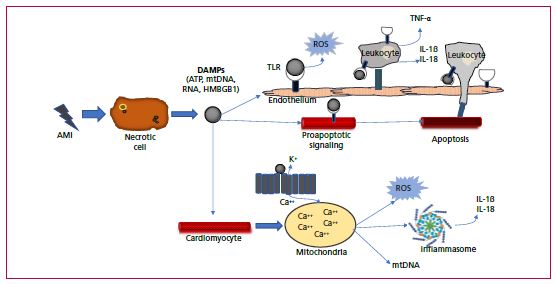
Ischemic heart disease is the most common cause of heart failure, with a high incidence of heart failure despite early revas cularization and neurohormonal modulation. In the acute myocardial infarction setting, necrotized cardiomyocytes induce activation of the innate immune system, increasing the levels of inflammatory cells to help remove dead cells and initiate a corrective response, which allows for proper scar tissue formation.
A prolonged or expanded inflammatory response after infarction contributes to adverse ventricular remodeling and develop ment of heart failure.
Understanding the inflammatory mechanisms that emerge as a result of myocardial infarction and their impact on adverse remodeling that leads to an increased number of major adverse cardiovascular events makes it possible to understand inflam mation as a therapy target.
Key words: Acute Myocardial Infarction - Inflammation - Ventricular Remodeling
How to cite this article
Moreno A, Rodríguez Granillo AM, Pérez de ña Hoz R. Inflammation in Acute Myocardial Infarction, Impact on Ventricular Remodeling, and New Therapeutic Targets. Rev Argent Cardiol 2023;91:343-8. http://dx.doi.org/10.7775/rac.v91.i5.20669
Downloads
Published
Issue
Section
License
Copyright (c) 2023 Argentine Journal of Cardiology

This work is licensed under a Creative Commons Attribution-NonCommercial-ShareAlike 4.0 International License.