Prevalence of Hypotension in Elderly Patients with Hypertension Undergoing Antihypertensive Treatment
pp. 276-282
DOI:
https://doi.org/10.7775/rac.es.v94.i4.21007Keywords:
Hypotension, Isolated systolic hypertension, 24-hour blood pressure monitoring, Antihypertensive treatment, Ederly hypertensive patientsAbstract
Background: Hypotension due to antihypertensive treatment is one of the undesirable effects that can occur in elderly patients with hypertension.
Objective: The aim of this study was to assess the presence and frequency of hypotension—whether symptomatic or not—in patients over 65 years of age receiving antihypertensive therapy using 24-hour ambulatory blood pressure monitoring (ABPM).
Methods: We retrospectively analyzed ABPM data from 12 177 patients, resulting in a final sample size of 1457 studies, all conducted in subjects with isolated systolic hypertension. Fifty-nine percent were women, and mean age was 73.1 years. They were divided into three age groups: 65 to 69, 70 to 79, and over 80 years of age. Hypotension was considered present in four circumstances: daytime systolic blood pressure or 24-hour systolic blood pressure < 100 mmHg, or daytime mean blood pressure or 24-hour mean blood pressure < 73 mmHg, respectively.
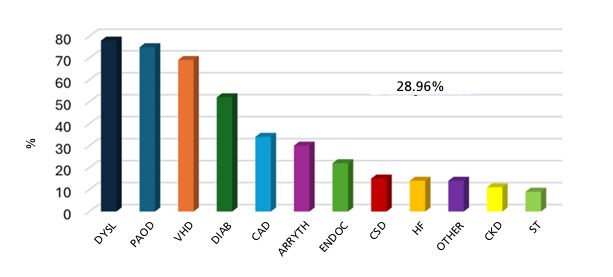
Results: Among the 1457 studies analyzed, 57 reported hypotension, and in only 9 of them—15.8%—patients experienced symptoms such as dizziness and weakness. None reported syncope or falls. The mean (standard deviation) of blood pressure recordings for these 57 patients were: daytime mean systolic blood pressure: 98.9 (3.74) mmHg; 24-hour mean systolic blood pressure: 99.8 (3.44) mmHg; daytime mean blood pressure: 68.8 (4.08) mmHg; and 24-hour mean blood pressure: 73.6 (3.62) mmHg. Among the 1457 patients, 2.1 medications per patient were required for blood pressure control, with a predominance of combination therapy, whereas among the 57 patients who presented with hypotension, 43.9% were treated with a single medication and 56.1% with combination therapy. In 28.9% of cases, patients had associated comorbidities.
Conclusions: Our results demonstrated a low prevalence of hypotension in these elderly patients receiving antihypertensive treatment, as well as good blood pressure control.
Downloads
Published
Issue
Section
License
Copyright (c) 2026 Argentine Journal of Cardiology

This work is licensed under a Creative Commons Attribution-NonCommercial-ShareAlike 4.0 International License.