Relationship Between Glycemic Control, Glucose-Lowering Pharmacological Treatment and Cardiovascular Risk in Older Adults with Type 2 Diabetes: Analysis of a Cohort In Rosario
pp. 378-383
DOI:
https://doi.org/10.7775/rac.es.v94.i5.21055Keywords:
Older Adults, Type 2 diabetes, Cardiovascular risk , Glycemic controlAbstract
Background: The global acceleration of population aging is reflected in Argentina, with projections anticipating a progressive rise in the burden of chronic diseases. The prevalence of type 2 diabetes mellitus (T2DM) increases with age; older adults constitute the largest and most complex group in terms of clinical management. Planning care strategies requires a regional characterization of this population.
Objective: The aim of this study is to describe the association between glycemic control, glucose-lowering drug therapy, and cardiovascular risk in older adults with T2DM.
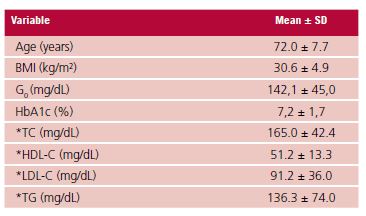
Methods: We conducted a descriptive, non-interventional study of 350 functionally independent patients ≥ 60 years with T2DM, using patient laboratory records of Policlínico PAMI I in Rosario between January and December 2023. The clinical characteristics, comorbidities, glucose-lowering treatment, and glycemic control as measured by glycated hemoglobin (HbA1c) were analyzed, as well as the atherogenic indices derived from the lipid profile. Missing data were handled using multiple imputation by fully conditional specification.
Results: Two or more comorbidities were identified in 65.1% of patients, and only 7.1% had no associated comorbidities. The most common comorbidities were overweight/obesity (92.3%), hypertension (83.4%), dyslipidemia (36.6%), and cardiovascular disease (16.0%); 54.7% were receiving combination drug therapy, with metformin being the most commonly used drug (72.8%), while glucagon-like peptide-1 (GLP-1) receptor agonists and sodium-glucose cotransporter 2 (SGLT2) inhibitors accounted for only 5.7% of treatments. Adequate glycemic control was achieved by 63.2% (HbA1c <7.5%), yet 15% had HbA1c ≤6%, consistent with possible overtreatment. More than half of the patients with adequate glycemic control had abnormal atherogenic indices.
Conclusion: Most patients in this cohort of older adults with T2DM achieved traditional glycemic control targets; however, utilization of hypoglycemic drugs with proven cardiovascular benefits was low, and a significant proportion of patients presented potential overtreatment and persistent residual cardiovascular risk as evidenced by abnormal atherogenic indices even in the presence of good glycemic control. These findings support a comprehensive assessment combining glycemic control and residual cardiovascular risk reduction.
Downloads
Published
Issue
Section
License
Copyright (c) 2026 Argentine Journal of Cardiology

This work is licensed under a Creative Commons Attribution-NonCommercial-ShareAlike 4.0 International License.