
Reduction of Contrast Utilization by Application of the Dynamic Coronary Roadmap During Coronary Angioplasty
pp. 358-363
DOI:
https://doi.org/10.7775/rac.es.v93.i5.20941Keywords:
Angioplastia coronaria transluminal percutánea, Nefropat´´ia inducida por contraste, Exposición a medios de contraste, Dynamic Coronary Roadmap, Radiación ionizante, Seguridad del pacienteAbstract
Background: Contrast-induced nephropathy is a relevant complication of percutaneous coronary intervention (PCI), especially in patients with comorbidities. The Dynamic Coronary Roadmap (DCR) is an innovative tool that optimizes intravascular navigation and may reduce contrast consumption without compromising procedural safety.
Objectives: To evaluate the impact of DCR use on contrast volume reduction during PCI in a center in Argentina.
Methods: A single-center retrospective study was conducted including 480 patients who underwent PCI between January and December 2024. Two groups were compared: PCI guided by DCR (n=201) and PCI guided by conventional angiography (n=279). Total contrast volume, radiation exposure, and changes in serum creatinine were assessed.
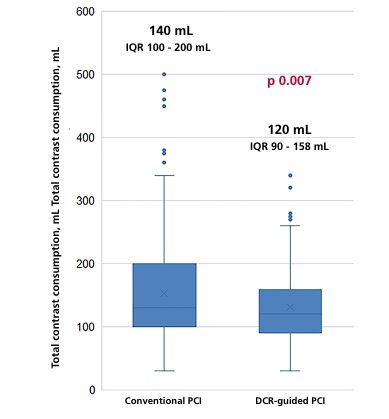
Results: The DCR group showed a significant reduction in contrast volume compared with the control group (120 ml [IQR 90–158] vs. 140 ml [100–200]; p=0.007). After adjustment for age, sex, and procedural complexity, the mean reduction was 37.3 ml per patient (95% CI –50.5 to –24.3 ml; p<0.0001). No significant differences were observed in post-procedural renal function or radiation exposure.
Conclusions: The use of DCR during PCI was associated with a significant reduction in contrast volume without affecting procedural safety. These findings, relevant in the regional context, may positively impact patient safety and cost optimization in interventional cardiology.
Downloads
Published
Issue
Section
License
Copyright (c) 2025 Argentine Journal of Cardiology

This work is licensed under a Creative Commons Attribution-NonCommercial-ShareAlike 4.0 International License.





