
Is Cold Pressor Test Useful to Predict Cardiovascular Events in Patients with Not Documented Coronary Artery Disease?
pp 417-424
DOI:
https://doi.org/10.7775/rac.v78i5.1955Keywords:
Ischemic Heart Disease, Endothelial Dysfunction, Cold Pressor Test, PrognosisAbstract
Background
Endothelial dysfunction is recognized as the initial step in the development of ischemic heart disease. Yet, the lack of appropriate methods to recognize in the preclinical stage of the disease the patients at risk of cardiovascular events emphasizes the necessity of developing additional diagnostic tools for its early identification. Endothelial function in coronary arteries was evaluated with myocardial perfusion SPECT imaging and cold pressor test.
Objective
To determine the prevalence of positive cold pressor test in 511 patients with not documented ischemic heart disease, of associated coronary risk factors in those with a positive test, and to analyze the incidence of cardiovascular events after 50-month follow-up.
Material and Methods
The study was conducted at a department of nuclear medicine. A total of 511 patients underwent myocardial perfusion SPECT imaging; exercise images showed uniform tracer uptake. There were no patients with a history of myocardial revascularization or previous myocardial infarction. Cold pressor test was performed between two and five days after. A positive test was defined by the presence of decreased tracer uptake in any segment that was not present in rest or exercise images; the absence of tracer
uptake changes defined a negative test. Mean follow-up was 24±13 months and was achieved in 95% of patients. The incidence of cardiac mortality, myocardial infarction, stroke and revascularization procedures was analyzed.
Results
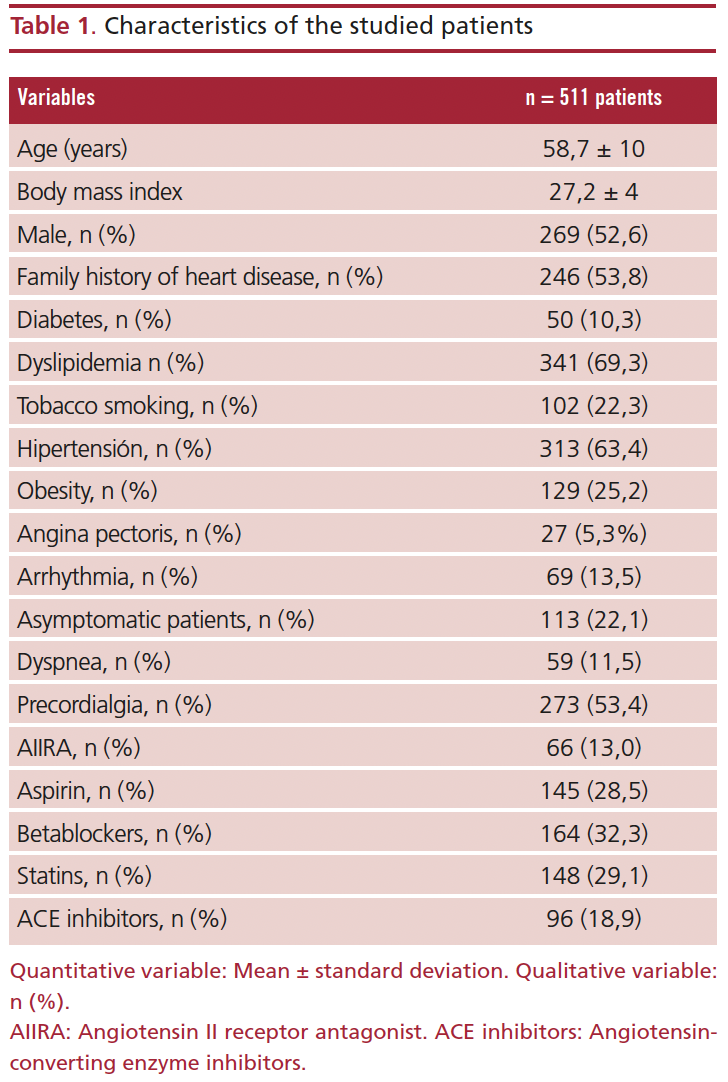
Mean age was 58.7 years; 52.6% were men. Prevalence of risk factors: diabetes 10.3%, dyslipemia 69.3%, hypertension 63.4%, obesity 25.2%, and smoking habits 22.3%. The test was positive in 32.4% of patients; 3.9% of patients did not tolerate cold stimulus and 5.3% presented vagal symptoms. Event-free survival at 50 months was 95.6% and 86.6% in patients with negative and positive test, respectively (p<0.01).
Conclusions
The prevalence of positive cold pressure test in patients with not demonstrated ischemic heart disease was 32.4%. Male gender and body mass index were associated with a positive test. Cold pressure test might identify patients at risk of cardiovascular events.
Downloads
Published
Issue
Section
License
Copyright (c) 2025 Argentine Journal of Cardiology

This work is licensed under a Creative Commons Attribution-NonCommercial-ShareAlike 4.0 International License.





