Allopurinol and Its Potential Cardioprotective Effect: A Narrative Review
pp. 323-334
DOI:
https://doi.org/10.7775/rac.es.v94.i4.21028Keywords:
Allopurinol, Xanthine oxidase inhibition, Cardiovascular protection, Oxidative stress, Endothelial dysfunction, Heart failureAbstract
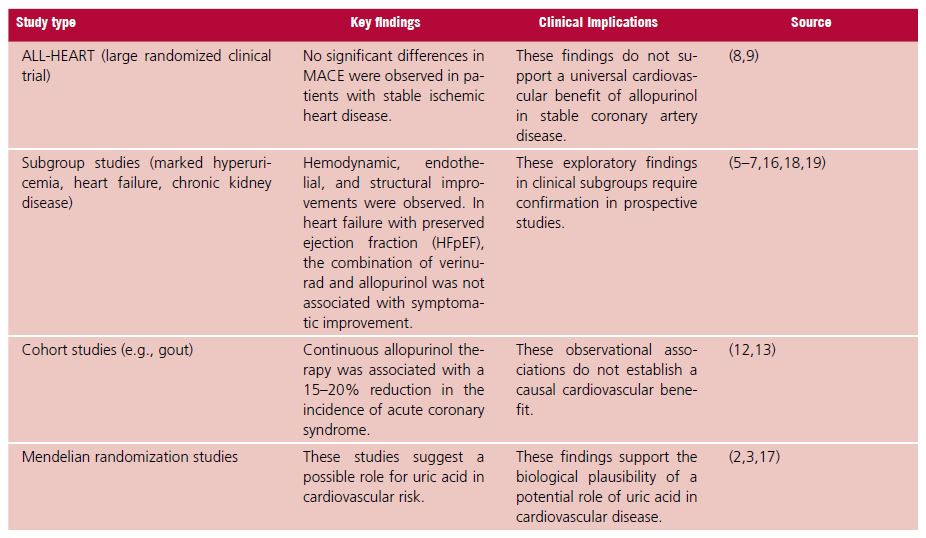
Allopurinol, a xanthine oxidase inhibitor traditionally used for gout and hyperuricemia, has emerged as a potential cardioprotective agent. Experimental and clinical studies suggest that its benefits extend beyond uric acid reduction and include modulation of oxidative stress, endothelial dysfunction, and myocardial remodeling. Although large, randomized trials in the general population have yielded neutral results, some exploratory analyses and studies in specific clinical subgroups have reported potentially favorable findings in patients with hyperuricemia, chronic kidney disease, or heart failure.
The cardiovascular efficacy of allopurinol appears to depend on the patient’s metabolic phenotype and oxidative-inflammatory burden. Its role extends beyond urate reduction, acting as a redox and metabolic modulator. Further stratified clinical trials are needed to confirm its benefits in high-risk cardiorenometabolic populations
Downloads
Published
Issue
Section
License
Copyright (c) 2026 Argentine Journal of Cardiology

This work is licensed under a Creative Commons Attribution-NonCommercial-ShareAlike 4.0 International License.