
Endovascular Stent-Graft Repair for the Occlusion of the Infrarenal Aorta
pp 200-204
DOI:
https://doi.org/10.7775/rac.v76i3.2407Keywords:
Abdominal Aorta, Arterial Occlusive Diseases, StentAbstract
Background
Total occlusion of the abdominal aorta is an infrequent condition mostly affecting middle-aged women with a history of smoking and dyslipemia. Angioplasty of the iliac arteries was the starting point of endovascular treatment of the aorta, progressing from balloon angioplasty to stent-grafts insertion.
Objective
To report the immediate results and medium-term follow-up outcomes in patients with occlusion of the abdominal aorta treated with endovascular stent-graft repair.
Material and Methods
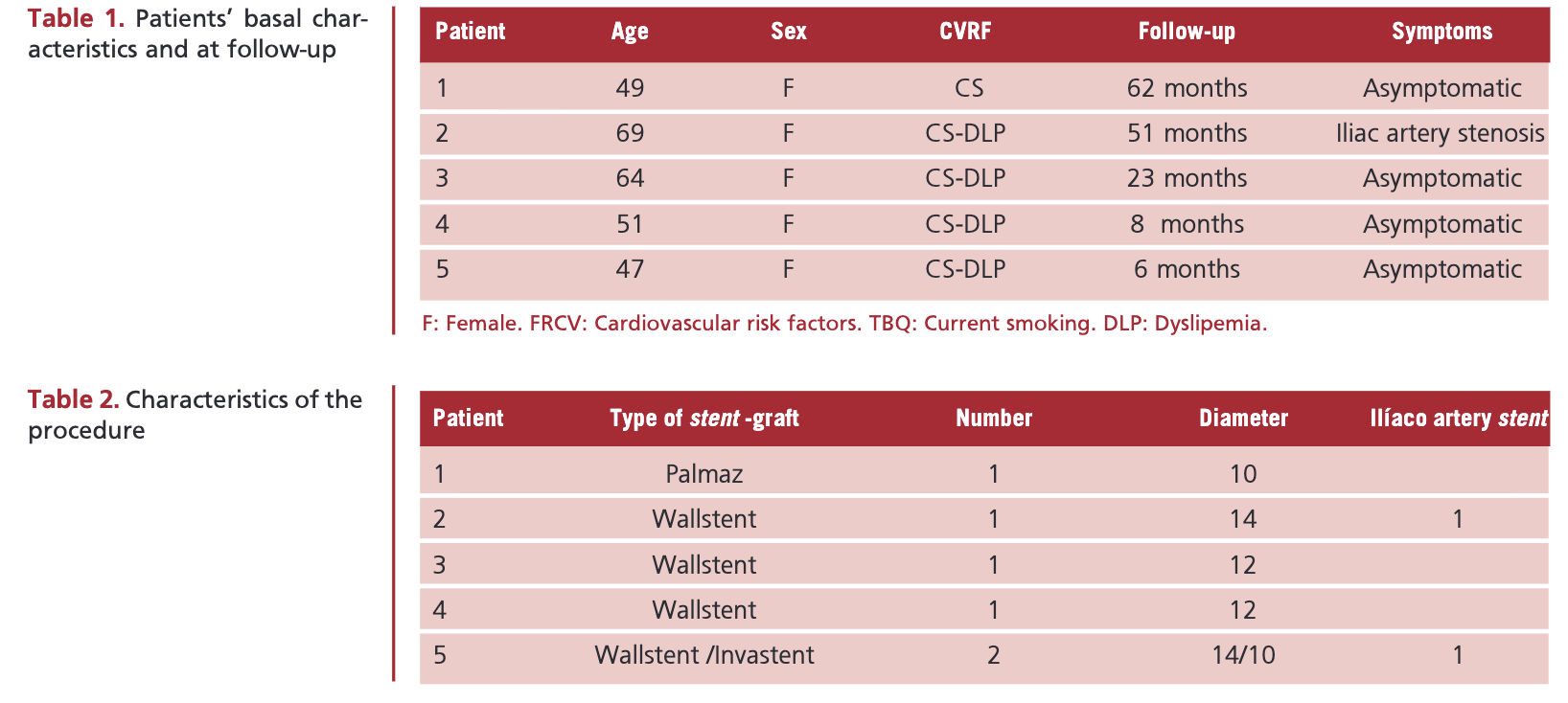
From October 1998 to May 2005, 5 female patients with total occlusion of the abdominal aorta with severe symptoms of claudication of both lower limbs were treated at our Department. The procedures were performed under local anesthesia and sedation. Whooley or hydrophilic Glidewire guide wires were inserted through the femoral artery. After abdominal angiography was performed, guide wires were removed and the balloon was introduced through an Amplatz guide wire; dilatations were done before the stent-graft was placed. Patients with iliac lesions were also treated with stent-grafts. The ankle-brachial index was 0.71. Mean hospital stay was 2 days. Patients were discharged with clopidogrel and aspirin as antiplatelet therapy, except for the first patient who received ticlopidine and aspirin. Clinical assessment and color echo-Doppler were performed at week 1, and at 1, 6 and 12 months of follow-up.
Results
All patients were women, with a history of smoking and dyslipemia. All the procedures were technically successful, and the ankle brachial index improved to 0.98. One patient presented an inguinal hematoma at the puncture site, with favorable outcomes. During late follow-up, ultrasound showed 100% aortic patency, and one patient presented a stenosis of a segment of the iliac artery that had not been covered by the stent.
Conclusions
In this group of patients with total occlusion of the abdominal aorta, balloon angioplasty with stent-graft placement has (...)
Downloads
Published
Issue
Section
License
Copyright (c) 2025 Argentine Journal of Cardiology

This work is licensed under a Creative Commons Attribution-NonCommercial-ShareAlike 4.0 International License.





