
Diagnostic Accuracy of Mortality on a Population of Heart Transplant Patients
pp 292-294
DOI:
https://doi.org/10.7775/2qgdb211Keywords:
Heart Transplant, -Necropsy, DiagnosisAbstract
Background
Although morbidity and mortality rates in heart transplant have been extensively analyzed, most mortality studies and mortality registries in heart transplant patients are based on clinical data. Isolated communications of necropsies performed in heart transplant patients have been reported.
Objective
To determine the importance of pathological studies for the diagnosis of the causes of death in a heart transplant program.
Material and Methods
Between January 1990 and January 2005 all dead transplant patients were included. The final diagnosis of the cause of death was confirmed with necropsy or biopsy of a solid organ. The causes of death assessed were early graft failure, cellular rejection, graft vascular disease, neoplasms and others.
Results
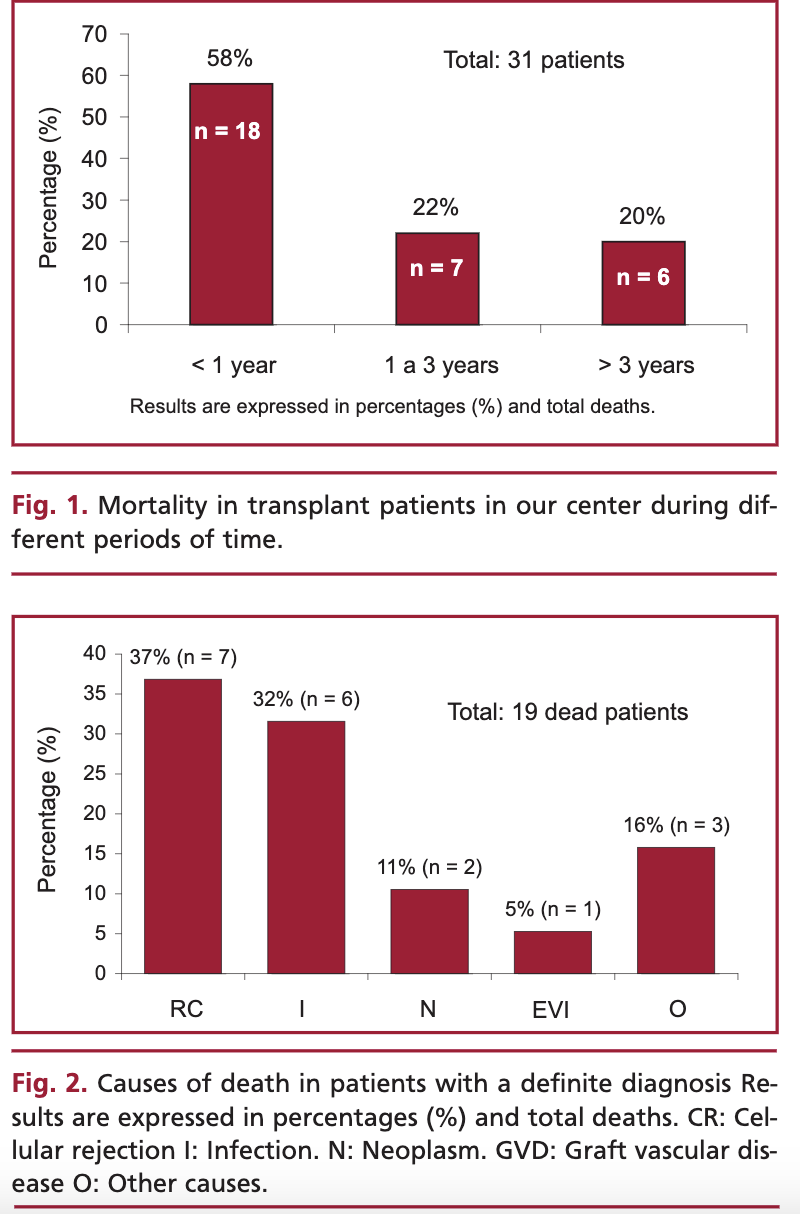
Seventy three patients underwent heart transplantation during the study period. Thirty one patients died. The cause of death was certified in 61% of cases by 12 necropsies and 7 solid organ biopsies. Cellular rejection greater than grade III was the most frequent cause of death. Histopathology studies differed from the clinically suspected cause of death in 12.9% of cases.
Conclusion
Clinical and pathological information derived from post mortem studies is an indicator of the reality of our practice and constitutes an underlying mainstay for understanding transplant patients and for their further management; in this sense, performing necropsies is of vital importance for these patients.
Downloads
Published
Issue
Section
License
Copyright (c) 2026 Argentine Journal of Cardiology

This work is licensed under a Creative Commons Attribution-NonCommercial-ShareAlike 4.0 International License.





