Anti-autonomic receptors, IGG presence and cardiac rhythm disorders in Type 2 Diabetes Mellitus
pp 384-390
DOI:
https://doi.org/10.7775/rac.v70i5.2664Keywords:
Type 2 diabetes mellitus, antiautonomic receptor inmunoglobulins , microalbuminuria, heart rate variability alterations, cardiac arrhythmiasAbstract
Introduction
Type 2 diabetes mellitus (DM2) is frequently associated with potentially severe cardiovascular disorders. These manifestations are not only related to myocardial ischemia, but also to functional myocardial compromise and rhythm alterations.
Objectives
To study the association between DM2 and a) anti-autonomic receptors (anti-RA) IgG ; b) heart rate variability alterations (VFC); c) severe ventricular arrhythmias (A V) and microalbuminuria (MAU).
Material and methods
Seventy-three patients were included (with no sex or age differences), 25 of them were recruited as a control group, and 48 with DM2 (age: 46.6±5.1 vs 44.5±3.4 y.o., p > 0.05). Anti-RA lgG presence was determined by ELISA essay while VFC and ventricular arrhythmias (AV) were detected by a 24-hour Holter study, microalbuminuria (MAU) by RIA essay; total cholesterol, triglycerides, and HDL cholesterol were measured; and routine analysis were also included. All data were submitted to statistical analysis: chi2, Student's t test, Spearman's rank correlation coefficient, multiple logistical regression analysis.
Results
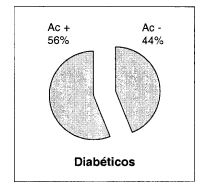
The presence of anti-RA lgG was more frequent in diabetic patients (56.3% vs 8.0%, p > 0.001). Moreover, VFC alterations and ventricular arrhythmias were also more frequent in DM2 patients (54.2% vs 4.0%, p > 0.001; and 43.7% vs 4.0%, p > 0.001 respectively). lgG antibodies against RA were associated to DM2 (rS = 0.48, p > 0.001), with ventricular arrhythmias (rS = 0.26, p > 0.03) and positive MAU (rS = 0.38, p > 0.001). AV were also associated with MAU (rS = 0.44, p > 0.001). According to the multivariate test anti-RA lgG presence was associated with DM2 (OR = 11.7, p = 0.03) and there was a borderline association to positive MAU (OR = 5.3, p = 0.02).
Conclusions
Anti-RAigGs presence, VFC alterations and AV seem to be more frequent in DM2 patients. The clinical consequences of these findings should be explored in future prospective studies, because they could contribute to cardiovascular morbimortality in DM2.
Downloads
Published
Issue
Section
License
Copyright (c) 2026 Argentine Journal of Cardiology

This work is licensed under a Creative Commons Attribution-NonCommercial-ShareAlike 4.0 International License.