
Nuclear magnetic resonance in cardiology. Cardiac MR
pp 210-216
DOI:
https://doi.org/10.7775/rac.v71i3.2906Keywords:
MRI, Cardiac MRI, Heart, MR, Cardiac ImagingAbstract
As a new gold standard for mass, volume and flow, the magnetic resonance imaging (MRI) is probably the most rapidly evolving technique in the cardiovascular diagnosis.An integrated cardiac MRI examination allows the evaluation of morphology, global and regional function, coronary anatomy, perfusion, viability and myocardial metabolism, all of them in only one diagnostic test and in a totally noninvasive manner.The surgeons can obtain relevant information on all aspects of diseases of the heart and great vessels, which include anatomical details and relationships with the greatest field of view, and may help to reduce the number of invasive procedures required in pre and postoperative evaluation.However, despite these excellent advantages the present clinical utilization of MRI is still too often restricted to few pathologies or case studies in which other techniques fail to identify the cardiac or cardiovascular abnormalities. If magnetic resonance is an excellent method for diagnosing so many different cardiac conditions, why is so little it used in routine cardiac practice? Cardiologists are still not very familiar whit the huge possibilities or cardiovascular MRI utilities.Our intention is to give a comprehensive survey of many of the clinical applications of this challenger technique in the study of the heart and great vessels.Those who continue to ignore this important and mature imaging technique will rightly fail to benefit.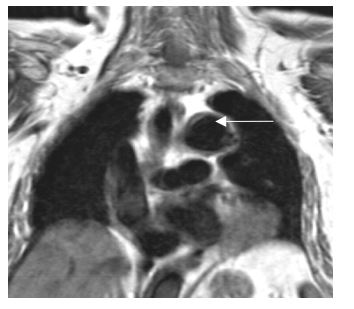
Downloads
Published
2026-02-23
Issue
Section
REVIEW ARTICLES
License
Copyright (c) 2026 Argentine Journal of Cardiology

This work is licensed under a Creative Commons Attribution-NonCommercial-ShareAlike 4.0 International License.





