Corrected QT Interval Variability as a Predictor of Malignant Ventricular Arrhythmia Due to Anthracyclines in Breast Cancer
pp. 361-367
DOI:
https://doi.org/10.7775/rac.es.v94.i5.21043Keywords:
Ventricular arrhythmia, Anthracyclines, Cardiotoxicity, Breast cancer, Risk factors, QT intervalAbstract
Background: One of the most common cardiotoxic effects of anthracyclines is malignant ventricular arrhythmia. Corrected QT interval (QTc) variability has emerged as a potential electrocardiographic predictor.
Objective: The aim of this study was to determine the influence of QTc variability on the onset of malignant ventricular arrhythmia in patients with breast cancer treated with anthracyclines.
Methods: A prospective, longitudinal, observational study was conducted at Lenin Hospital in Holguín (Cuba) from June 2023 to June 2025. A total of 150 patients with breast cancer treated with anthracyclines were included. QTc was measured at baseline,
after each treatment cycle, and at 3 and 12 months. Descriptive and inferential statistics were used, including multivariate logistic
regression.
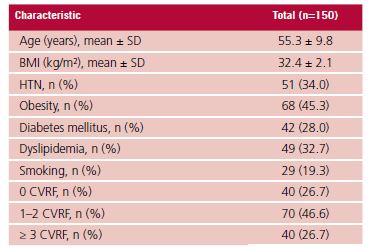
Results: Mean age was 55.3±9.8 years, and mean body mass index (BMI) was 32.4±2.1 kg/m². Eighty-one percent of patients had at least one cardiovascular risk factor. QTc showed a progressive increase from baseline (418±19 ms) to post-cycle 4 (463±26 ms). The intra-subject QTc variability (coefficient of variation) was 15.3±4.2%. There was a significant positive correlation between the number of risk factors and QTc prolongation (ρ = 0.55; r² = 0.30; p <0.001). Obesity (β = 24.7 ms) and hypertension (β = 15.2 ms) were the strongest independent predictors of QTc prolongation. Twenty-five patients (16.7%) developed malignant ventricular arrhythmia during follow-up. In the multivariate analysis, QT variability was independently associated with malignant ventricular arrhythmia (adjusted OR = 5.90; 95% CI 2.41 14.46; p <0.001).
Conclusions: QTc interval variability during anthracycline therapy is an early and independent marker of risk for malignant ventricular arrhythmia. Obesity and hypertension enhance this effect. Serial QTc interval assessment and variability calculation could improve risk stratification in cardiooncology.
Downloads
Published
Issue
Section
License
Copyright (c) 2026 Argentine Journal of Cardiology

This work is licensed under a Creative Commons Attribution-NonCommercial-ShareAlike 4.0 International License.