Aortic Valve Replacement Via Partial Sternotomy
pp 239-248
DOI:
https://doi.org/10.7775/rac.v68i2.3111Keywords:
Aortic valve, Replacement, Partial sternotomyAbstract
Background
Standard median sternotomy is the current approach to the aortic valve. During the past 3 years, there has been increasing interest in the development of minimal incisions for aortic valve replacement.
Objective
Our purposes were to evaluate early and late (12-months after the procedure) results of aortic valve replacement via proximal partial sternotomy, to compare it with a complete sternotomized historical group and to compare our results with those reported in the scientific literature published else-where.
Material and method
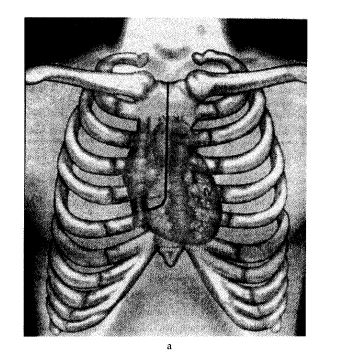
Forty-five patients undergoing isolated aortic valve replacement via proximal partial "J" sternotomy into the right fourth intercostal space were prospectively studied. Controls (n = 50), were patients with complete median sternotomy to perform the valve replacement. Scientific papers analysis was based on Medline data banks and by manual search.
Results
In patients submitted to partial sternotomy, mean length of incision was 10.8 ± 1.02 cm and cross-clamp was 58.5 ± 12.07 min (longer than in controls);operative mortality was 2.4%. The main technical problem with this approach was an excessive distance to the valve ring (20% of the patients), with a conversion rate to complete sternotomy of 6.6%. No statistical significant differences between groups were found in morbidity and mortality rates until 30 days. One-year survival, including operative mortality, in group with ministernotomy was 79%,while in the control group it was 89% (log rank x'=1.541, p = NS).
Conclusion
Partial sternotomy is an alternative less-invasive technique for isolated aortic valve replacement inpatients with flat chest and no kinked aorta.Though early results were similar to those employ-ing the conventional approach, a more strict selection of patients will be necessary to reduce late complications and mortality.
Downloads
Published
Issue
Section
License
Copyright (c) 2026 Argentine Journal of Cardiology

This work is licensed under a Creative Commons Attribution-NonCommercial-ShareAlike 4.0 International License.