
Chronic Chagasic myocarditis and ventricular tachycardia. Ten-year follow-up
pp 401-407
DOI:
https://doi.org/10.7775/rac.v60i4.3319Abstract
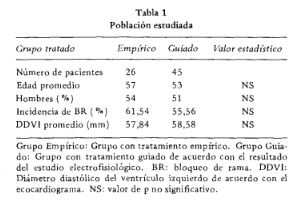
The use of electrophysiological tests in the selection of treatment for patients with ventricular tachycardia and Chagas' disease was evaluated after ten year follow-up. Seventy one patients with chronic chagasic myocarditis presenting episodes of ventricular tachycardia were studied. A group of 45 patients were subjected to programmed ventricular stimulation. Sustained ventricular tachycardia was induced in 18 of them (40 %, group A), while in 17 of the patients (37,78 %, group B) a non-sustained tachyarrhythmia was provoked. In 10 (22.22 %) it was not possible to induce ventricular tachycardia. Each patient received, on average 2.72 antiarrhythmic drugs, including mexiletine, flecainide and propafenone. At least one drug proved efficacious in 13 of the patients from group A; two died (15.3 %, non-sudden death) during follow-up. Eight patients from group B didn't recesive antiarrhythmic treatment owing to the fact that they were undergoing asymptomatic non-sustained ventricular tachycardia; none of them died. The remaining 24 patients were treated with amiodarone: seven died (29.1 %), four suddenly. A second group of 26 patients were not subjected to stimulation test. They were treated empirically with amiodarone alone or associated with mexiletine. Seven deaths (26.9 %) were registered during follow-up (three of them were sudden) (p < 0.05 in ten years and NS in five years). Considerable incidence of sustained ventricular tachycardia was observed in patients with apical motility disorders (68 %). Survival was shorter in patients presenting a diastolic ventricular diameter exceeding 60 mm. The results of this trial show that treatment with programmed stimulation has improved survival in this population, but only in 13 out of 45 cases (28.8 %) it was possible to select specific treatment using this technique. Therefore our proposal is to begin with amiodarone after the electrophysiologic test, resorting to the procedure described in case of ineffectiveness or intolerance to this drug.
Downloads
Published
Issue
Section
License
Copyright (c) 2026 Argentine Journal of Cardiology

This work is licensed under a Creative Commons Attribution-NonCommercial-ShareAlike 4.0 International License.





