
Prevalence of Hyperkalemia in a Cohort of Patients with Heart Failure with Reduced EjectionFraction in a Specialized Unit
pp. 141-145
DOI:
https://doi.org/10.7775/rac.es.v94.i2.21001Keywords:
Hyperkalemia, Heart failure, Renin-angiotensin-aldosterone systemAbstract
Background: Hyperkalemia is a common condition in patients with heart failure (HF), impacting treatment and prognosis.
However, its prevalence and risk factors in our region are not clearly defined.
Objective: The aim of the study was to determine the prevalence of hyperkalemia in a specialized HF unit and its association
with clinical and pharmacological variables.
Methods: An observational, analytical, and retrospective study was conducted including 693 patients with heart failure with reduced ejection fraction (HFrEF) treated at the Multidisciplinary Heart Failure Unit (UMIC) of a university hospital between 2018 and 2022. Hyperkalemia was defined as serum potassium > 5.0 mEq/L and classified according to tis level,
as mild (>5.0–<5.5 mEq/L), moderate (5.5–6.0 mEq/L), or severe (>6.0 mEq/L). Chi-square and Mann-Whitney tests were used to assess associations.
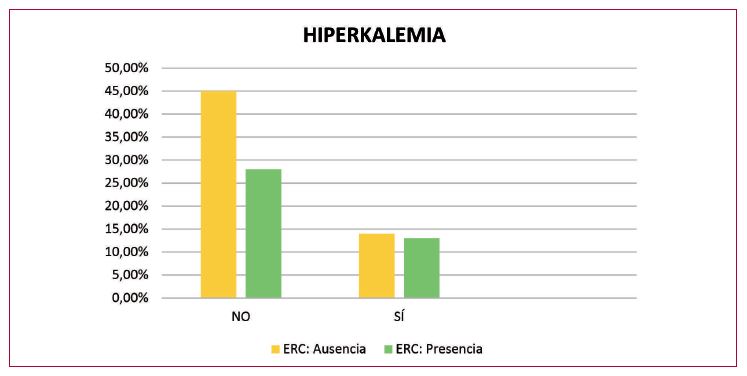
Results: The prevalence of hyperkalemia was 27%, with a predominance of mild cases (85%). A significant association was found with chronic kidney disease (CKD), but not with diabetes. No significant relationship was either found with the use of disease-modifying drugs, including renin-angiotensin-aldosterone system inhibitors.
Conclusions: The prevalence of hyperkalemia in this cohort is high and is primarily associated with CKD. The absence of an association with disease-modifying treatments reinforces the importance of continuing these therapies, given their role in improving morbidity and mortality in HFrEF.
Downloads
Published
Issue
Section
License
Copyright (c) 2026 Argentine Journal of Cardiology

This work is licensed under a Creative Commons Attribution-NonCommercial-ShareAlike 4.0 International License.





