
Catecholaminergic Polymorphic Ventricular Tachycardia: Clinical Assessment and Genetic Analysis in Two Families
pp. 443-448
DOI:
https://doi.org/10.7775/rac.v70i6.3529Keywords:
syncope, sudden death, ventricular tachycardia , geneticsAbstract
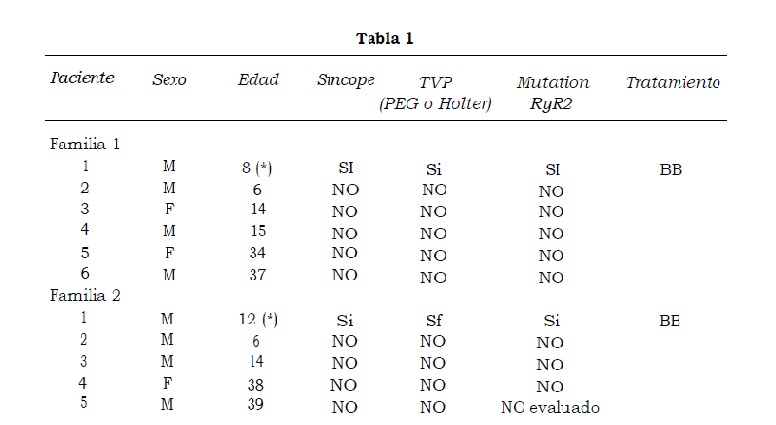
Polymorphic ventricular tachycardia and ventricular fibrillation are infrequent arrhythmias in structurally normal hearts. However, they have high morbidity and mortality associated (syncope and/or sudden death) if they are not properly diagnosed and treated. Here we show the results of the clinical evaluation and genetic analysis performed in 11 subjects from two different families: 2 patients with syncope and stress-induced polymorphic ventricular tachycardia and 9 asymptomatic relatives. Clinical evaluation, 12-lead electrocardiogram, chest X-ray, 24-hour Holter monitoring and exercise stress test were carried out in all the subjects. Genetic analysis was performed in 10 of them. Both patients with syncope and stress-induced polymorphic ventricular tachycardia were boys who had had recurrent syncopes during the past 2 years. They had no cardiac structural abnormalities and the QTc interval was normal. Bigeminal, frequent, ventricular premature contractions, couples and polymorphic ventricular tachycardia were discovered during exercise on 24-hour Holter monitoring. Exercise stress test also induced polymorphic ventricular tachycardia. Genetic analysis showed a mutation in the cardiac ryanodine receptor gene (RyR2). The 9 asymptomatic relatives assessed had a structurally normal heart and no ventricular arrhythmias in 24-hour Holter monitoring and exercise stress test.Genetic analysis performed in 8 of them showed no mutations in RyR2. Beta blockers successfully avoided or reduced the frequency of syncopal episodes and prevented mortality due to sudden death during 40 months of follow-up in the first patient and 14 months of follow-up in the second one. Catecholaminergic polymorphic ventricular tachycardia should be considered inpatients with stress-induced syncope, in absence of cardiac abnormalities and normal QTc interval.
Downloads
Published
Issue
Section
License
Copyright (c) 2026 Argentine Journal of Cardiology

This work is licensed under a Creative Commons Attribution-NonCommercial-ShareAlike 4.0 International License.





