Myoblast Transplantation for Cardiac Repair. Results of a Three Year Follow-up
pp. 304-307
DOI:
https://doi.org/10.7775/rac.v74i4.4194Keywords:
Myoblasts, Cell transplantation, Congestive heart failureAbstract
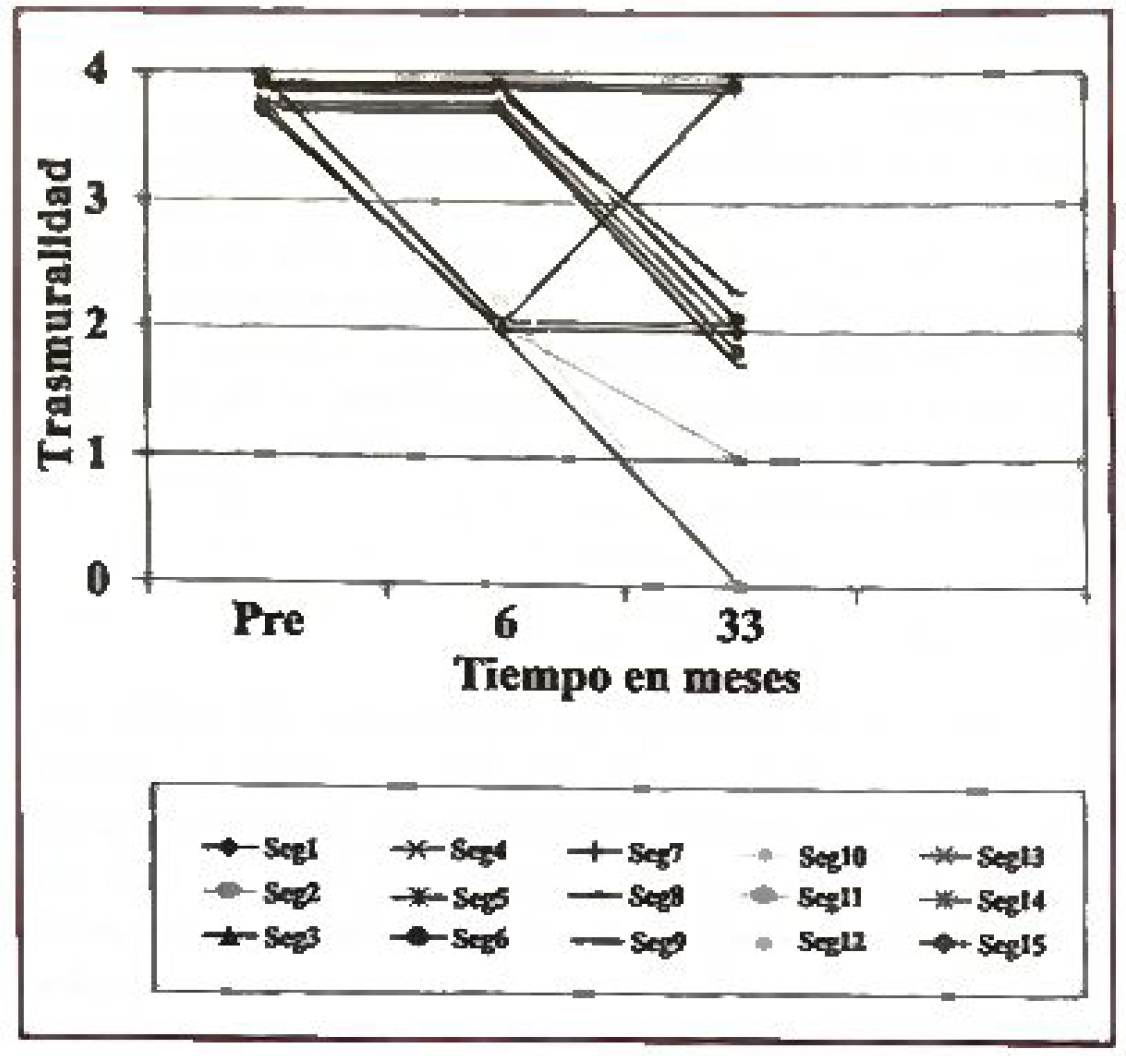
This study was performed as a follow-up of one of the first reports published in the world literature regarding the clinical implant of cells with myoblasts (previously reported in this journal). A total of 68 evaluable segments were analyzed and categorized in 4 groups: transmural infarction, non transmural infarction, ischemic or normal. In 4 patients who survived after 33 ± 6.05 months, there was a frank decrease in the number of segments with transmural scars, and an increase in the number of non-transmural and ischemic segments. The number of segments with transmural involvement decreased from 15 to 3, i.e., an 80% reduction (p=0.0005). A comprehensive assessment of non-transmural segments showed that although the overall number of such segments increased from 7 to 10, segments which were reported preoperatively as non-transmural scars decreased from 7 to 2, i.e., 72%. The overall increase in segments with non-transmural scars may be explained either by profession of the disease or by segments with transmural scars which have improved to non-transmural involvement due to a reversal in the fibrotic process.
Downloads
Published
Issue
Section
License
Copyright (c) 2026 Argentine Journal of Cardiology

This work is licensed under a Creative Commons Attribution-NonCommercial-ShareAlike 4.0 International License.