
Systematic Application of an Algorithm for Lipid Management in Cardiovascular High-Risk Patients. Impact on Lipid Goals
pp. 425-431
DOI:
https://doi.org/10.7775/rac.es.v88.i5.19021Keywords:
Acute Coronary Syndrome – Angioplasty - Cardiac Surgical Procedures - Cholesterol, LDL - AlgorithmsAbstract
Objective: The aim of this study was to analyze the indicated lipid-lowering therapy and verify the achievement of the recommended lipid goals during hospitalization and early follow-up, after the systematic application of a lipid management algorithm based on current recommendations.
Methods: Patients hospitalized for acute coronary syndrome or programmed revascularization surgery were prospectively included in the study. A lipid management algorithm, including; 1) early indication of high-intensity statins during hospitalization and 2)early follow-up (6 and 12-week controls), was systematically applied. The therapy indicated was based on position documents of the Argentine Society of Cardiology. Achievement of LDL-C goals (<70 mg/dl) at 6 and 12 weeks was analyzed.
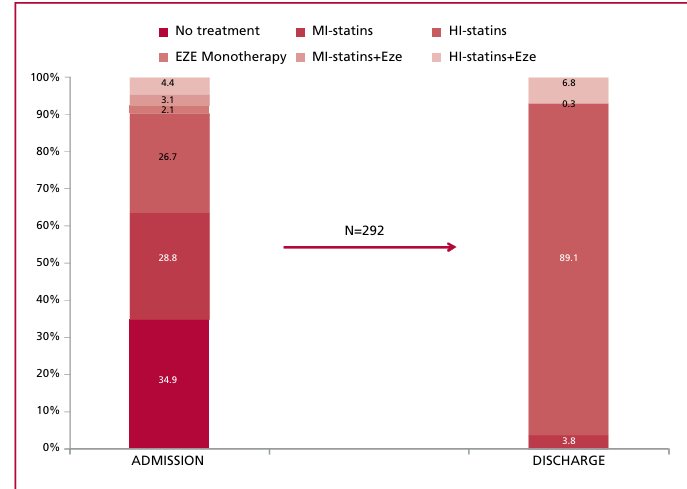
Results: A total of 292 patients were prescribed statins (high-intensity in 95.9% of cases) at hospital discharge. At 6 weeks, 62.5% reached the LDL-C goal. The therapeutic plan was modified in 36.3% of patients (increased dose of statins in 19.7% and addition of ezetimibe in 67.7%). At 12 weeks, 69.1% of the subgroup which had not fulfilled the goal at 6 weeks, attained the lipid target. A PCSK9 inhibitor (PCSK9i) was indicated in 7 patients. Overall, 88.4% of patients achieved the LDL-C goal at 12 weeks.
Conclusion: Many cardiovascular high-risk patients reached LDL-C goals at 12 weeks with the systematic application of a guideline-based algorithm. The indication of a PCSK9i was reserved for a reduced group of patients.
Downloads
Published
Issue
Section
License
Copyright (c) 2020 Argentine Journal of Cardiology

This work is licensed under a Creative Commons Attribution-NonCommercial-ShareAlike 4.0 International License.





