
Association Between Plasma Aldosterone and Sleep Apneas in Arterial Hypertension
pp. 322-328
DOI:
https://doi.org/10.7775/rac.es.v88.i4.17720Keywords:
Hypertension - Aldosterone - Sleep Apnea SyndromesAbstract
Background: Hypertension and obstructive sleep apneas and hypopneas are highly prevalent, frequently associated diseases, mainly in patients with resistant hypertension. In these patients, aldosterone levels correlate with obstructive sleep apnea severity and its blockade reduces seriousness. It has been reported that obstructive sleep apnea could intensify aldosterone secretion and this could be one of the mechanisms that increase blood pressure. However, there is little evidence demonstrating its relationship with the severity of obstructive sleep apnea in the population with suspected hypertension.
Objective: The aim of this study was to establish the association between plasma aldosterone and obstructive sleep apnea in patients with suspected hypertension without pharmacological treatment.
Methods: This was a prospective, descriptive observational study. Hypertension was diagnosed by ambulatory monitoring of blood pressure. The clinical suspicion of obstructive sleep apnea was evaluated by self-administered home respiratory polygraphy and se verity was defined according to the apnea-hypopnea index per registry hour. Plasma aldosterone was assessed from a morning blood sample in the same evaluation session.
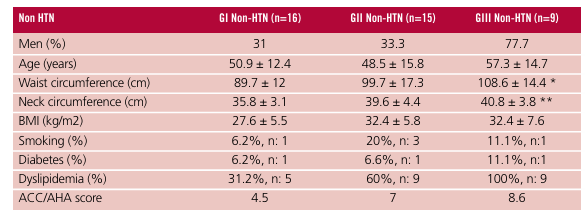
Results: A total of 109 patients were included in the study. Baseline aldosterone was higher in patients with obstructive sleep apnea independently of whether they were or not hypertensive (p <0.05). A stepwise aldosterone increase was found as obstructive sleep apnea was more severe in normotensive patients (p <0.05), while in the hypertensive group, the same pattern was found, but without significant differences.
Conclusion: A proportional increase in aldosterone, blood glucose and cardiovascular risk was found with increased sleep apnea severity.
Downloads
Published
Issue
Section
License
Copyright (c) 2020 Argentine Journal of Cardiology

This work is licensed under a Creative Commons Attribution-NonCommercial-ShareAlike 4.0 International License.





