
Contributions of Exercise Stress Testing in the Octogenarian Population
pp. 229-232
DOI:
https://doi.org/10.7775/rac.es.v88.i3.17282Keywords:
Exercise Test - Risk Factors - Cardiovascular Diseases – AgedAbstract
Background: The octogenarian population has substantially increased due to higher life expectancy and quality of life. In Argentina, there is scarce information on this group of patients.
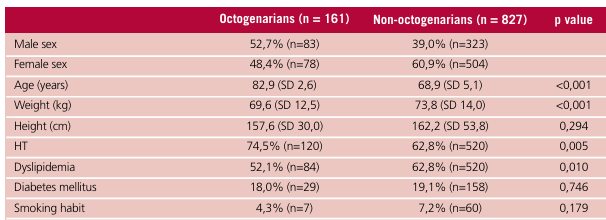
Methods: A cross-sectional, descriptive and comparative study was conducted comparing an octogenarian population with a non octogenarian population consisting of elderly patients between 60 and 79 years of age. Cardiovascular risk factors, pharmacological treatment, reasons for performing/requesting an exercise stress test, test findings and reasons for test termination were evaluated.
Results: A total of 161 octogenarians were included in the study (mean age 82.98 years) and 94% had at least one cardiovascular risk factor. The most common requests for exercise stress testing were to certify physical fitness or in the setting of a check-up examination. We noticed some expected differences between both populations. Octogenarians were receiving more pharmacological treatment compared with non-octogenarians. There were no significant findings or complications during the test.
Conclusion: In octogenarians, exercise stress testing constitutes a valuable tool that provides useful information without complications. Probably, the subjective nature in the evaluation of dyspnea is the reason to request exercise stress testing.
Published
Issue
Section
License
Copyright (c) 2020 Argentine Journal of Cardiology

This work is licensed under a Creative Commons Attribution-NonCommercial-ShareAlike 4.0 International License.





