Evaluation of Clinical Management and Follow-up of Patients with Severe Myocardial Ischemia Detected by Gated-SPECT
pp. 263-269
DOI:
https://doi.org/10.7775/rac.es.v94.i4.21025Keywords:
Myocardial perfusion, Gated-SPECT, Ischemic burden, Coronary artery diseaseAbstract
Background: Ischemic heart disease (IHD) is one of the leading causes of death and disability. Many studies have shown that patients with angina and severe myocardial ischemia, as evidenced by functional studies, have an unfavorable clinical course, with a higher risk of cardiovascular events and mortality.
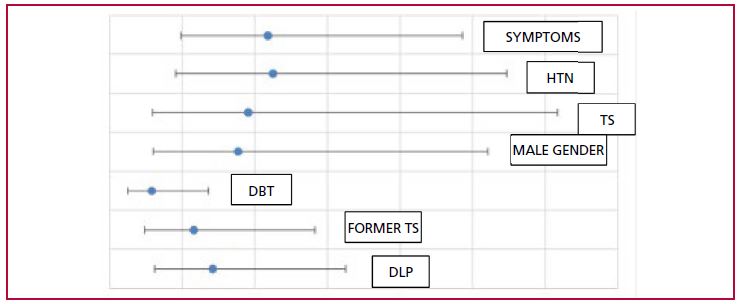
Objectives: The primary aim of this study was to analyze the management adopted by treating physicians (invasive vs. conservative) in patients with a left ventricular mass ischemic burden (IB) ≥10% on a gated-SPECT myocardial perfusion study, and to explore whether higher ischemia values (15% cutoff point) significantly influence this decision. The secondary goal was to identify clinical and/or functional variables associated with the decision to implement an initial invasive strategy and to compare the incidence of cardiovascular events (acute myocardial infarction, unstable angina, rehospitalization due to cardiovascular causes, heart failure, arrhythmias, and cardiovascular death) between patients treated medically and those undergoing revascularization during long term follow-up.
Methods: A retrospective, observational, single-center study was conducted including consecutive patients referred for a gated SPECT myocardial perfusion study (n=142) between January 2021 and December 2024.Patients with an IB ≥10% were selected and divided into two cohorts: 1) IB ≥ 16% (n=50, 32.2%) and 2) IB between 10 to 15% (n=92, 64.8%)
Results: The proportion of patients managed with an initial invasive strategy was higher in the group with IB ≥16% (84% vs. 68.4%, p=0.044). Major cardiovascular events occurred in 16 patients (11.4%); 9 (9.8%) had an IB between 10–15% and 7 (14%) in the group with IB ≥16%. Among all patients who experienced events, 11 (68.5%) had previously undergone revascularization: 9 via PCI (81%) and 2 via CABG (18%). The mean time between revascularization and the event was 8.3 months (range: 1 day–21 months), with 5 events occurring within the first month after the procedure.
Conclusion: The presence of severe myocardial ischemia with a left ventricular mass IB ≥ 16% was associated with a higher indication for coronary angiography and revascularization. The incidence of major events during follow-up was low, limiting the ability to draw prognostic conclusions and highlighting the need for additional studies with a larger number of patients and longer follow-up.
Downloads
Published
Issue
Section
License
Copyright (c) 2026 Argentine Journal of Cardiology

This work is licensed under a Creative Commons Attribution-NonCommercial-ShareAlike 4.0 International License.