
Platypnea-orthodeoxia Syndrome, a Hidden Cause of Dyspnea?
DOI:
https://doi.org/10.7775/rac.es.v80.i5.1575Keywords:
Echocardiography, transesophageal, Dyspnea, Foramen ovale, patent, Endovascular proceduresAbstract
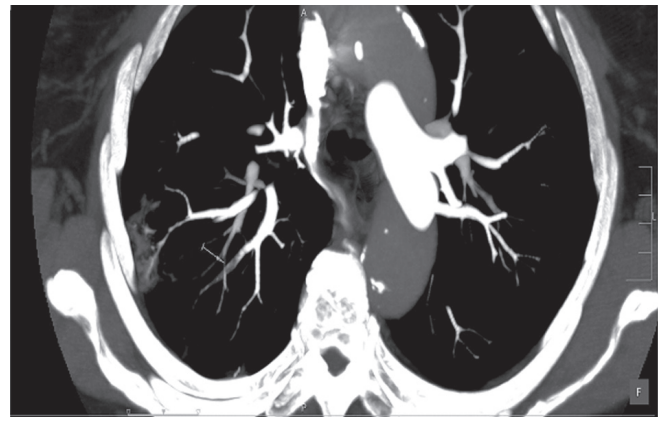
A patent foramen ovale (PFO) is an atrial septal defect with or without atrial septal aneurysm, associated with left-to-right shunt.It is also related with embolic stroke and platypnea-orthodeoxia syndrome.This report describes the case of a patient with platypnea-orthodeoxia syndrome, which represented a diagnostic challenge because she was admitted due to pneumonia but then was incidentally diagnosed with pulmonary thromboembolism (PTE). Given the unfavorable progression of her condition, and worsening of dyspnea with hypoxemia upon sitting, a transesophageal echocardiography (TEE) was performed, revealing a PFO with atrial septal aneurysm and marked right-to-left bubble passage occurring spontaneously (in dorsal recumbent position). After completion of antibiotic treatment, percutaneous closure of patent foramen ovale was performed with an Amplatzer device.
Downloads
Published
Issue
Section
License
Copyright (c) 2025 Argentine Journal of Cardiology

This work is licensed under a Creative Commons Attribution-NonCommercial-ShareAlike 4.0 International License.





