
Acute Myocardial Infarction, a Public Health Care Issue
pp 259-263
DOI:
https://doi.org/10.7775/rac.v77i3.2216Keywords:
Myocardial infarction, Mortality, Health policyAbstract
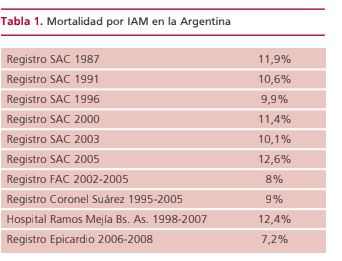
Acute myocardial infarction (AMI) is an important cause of death in ArgentinaAt present, in-hospital mortality due to AMI is about 10%, at least in registry participating centers. Treatment is focused on achieving reperfusion of the occluded artery with either primary angioplasty or thrombolytic therapy. However, only a few hospitals have primary angioplasty facilities, and the indication of thrombolytic therapy is lower than recommended. Thrombolytics, anticoagulant drugs and antiplatelet agents should be indicated promptly and broadly to reduce mortality. The health care authorities, with the support of the scientific societies, should design a national program to achieve a substantial impact on mortality due to AMI. This program should focus on three main issues: 1. A 12-lead electrocardiogram should be performed and interpreted as soon as possible in all patients with chest pain, including the use of pre-hospital emergency services. A centralized ECG reading with expert physicians may help those health care centers that lack qualified staff. 2. Rapid reperfusion with thrombolytic therapy and/or angioplasty. Bolus fibrinolytic drugs are simpler and more effective than streptokinase, yet, they are more expensive. It is very important to choose an easy-to-administer thrombolytic agent in primary care facilities. 3. The organization of a network to transfer the most severe patients to referral centers in fully equipped ambulances with trained staff. Possibly, 50% of AMI patients need to be transferred due to severe congestive heart failure, failed thrombolysis, or recurrent ischemia.
Downloads
Published
Issue
Section
License
Copyright (c) 2025 Argentine Journal of Cardiology

This work is licensed under a Creative Commons Attribution-NonCommercial-ShareAlike 4.0 International License.





