
Cost-effectiveness of ramipril in high cardiovascular risk patients in Argentina
pp 16-22
DOI:
https://doi.org/10.7775/rac.v71i1.2892Keywords:
Cardiovascular prevention, Ramipril, Cost effectivenessAbstract
Objective
To perform a cost-effectiveness analysis of ramipril use in high risk cardiovascular patients in Argentina.
Methods
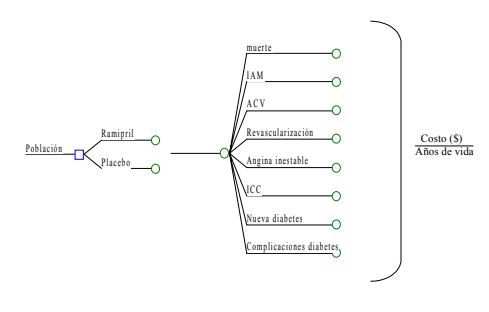
A cost-effectiveness analysis of ramipril versus placebo was performed based on the effectiveness data from HOPE trial, and cost and resources utilization in Argentina. A model was built using a decision tree that included death, cardiovascular events, development of new diabetes and diabetes complications. The incremental cost-effectiveness ratio was calculated as ramipril cost - placebo cost / ramipril life expectancy - placebo life expectancy. Results were expressed as argentine pesos($) per life-years saved, meaning the cost of an additional life year with ramipril use compared with placebo. To evaluate the effect of assumptions uncertainty, a sensitivity analysis was performed.
Results
The cost-effectiveness analysis of ramipril was favorable. Ramipril treatment saved $ 56 in arder to gain a year of life, because of a reduction in the incidence of events,. The ratio between lower cost and higher effectiveness remained stable in sensitivity analyses, and only in the worst combination of variables generated cost.
Conclusion
These results obtained for ramipril, when a prevention strategy combines lower cost and higher effectiveness, is not frequent in cardiovascular prevention strategies, highlighting the potential role of angiotensin converting inhibitors in secondary prevention, which are seldom prescribed in this context.
Downloads
Published
Issue
Section
License
Copyright (c) 2026 Argentine Journal of Cardiology

This work is licensed under a Creative Commons Attribution-NonCommercial-ShareAlike 4.0 International License.





