
Results of a surgical approach in aortic coarctation withextended end to end anastomosis
pp 93-101
DOI:
https://doi.org/10.7775/rac.v71i2.2953Keywords:
Anastomosis surgica, Aortic coarctation , Deffects associationAbstract
Introduction
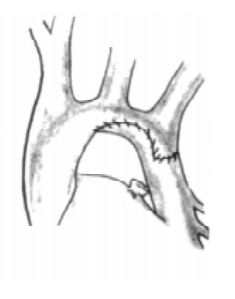
Coarctation of the aorta (AoCo) is a frequent congenital heart disease. It may either be well tolerated in infancy or result very serious in the newborn causing severe heart failure by overloading the ventricle when the ductus closes.ObjectivesTo evaluate the efficacy of a surgical technique (extended end to end anastomosis [ATTA]) which permits a definite repair of the lesion no matter the age or the anatomic variant.
Material and Methods
A total of 73 patients (p) were studied. We grouped them according to the age Group (GR) I: 32 p. less than 60 days old and 4 kg, GR II: 19 p. between 30 months and 2.5 years old, GR III: 22 p. older than 2.5 years; 39.7% of the whole population had associated heart lesions, 7 of them with interrupted aortic arch. In 67 p (91.8 %) we performed a follow-up along 1 to 141 months. Early and late mortality as well as the survival rate were studied. Criteria used to evaluate new obstructions were: presence of femoral pulses, imaging and gradients. The occurrence of basal hypertension or hypertension occurrence during exercise were studied.
Results
Two newly developed coarctations occurred (2.7%) one wasrepaired 1 month after surgery and another 5 years afterthe operation, both from p in GR I. The rest of p. were freefrom obstruction, all of them had good femoral pulses eventhose who died. Three p. had mild arterial hypertensionduring exercise. Surgical mortality was 9/73 p. (12.5%),mostly in GR I : 7/32 (21.8%); 85.7% (6/7) had an associatedpathology. Patients in GR I had the highest mortality rate:14/29 (48.3%); only 2/44 (4.5%) with isolated coarctation died(OR: 10.62 p: 0.000036. Late mortality was 7/67 (10,4%).
Conclusion
AoCo is associated with the highest risk in small children mainly when it is appears with other heart malformations.Post surgical re obstruction as well as arterial hypertension were infrequent in our population of patients. The aortic arch hypoplasia or its interruption could be resolved with-out leaving residual obstruction and with normal growth of the area. The ATTA is a very good technique which can be applied in the different anatomical variants of CoAo independently of weight and age.
Downloads
Published
Issue
Section
License
Copyright (c) 2026 Argentine Journal of Cardiology

This work is licensed under a Creative Commons Attribution-NonCommercial-ShareAlike 4.0 International License.





