
Prognostic Value of Amrinone Responde. Part I: Patients with Coronary Dilated Cardiomyiopathy
pp 267-273
DOI:
https://doi.org/10.7775/rac.v69i3.3062Keywords:
Amrinone, Ejection fraction, PrognosisAbstract
Objective To evaluate the prognosis at 12 months in patients with coronary dilated cardiomyopathy and severe depression of IV systolic function, according to the initial response to amrinone IV administration. Material and method Thirty-two patients were consecutively studied, 28 males and 4 women, mean age 65±10 years old, with clinical, radiological and echocardiographic diagnosis of dilated cardiomyopathy and signs of depressed IV function. The whole population exhibited coronary disease and negative viability test in a201T1study. During confinement, and all patients were clinically stable, a radioisotopic ventriculogram was made in basal conditions and 20 minutes after the administration of amrinone lactate (1.5mg/kg) IV. The conventional parameters (HR, BP and mainly IV EF) were analyzed. After one year follow-up patients were included in one of 3groups; group A:patients with good clinical evolution (n=12); group B: patients who needed re-hospitalization because of pump failure (n = 10)and groupC:patients dead during that period (n=10). Basal EF and its variation with amrinone was analyzed in all three groups. Results Basal EFLV(%) EF post-LA % variation p value with LA Group A 34.7± 11# 44.0±8.3# +29.1±27.8 NS Group B 31.7±12# 39.2±7.6# +27.3±25.7 NS Group C 18.0 ±5# 24.4 ±4.6# +30.1±13.9 NS *p value: < 0.001 within groups and between group C and groups A and B. Conclusion The basal ejection fraction was significantly lower in patients who died along the follow-up period(one year). Variation of response to amrinone did not allow to identify patients at the highest risk.This may be due some degree of myocardial tissue viability not detected with the perfusion study performed at the entrance to the protocol.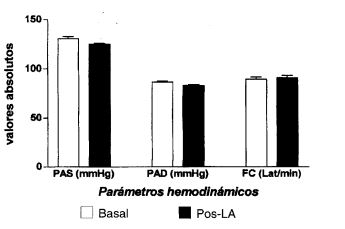
Downloads
Published
2026-03-02
Issue
Section
ORIGINAL ARTICLES
License
Copyright (c) 2026 Argentine Journal of Cardiology

This work is licensed under a Creative Commons Attribution-NonCommercial-ShareAlike 4.0 International License.





