
Prevalence and Functional and Biochemical Effects on Antiautonomic Cardiac Receptor Antibodies in Patients with Ventricular Arrhythmias and Renal Failure
pp 399-413
DOI:
https://doi.org/10.7775/rac.v68i3.3133Keywords:
Chagas' heart disease, Idiophatic dilated cardiomyopathy, Primary ventricular arrhythmias, β-adrenergic receptors, M₂cholinergic receptor, Propranolol, AtropineAbstract
Background Anti-β adrenergic and anti-M2 -cholinergic receptor antibodies have been demonstrated in various heart diseases. The relationship between the arrhythmias occurring in those heart diseases and the antibodies as well as the functional and bio-chemical effects of the antibodies have not been systematically investigated. Objectives To assess the prevalence as well as the functional and biochemical effects of the circulating antiautonomic membrane receptor antibodies (AARAb) in patients with cardiac arrhythmias.MethodsFour groups of individuals were studied. Group I: 28 patients with ventricular arrhythmias. Group II: 13 patients with sinus node dysfunction. Group III: 5 patients with both ventricular arrhythmias and sinus node dysfunction. Group IM 10 healthy con-trols. The chronotropic effects of the IgG fractions were assessed on cultured neonatal rat cardiomyocytes before and after exposure to atropine and propranolol to detect of anti-M2cholinergic and/or anti-β-adrenergic receptor antibodies. In 10 selected cases, immunopurified anti-β1 adrenergic receptor or anti-M2-cholinergic receptor antibodies were obtained and their chronotropic effects were explored in the same experimental set-up. The biochemical effects of the IgG from17patients(groupI: 9patients; groupII: 6patients; group III: 2 patients) and 3 healthy controls were assessed onCOST cells transfected with genes encoding for β1 and β2 adrenergic receptors (by the increment incAMP) and M2cholinergic receptors (by the increment in phosphatidylinositol: PI). Results IgG from healthy controls had no chronotropic effects and, accordingly, AARAb were not detected. The IgG from the group I patients exerted a positive chronotropic action, with a high prevalence ofanti-(3-adrenergic receptor antibodies(75%)and alow prevalence ofanti-M2-cholinergic receptor antibodies(10.7%). In contrast, the IgG from groupII patients had a depressing chronotropic effect, with a high prevalence of anti-M2-cholinergic receptor antibodies (76.9%)and a low prevalence of anti- (3-adrenergic receptor antibodies(15.4%). No significant chronotropic effects were elicited by the IgG from group III patients, but a high prevalence of anti-M2cholinergic receptor antibodies (80%) and an intermediate prevalence of anti-3-adrenergic receptor antibodies(40%)could be demonstrated. The study of the chronotropic effect of the immuno purified antibodies was confirmed the results obtained with the corresponding IgG fractions. In agreement with the results of the functional tests, the IgG from group I patients induced a clear-cut and long-lasting increment of cAMP but no of PI, whereas the IgG from group II patients evoked a marked augmentation of PI without affecting cAMP production. Conclusions Our results demonstrate a strong correlation between anti-β-adrenergic receptor antibodies and ventricular arrhythmias (primary or due to Chagas' heart disease or idiopathic dilated cardiomyopathy) as well as between anti-M2-cholinergic receptor antibodies and sinus node dysfunction(primary or due to Chagas' heart disease).Anti-M2-cholinergic receptor antibodies are uncommon inpatients with ventricular arrhythmias (unless there is a concomitant involvement of sinus node) andanti-β-adrenergic receptor antibodies are uncommon in patients with "pure" sinus node dysfunction. It was also demonstrated that the AARAb exert a stimulating action on the corresponding receptors. Anti-β-adrenegic receptor antibodies increase and anti-M2adrenergic receptor antibod-ies inhibit cAMP production. These findings may open new ways towards the knowledge of the etiology and pathophysiology of ventricular arrhythmias and sinus node dysfunction and may possess important therapeutic implications.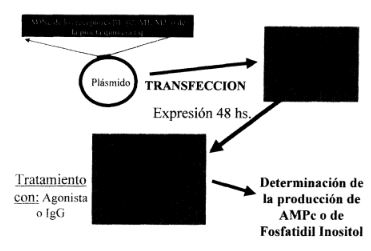
Downloads
Published
2026-03-05
Issue
Section
ORIGINAL ARTICLES
License
Copyright (c) 2026 Argentine Journal of Cardiology

This work is licensed under a Creative Commons Attribution-NonCommercial-ShareAlike 4.0 International License.





