
Reduction of Revascularization Rates and Hospital Costs in South American Patients with Acute Non-Q-Wave Coronary Events Treated with Enoxaparin Compared to Unfractionated Heparin
pp 131-136
DOI:
https://doi.org/10.7775/rac.v67i2.3558Keywords:
Acute coronary syndromes, Heparin, Hospital care costsAbstract
Background
The availability of new drugs and technologies have increased the overall costs of cardiovascular care and provoked the need for cost/efficacy information besides traditional clinical benefit data in the approval process in many Western countries.
The aim of the present study is to analyze the clinical events rates, use of resources and direct costs derived from the use of antithrombin agents in theSouth American branch of the ESSENCE Study.
Material and method
Patients suffering from unstable angina or acute non-Q-wave AMI were randomly assigned to anticoagulant therapy with either SC enoxaparin 1mg/kg/BID or IV unfractionated heparin for a tar-get aPTT of 1.8-2.5 times baseline. We compared clinical endpoints rates, daily hospital care cost for ICU, intermediate unit and ward, plus direct costs of percutaneous procedures and bypass surgery when applicable.
Results
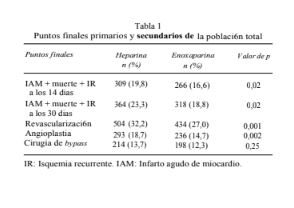
Less revascularization procedures needed by clinical endpoints were performed in the enoxaparin group (10.2% vs 18.1%), particularly through an-gioplasty (3.1% vs 9.3%). The estimated savings in the enoxaparin group for every 100 treated patients were $ 29.000.
Conclusions
These results support that the cost/efficacy ratio favors the use of enoxaparin and largely compensates the higher direct cost of daily treatment compared to standard heparin.
Downloads
Published
Issue
Section
License
Copyright (c) 2026 Argentine Journal of Cardiology

This work is licensed under a Creative Commons Attribution-NonCommercial-ShareAlike 4.0 International License.





