
P-Wave Signal Averaged ECG in Normal Subjects
pp 545-548
DOI:
https://doi.org/10.7775/rac.v66i5.3771Keywords:
P-wave signal average, Atrial fibrillationAbstract
Background
Atrial fibrillation is a common arrhythmia that is associated with hemodynamic alterations and an increased risk of morbidity mainly related with thromboembolism, in consequence it's important to identify predictors that attempt to detect patients at risk for develop this arrhythmia. Intra-atrial conduction delays characterize patients with atrial fibrillation, and P-wave signal averaged electrocardiogram can be a useful tool for detecting this abnormality and is important to establish reference values.
Material and method
Forty healthy volunteers by history, clinical examination and electrocardiogram, who did not came from endemic zones for Chagas's disease, whose age ranges between 22 and 78 years (mean: 41), free of antiarrhythmic drugs, were studied with an electrocardiogram and a P-wave signal averaged electro-cardiogram. We used an MRE Cardio soft equipment, with filter in 29 Hz, looking for a noise endpoint < 0.3 gV The P-wave duration of the filter edorthogonal leads X, Y, Z and vector magnitude, and the root mean square voltage for the last 20, 30 and40 msec of the filtered vector magnitude measured.
Results
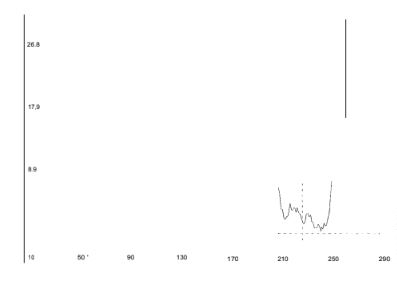
The mean number of beats averaged was 122 ± 29with a noise end point of0.25 ± 0.05 tV The values for the P-wave duration in the filtered X, Y, Z and vector magnitude leads are 108 ± 11, 116 ± 14, 107 ±13 and 123 ± 10 msec respectively. The values for the RMS-20, RMS-30 and RMS-40 are 5.56 ± 2.42,7.66± 3.21 and 9.02 ± 3.70 gV respectively.
Downloads
Published
Issue
Section
License
Copyright (c) 2026 Argentine Journal of Cardiology

This work is licensed under a Creative Commons Attribution-NonCommercial-ShareAlike 4.0 International License.





