
Usefulness and Rentability of Routine Transesophageal Echocardiography in Cardiac Surgery. Analysis of 130 Consecutive Cases
pp 543-553
DOI:
https://doi.org/10.7775/rac.v63i6.3778Keywords:
Transesophageal echocardiography, Intraoperative echocardiology, Heart surgery, Coronary disease surgery, Heart valve disease surgeryAbstract
Background
The main aim of this study is to assess the value of routine intraoperative transesophageal echocardiography in unselected patients undergoing cardiac surgery.
Material and method
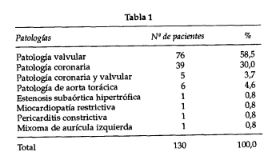
From February 1994 to May 1994 an intraoperative transesophageal echocardiography was routinely performed in patients undergoing cardiac surgery. A total of 130 studies were made to128 patients (68 males and 60 females; mean age 49.4 ± 12.1 years). Indications for surgery were as following: a) coronary artery bypass graft: 39; b) valvular surgery: 76; ) coronary artery bypass graft and valvular surgery:5; d) thoracic aorta pathology associated or not to aortic valve surgery and/or coronary arteries reimplantation: 6; and e) other: 4. Transesophageal echocardiography was performed using either monoplane, biplane or multiplane probe and the image acquisition was made before thoracotomy and cardiopulmonary bypass and after cardiopulmonary bypass with hemodynamic stabilization.
Results
Precardiopulmonary bypass imaging yielded unsuspected findings in 11 patients (8.5%) that changed the planned surgery in 7 cases (5.4%). Post-cardiopulmonary bypass echo study, modified the surgical strategy in 13 cases (10.9%) avoided one predetermined surgical procedure (tricuspid ring annuloplasty) and a new surgery in another case; leaded to three non-planed surgical procedures (by showing significant tricuspid regurgitation); to a further surgery in the same valve in 6 patients (mitral paravalvular leak with significant regurgitation in one patient, another mitral prosthesis dysfunction in one patient, residual mitral valve in-sufficiency after mitral valve repair in three patients and aortic prosthesis dysfunction in one patient);to a intraaortic counter pulsation balloon device in one patient and to new cardiopulmonary bypass due to an insufficient extraction of calcified pericardium in one case of constrictive pericarditis. In 23 cases (17.7%) transesophageal echocardiography has modified the anesthetic procedure by showing signs of hemodynamic changes before a Swan-Ganz catheter was inserted, thus prompting in the administration of fluids, inotropics or vasodilators. Intraoperative transesophageal echocardiographyhas changed the surgical and/or anesthetic plans in 43 cases (33.0%). There were no problems or complications related to the procedure.
Conclusions
Data indicate that intraoperative transesophageal echocardiography is useful to determine surgical plan and to assess the immediate operative results as well as a guide to anesthetic procedures.
Downloads
Published
Issue
Section
License
Copyright (c) 2026 Argentine Journal of Cardiology

This work is licensed under a Creative Commons Attribution-NonCommercial-ShareAlike 4.0 International License.





