In Vivo Gene Editing of PCSK9 in the Prevention of Atherosclerotic Cardiovascular Disease: From Genetic Validation to Clinical Application
pp. 406-412
DOI:
https://doi.org/10.7775/rac.es.v94.i5.21056Keywords:
PCSK9, Gene editing, CRISPR-Cas9, Base editing, LDL cholesterol, Atherosclerotic cardiovascular diseaseAbstract
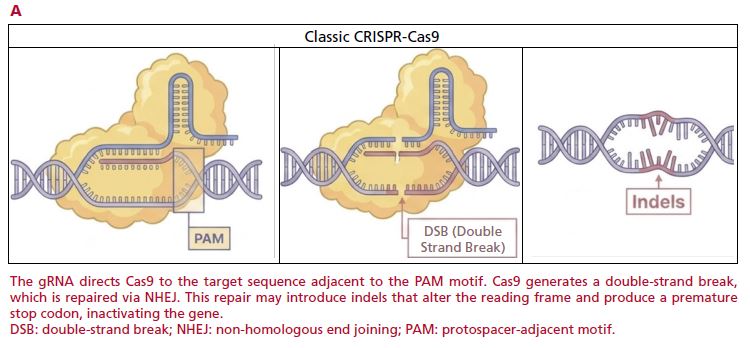
Atherosclerotic cardiovascular disease (ACVD) remains the leading cause of morbidity and mortality worldwide, and low-density lipoprotein cholesterol (LDL-C) is the primary causal and modifiable risk factor. Available lipid-lowering therapies—statins, ezetimibe, anti-PCSK9 monoclonal antibodies, and RNA interference—have been shown to reduce cardiovascular events, but they require long-term administration and are limited by efficacy, adherence, cost, and access. Proprotein convertase subtilisin/ kexin type 9 (PCSK9) is, to date, the most genetically validated target for the development of in vivo gene-editing strategies aimed at achieving a permanent reduction in LDL-C through a single therapeutic administration. This review describes the biology of PCSK9, the available gene-editing platforms—CRISPR-Cas9, base editing, and primer editing—and their delivery to hepatocytes via lipid nanoparticles. It summarizes preclinical data and ongoing clinical trials (VERVE-101, VERVE-102, and YOLT-101) showing sustained, dose-dependent reductions in LDL-C following a single infusion, with acceptable short-term safety profiles. Finally, the long-term safety, regulatory, economic, and ethical challenges that will determine the eventual translation of this technology into routine clinical practice are discussed.
Downloads
Published
Issue
Section
License
Copyright (c) 2026 Argentine Journal of Cardiology

This work is licensed under a Creative Commons Attribution-NonCommercial-ShareAlike 4.0 International License.