
Evaluation of Cardiovascular Variables in a Calchaquí Population in the Middle and High Mountains of Tucumán
pp. 20-26
DOI:
https://doi.org/10.7775/rac.es.v89.i1.19095Keywords:
Cardiovascular Diseases, American Native Continental Ancestry Group, Indians, South American, Altitude Sickness / epidemiologyAbstract
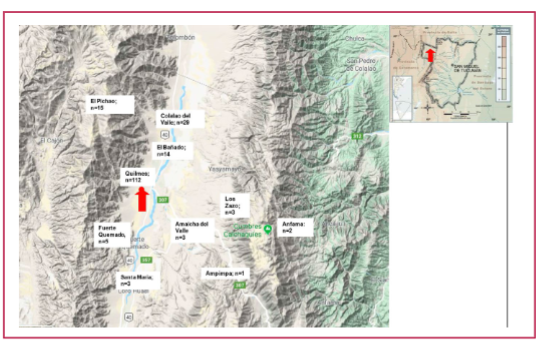
Background: The Quilmes community includes 2,400 inhabitants of the middle and high mountains of Tucumán (1,800 to 4,000 meters above sea level). The purpose of the present study was to know their cardiovascular health status.
Methods: A cross-sectional descriptive quantitative investigation was carried out in people belonging to the Quilmes community who voluntarily attended the planned evaluation on September 27-29, 2018.
Results: Two hundred and two settlers were studied (125 women and 77 men; 48±1.4 years), 23% of them had hypertension (HTN); 14% were smokers; 4.9% had diabetes; 18% had dyslipidemia (DLP) and 25% usually consumed alcohol (1.0 ± 0.4 L/day). Also, 29% were overweight and 36% obese. High blood pressure (BP) was recorded in 48 individuals at the time of the study. Blood pressure decreased in the third compared to the first measurement, whereas heart rate increased in the third assessment (74±1 beats per minute vs. 77±1; p <0.01). Oxygen saturation (95.0±0.2%) was negatively correlated with age (Pearson r: -0.266; p <0.001). In individuals with normal BP, ultrasound E/ratio was higher (1.2±0.0) and left ventricular posterior wall thickness was lower (8.5±0.5 mm) than in those with elevated BP (0.92±0.1 and 9.0±0.3, respectively, p <0.001). Twenty-four percent of individuals had atherosclerotic plaques and 120 had DLP.
Conclusions: The Quilmes population presents a prevalence of cardiovascular risk factors similar to that of urban centers, which could lead to an increase in cardiovascular morbidity and mortality in the coming years.
Downloads
Published
Issue
Section
License
Copyright (c) 2025 Argentine Journal of Cardiology

This work is licensed under a Creative Commons Attribution-NonCommercial-ShareAlike 4.0 International License.





