
Usefulness of Adenosine Testing in the Differential Diagnosis Between Fasciculoventricular Pathways and Wolff-Parkinson-White-type Ventricular Preexcitation
pp. 353-356
DOI:
https://doi.org/10.7775/rac.es.v85.i4.9288Keywords:
Wolff-Parkinson-White Syndrome - Adenosine - Accessory Atrioventricular BundleAbstract
Background: The diagnosis of Wolff-Parkinson-White-type ventricular preexcitation on the surface electrocardiogram is generally easy. However, in patients with minimal or subtle electrocardiographic manifestations, the differential diagnosis with other types of preexcitation, as fasciculoventricular fibers, may be difficult. Adenosine testing is a useful tool for that purpose.
Objective: The aim of this study was to describe our experience with adenosine testing in the differential diagnosis of patients with minimal ventricular preexcitation.
Methods: Among 313 consecutive patients with diagnosis of Wolff-Parkinson-White, 26 patients with minimal preexcitation on the electrocardiogram that questioned the diagnosis were analyzed.
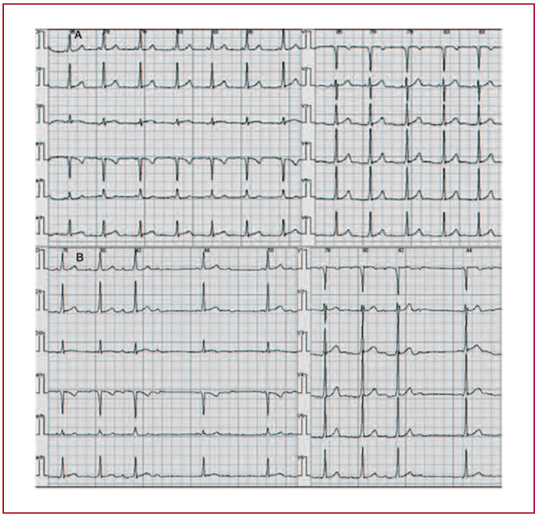
Results: Adenosine testing produced transient first-degree, second-degree and complete atrioventricular block without changing the ventricular activation pattern, ruling out Wolff-Parkinson-White syndrome. Twenty patients underwent an electrophysiology study which confirmed the diagnosis of fasciculoventricular pathways in 16 cases.
Conclusion: In patients with suspected Wolff-Parkinson-White ventricular preexcitation, adenosine testing proved to be an efficient and safe tool to establish or rule out the diagnosis.
Downloads
Published
Issue
Section
License
Copyright (c) 2017 Argentine Journal of Cardiology

This work is licensed under a Creative Commons Attribution-NonCommercial-ShareAlike 4.0 International License.





