
Treatment of Critical Lower Limb Ischemia
pp 129-133
DOI:
https://doi.org/10.7775/rac.v77i2.2178Keywords:
Ischemia, Lower Limbs, Angioplasty, AmputationAbstract
Background
Critical lower limb ischemia is the extreme manifestation of chronic peripheral arterial disease. Surgical revascularization is the treatment of choice for patients with this condition as it reduces amputation and mortality rates despite being an invasive procedure. Yet, the incidence of complications is high. During the last decade, the development and introduction of new percutaneous technologies have enabled significant growth in endovascular strategies. Indications for endovascular treatment have increased due to its low morbidity compared to surgery.
Objective
To evaluate the clinical outcomes in patients with critical lower limb occlusions undergoing endovascular treatment in a high-volume center.
Material and Methods
A total of 60 procedures in 55 patients were performed from January 2005 to December 2008.
Results
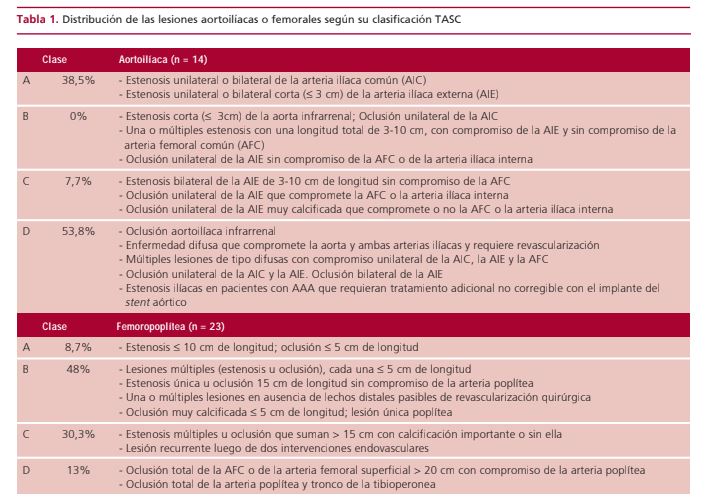
Patients’ age was 72.5±10.6 years (range 49-91) and 60.7% were men; 57% were diabetics and 48.8% had coronary artery disease. Fifty percent of patients had ischemic rest pain; 41% had minor trophic lesions and 9% presented major throphic lesions. A total of 74 occlusions were treated: 14 aortoiliac, 23 femoropopliteal, 28 infrapopliteal and 9 occlusions of vascular bypass grafts. The following outcomes were evaluated 30 days after the intervention: urgent reintervention, 10.9%; amputation, 5.4%; mortality, 3.6%; major cardiac events (mortality, myocardial infarction, stroke, reintervention or amputation), 10.9%. In the long term follow-up (median 727±442 days) reintervention rate was 11.7%, amputation 7.4%, myocardial infarction 2%, stroke 2%, mortality 11.7%, and major cardiac events 27.4%. Reintervention, amputation and major cardiac events rates throughout the study were 21.4%, 14.3% and 30.3%, respectively.
Conclusions
Endovascular treatment represents an attractive option to reduce the risk of amputation in patients with critical lowe limb ischemia. However, this population carries high long term cardiovascular risk.
Downloads
Published
Issue
Section
License
Copyright (c) 2025 Argentine Journal of Cardiology

This work is licensed under a Creative Commons Attribution-NonCommercial-ShareAlike 4.0 International License.





