
Risk Factors and Extension of Ischemic Heart Disease Assessed by Non-Invasive Coronary Angiography
pp 112-117
DOI:
https://doi.org/10.7775/rac.v76i2.2445Keywords:
Tomography, X-Ray Computed, Multislice, Atherosclerosis, EpidemiologyAbstract
Background
Although several studies have well established the association between risk factors (RFs) and cardiovascular events, the relationship between the total extension of coronary atherosclerosis and RF has not been clearly determined yet.
Objective
The aim of this study was to assess the relationship between traditional coronary risk factors with the presence and extension of coronary atherosclerosis using high-resolution multislice computed tomography (MSCT).
Material and methods
We conducted a monocenter and observational study on consecutive patients in sinus rhythm who underwent multislice computed tomography coronary angiography. The population was prospectively categorized in three groups according to the number of RFs.
Results
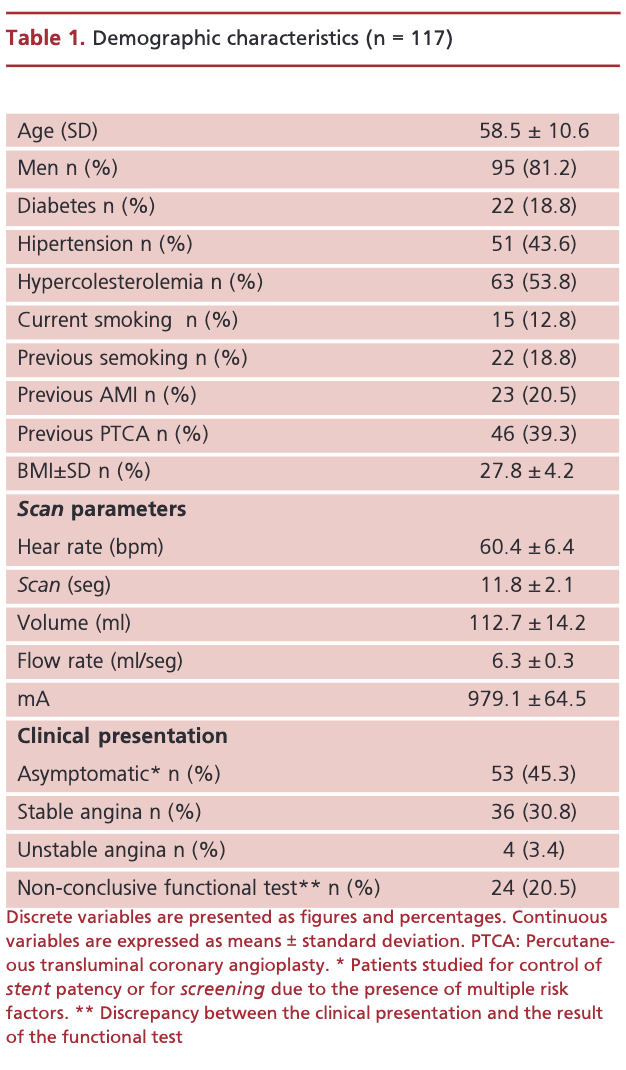
One hundred and seventeen patients were included. Mean age was 58.5 ± 10.6 years, 81% were men and 19 suffered from diabetes. A positive association was observed between the number of RFs and the prevalence of any lesion (p = 0,001), of significant lesions (p < 0.001), of multiple non significant lesions (p< 0.001) and of multiple significant lesions (p < 0.001). The number of lesions (1.9 ± 2.3 versus 4.3 ± 3.3 versus 6.6 ± 2.6, p < 0,001), and the calcium score [2.79 (0.0; 44.0) versus 64.0 (0.0; 273.2) versus 539.0 (74.0; 1,405.9), p = 0.001] were significantly greater in patients with multiple RFs. Several RFS were individually associated with the presence of lesions. Age, diabetes, hypercholesterolemia, hypertension, a history of previous myocardial infarction and smoking habits were related to the presence of atherosclerosis, either by the evidence of a greater prevalence of lesions, of greater total number of lesions ad/or higher calcium scores.
Conclusions
This study found a significant relationship between the number of risk factors, as well as several risk factors per se, and the extension of coronary atherosclerosis assessed by multislice computed tomography coronary angiography
Downloads
Published
Issue
Section
License
Copyright (c) 2025 Argentine Journal of Cardiology

This work is licensed under a Creative Commons Attribution-NonCommercial-ShareAlike 4.0 International License.





