Severe Pericardial Effusion. Percutaneous Balloon Pericardial Window
pp 313-316
DOI:
https://doi.org/10.7775/67e0f682Keywords:
Pericardial effusion, PericardiocentesisAbstract
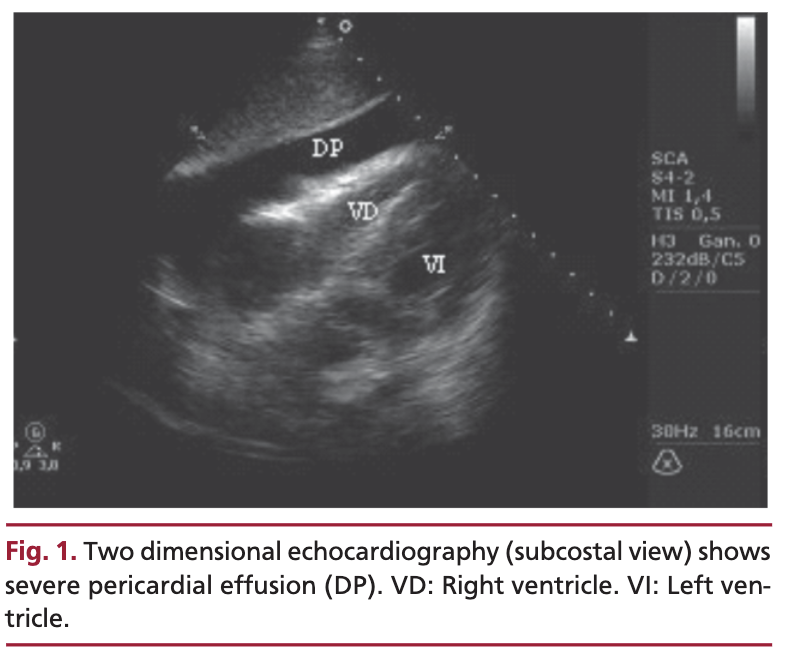
Most patients with chronic pericardial effusion are women aged 50 years or older. This presentation describes a 63-year old female patient with severe chronic pericardial effusion; she had received radiotherapy for cancer of the left breast, had a history an uncon- firmed presumptive diagnosis of pulmonary tuberculosis and was under treatment for hypothyroidism. A pericardiocentesis was performed; nevertheless the patient presented recurrence of the pericardial effusion and was treated with NSAIDs. As this therapy failed, she underwent a percutaneous pericardial window with no adverse outcomes. The patient started treatment with colchicine. The potential causes of the pericardial effusion were tuberculosis, malignant neoplasms, hypothyroidism or radiotherapy. The latter etiology was considered as the most probable once the others had been excluded. An echocardiogram performed one month after the procedure showed no signs of pericardial effusion.
Downloads
Published
Issue
Section
License
Copyright (c) 2026 Argentine Journal of Cardiology

This work is licensed under a Creative Commons Attribution-NonCommercial-ShareAlike 4.0 International License.