
Endovascular Treatment of Aortic Aneurysm Rupture
pp 55-58
DOI:
https://doi.org/10.7775/rac.v83i1.2734Keywords:
Abdominal Aortic Aneurysm, Ruptured Aneurysm, Endovascular TreatmentAbstract
Introduction: Endovascular repair of aortic aneurysm emerges as a less invasive option for patients with high operative risk, constituting a feasible and safe treatment due to technical advances. For this reason, our institution considers endovascular treatment as the “first line therapy” in patients with very high operative risk, as those with ruptured abdominal aortic aneurysm.
Objective: The goal of this study is to report the experience with our surgical treatment protocol of patients with ruptured abdominal aortic aneurysm.
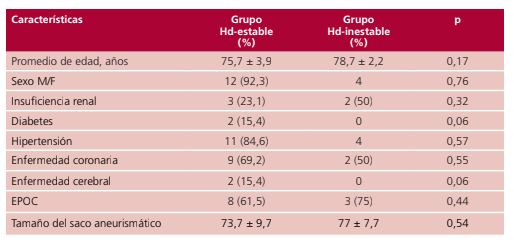
Methods: Seventeen patients were treated based on the protocol “endovascular approach first”. The population was classified according to systolic blood pressure (SBP) at admission in: hemodynamically stable (SBP ≥ 80 mm Hg) or hemodynamically unstable (SBP < 80 mm Hg during > 10 minutes). The outcomes included mortality at 30 days and during follow-up and complications after the procedure. The statistical analysis was performed using Fisher’s test.
Results: Mortality at 30 days was 23.5%. Technical success was achieved in 94.1% of patients. Despite both groups had similar comorbidities, mortality in stable patients, operated on under local anesthesia, was 7.7% (p < 0.02).
Conclusion: Endovascular treatment of ruptured abdominal aortic aneurysm, following a strict clinical and surgical treatment, is feasible and safe, particularly in stable patients under local anesthesia.
Downloads
Published
Issue
Section
License
Copyright (c) 2026 Argentine Journal of Cardiology

This work is licensed under a Creative Commons Attribution-NonCommercial-ShareAlike 4.0 International License.





