
The Transepicardial Echocardiogram During Surgery of Congenital Heart Disease in Children
pp 183-187
DOI:
https://doi.org/10.7775/rac.v70i3.2972Keywords:
Transepicardial echo, Congenital heart diseaseAbstract
Objective
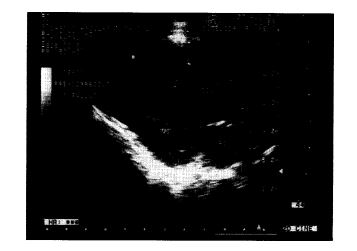
The purpose of this paper is to evaluate the detection of residual pathology immediately after surgery mainly in patients of early age and low weight. Sixty four patients between1month to 10 years of age (X14 m) weighting 3 to 27 kg (X 9,0kg) were investigated with transepicardial echocardiogram (TEPE) immediately after disconnecting the extracorporeal circulation (EC). We evaluated:1) residual shunt, 2) outflow tract gradient, 3) AV valve regurgitation, 4) ventricular function.
Results
The TEPE could be performed in100% patients without complications. Minimal defects immediately after surgery were detected in39.37% of the patients, but only 9.37% needed surgical repair.The results by TTc and TEPE showed: 1) residual ventricular shunt: minimal shunts were found in18% without difference between the TEPE and TTE, 2) outflow tract gradient: residual gradient was less10 mm Hg in21/23 patients, and only 3/23 patients showed more gradient byTTE (X= 15 mmHg) re-spect to the TEPE,3) AV valve regurgitation: mild regurgitation was detected in 9/19 patients. TEP underestimated the degree of the insufficiency in 10%of the patients, 4) ventricular function: left ventricular function was depressed immediately after surgery in 10% of the patients. No disagreement was found between TEPE and TTc.All the patients re-covered normal IV function before discharged.
Conclusion
The TEPE was able to evaluate immediately the surgical result, it was easy to perform in small children, there was no morbidity secondary to the method in the present series and it is a cheap and easy option when a transesophageal echocardiogram is not available.
Downloads
Published
Issue
Section
License
Copyright (c) 2026 Argentine Journal of Cardiology

This work is licensed under a Creative Commons Attribution-NonCommercial-ShareAlike 4.0 International License.





