
Balloon catheter valvuloplasty for critical pulmonary valve stenosis
pp 457-461
DOI:
https://doi.org/10.7775/rac.v61i5.3523Abstract
Newborns with critical pulmonary stenosis requires immediate treatment. Surgical valvotomy with or without a systemic to pulmonary shunt has been the traditional therapy. The experience with percutaneous balloon valvotomy in infants and children has demonstrated the usefulness of such approach instead of surgical intervention. However in neonates extensive experience is not available yet. Fourteen patients with critical pulmonary stenosis were referred to the catheterization laboratory to perform percutaneous balloon valvotomy. We completed the procedure in 11 neonates. In the other 3, who had associated hypoplastic right ventricle, we couldn't pass across the stenotic orifice and they must be referred to surgery. The right systolic ventricular pressure was decreased from 82±10 to 40±6mmHg(p<0.05), the gradient through the pulmonary valve diminished from 73 ± 14 to 18 ±4mmHg(p<0.01) and the systemic saturation increased from 50 ± 4.7 to 83 ± 4% (p<0.001); 1 patient died two hours after the procedure, another 3 went to surgery because they had had a bad evolution and the remaining 7 patients had a follow-up period between I and 30 months (mean 10.3). All they had gradients across the pulmonary valve less than 25 mmHg. We conclude that balloon valvotomy is the first method to perform in critical pulmonary stenosis. Patients with associated hypoplastic right ventricle often do not respond to the procedure and have a high rate of complications.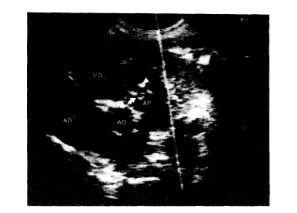
Downloads
Published
2026-04-07
Issue
Section
ORIGINAL ARTICLES
License
Copyright (c) 2026 Argentine Journal of Cardiology

This work is licensed under a Creative Commons Attribution-NonCommercial-ShareAlike 4.0 International License.





