
Peel Index and Echocardiogram as Predictors of the Evolution of Acute Myocardial Infarction Patients
pp 621-625
DOI:
https://doi.org/10.7775/rac.v62i6.3549Keywords:
Two-dimensional echocardiogram, Peel Index, Acute myocardial infarctionAbstract
Background
Prognostic evaluation post myocardial infarction is essential to establish the most adequate treatment for each patient. Echocardiographic and Peel Index results can predict mortality during the acute episode.
Methods
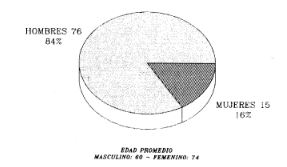
From 150 patients admitted to the coronary unit between November 1989 and December 1990 with diagnosis of acute myocardial infarction (AMI), 91 were included in a study to evaluate the usefulness of Peel Index and bidimensional echocardiography as prognosis indicators during hospital stay. Seventy-six men(83.5%)and15omen(16.5%) with a mean age of60and74years respectively were analyzed. All patients had Q wave infarction (44 inferior and 47anterior). Patients were divided in to groups according to Peel Index (I-II; III-IV) and in three groups according to echocardiographic findings: High risk (HR), Intermediate risk (IR), and Low risk MR).
Results
According to the echocardiographic findings, 21%of the patients belonged to the HR group and 79% to the IR or LR group. According to Peel Index, 76% of the subjects were I-II (44% I; 32%II) and 24% were III-IV (18% III; 6% IV). The group with Peel Index III-IV and HR had a higher mortality than those patients with Peel Index III-IV or HR (p <0.025). The positive predictive value of Peel Index III-IV and HR was66%. Echocardiographic findings had a high negative predictive value(96%) in patients with LR or IR.
Conclusions
Mortality was higher in patients with HR (p <0.05). The classification according toPeel Index defines different populations and groupIII-IV presented a higher mortality (p < 0.001).
Downloads
Published
Issue
Section
License
Copyright (c) 2026 Argentine Journal of Cardiology

This work is licensed under a Creative Commons Attribution-NonCommercial-ShareAlike 4.0 International License.





