
Patients with Syncope of Unknown Origin and Inducible Ventricular Arrhythmias Treated with with an Implantable Defibrillator
pp 689-694
DOI:
https://doi.org/10.7775/rac.v65i6.3804Keywords:
Syncope, Ventricular arrhythmias, Electrophysiologic study , Implantable cardioverter defibrillatorAbstract
Objectives
This study evaluates the hypothesis that in patients with syncope of unknown origin and heart anomalies, inducible ventricular arrhythmias are specific arrhythmias and therefore should be appropriately treated. Background Although syncope is a frequent clinical entity, the evaluation and treatment of patients with syncope without a clear etiology remains still undefined. Many patients with syncope of undetermined origin undergo invasive electrophysiologic evaluation. Abnormalities of the sinus node, prolongation of conduction times or inducible arrhythmias found at these evaluation are usually assumed to be the cause of syncope, and are therefore treated.However, whether tachyarrhythmias are truly the cause of syncope, and whether treatment of these tachyarrhythmias can prevent recurrent syncope and arrhythmic death, is unknown.
Material and method
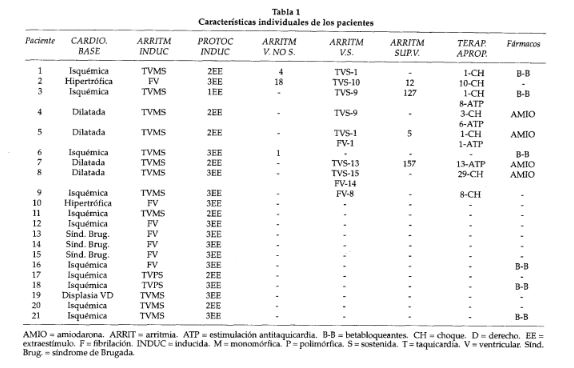
From a total of 320patients with syncope of unknown origin that underwent electrophysiologic evaluation, 163 presented some kind of cardiac anomaly. In 26 out of the163patients(16%), programmed electrical stimulation induced sustained ventricular arrhythmias. In 21 out of the 26 patients an automatic defibrillator was implanted and conform the study group.ResultsIn these 21patients, programmed ventricular stimulation induced sustained monomorphic ventricular tachycardia in 12, sustained polymorphic ventricular tachycardia in two and ventricular fibrillation in seven. During a mean follow-up of 14 months, nine patients received 81 appropriate therapies from the device(53because of ventricular tachycardia and 23 because of ventricular fibrillation). The probability of appropriate therapy was 100% at one year follow-up. There were no episodes of sudden death and one patient died of congestive heart failure.
Conclusions
In patients with syncope of undetermined origin, heart disease and inducible ventricular tachyarrhythmias treated with implantable cardioverter defibrillator, there is a high incidence of appropriate therapies. Our results support the practice of using implantable cardioverter defibrillators inpatients with syncope of unknown origin, heart disease and inducible ventricular arrhythmias.
Downloads
Published
Issue
Section
License
Copyright (c) 2026 Argentine Journal of Cardiology

This work is licensed under a Creative Commons Attribution-NonCommercial-ShareAlike 4.0 International License.





