
Low HDL-cholesterol is a strong independent risk marker in non ST-segment elevation acute coronary syndromes
pp. 6-17
DOI:
https://doi.org/10.7775/rac.v65i1.3893Keywords:
Unstable angina, Lipoproteins, HDL cholesterol, PrognosisAbstract
Objetive
To analyze the link between usual lipid parameters with myocardial necrosis or inflammation markers and short- and long-term prognosis in patients with non ST-segment elevation acute coronary syndrome (ACS).
Material and methods
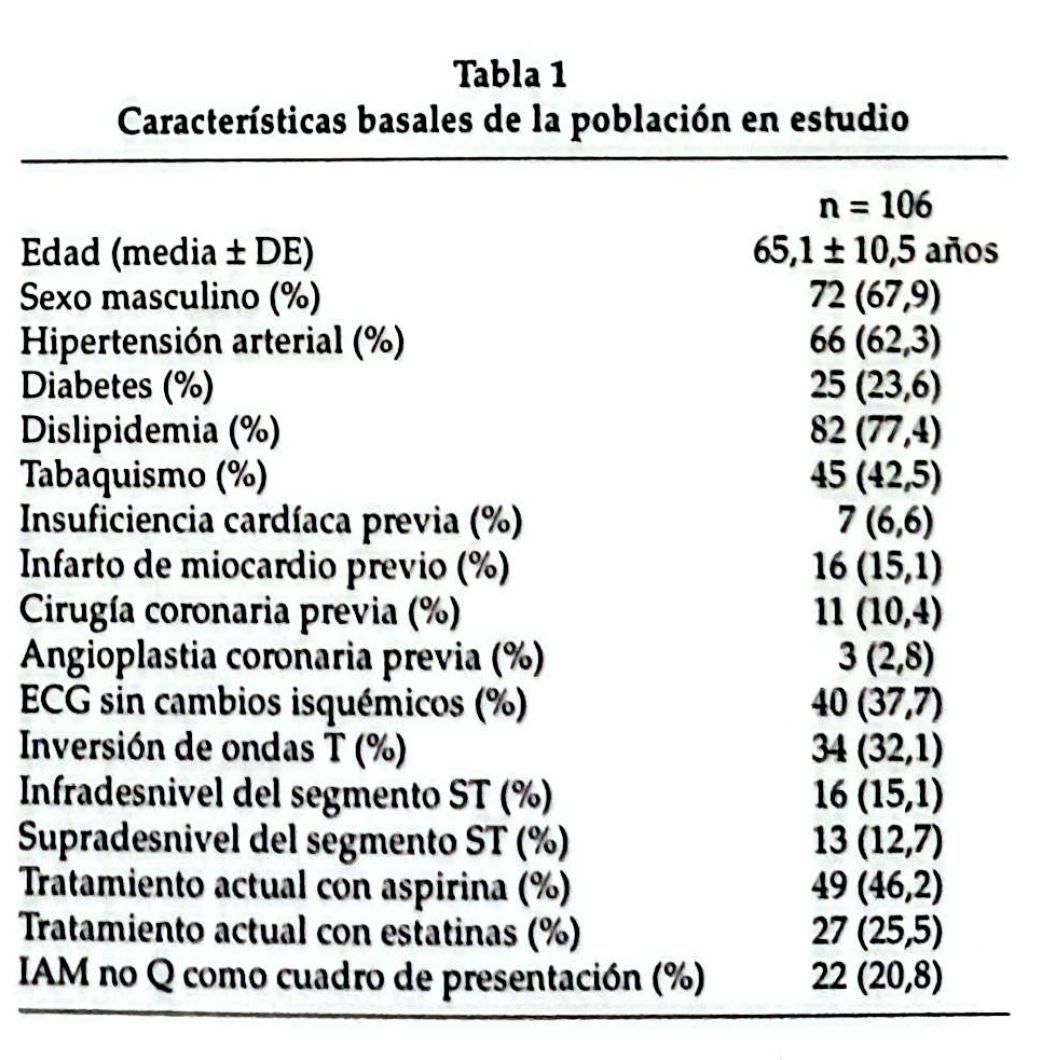
Prospective cohort study of 106 consecutive patients admitted with non-ST elevation ACS. Baseline clinical and ECG data were recorded and blood samples were collected for: a) Total cholesterol LDL-cholesterol (LDL-C), HDL-cholesterol (HDL-C), and triglycerides (TG) ≤ 12 hours from admission. b) TnT 8-24 hours from last chest pain episode. c) C-reactive proteine (CRP) 8-24 hours and 48-72 hours from last chest pain episode. End point (EP) was death and/or MI at the end of a follow-up of 371 ± 201 days (maximum 830). We also analized the correlation between lipids leves and CRP or TnT.
Results
There was a significant correlation between CRP leve;s with HDL-C (r=0,36; p=0,002) and TG (r=0,27; p < 0,05). No association was found between TnT and lipid levels. Lower HDL-C levels were associated with worse prognosis. In a multivariate analysis (Cox regression model) HDL-C < 35 mg/dl was the strongest independent predictor of EP.
Conclusion
Low HDL-C levels in non-ST elevation acute coronary syndrome are associated with elevated CRP, and constitute an strong independent predictor for short- and long- term serious events. Further studies are needed to determine the precise role of lipid levels in this patients and eventually to include them in risk stratification.
Downloads
Published
Issue
Section
License
Copyright (c) 2026 Argentine Journal of Cardiology

This work is licensed under a Creative Commons Attribution-NonCommercial-ShareAlike 4.0 International License.





